

“Attending the Crawford Fund Annual Conference has strengthened my resolve and equipped me with real-world strategies to ensure my research is both technically robust and socially meaningful” – Our scholar reflections from the NT
September 11, 2025
The Crawford Fund’s Annual Conference was held last month in Parliament House, Canberra. As well as bringing together the world’s leading experts in agricultural science, research, policy, development and industry to address the conference topic, the Crawford Fund is committed to encouraging the next generation in international agriculture for development to the event via scholarships awarded through our State and Territory committees and scholar supporters.
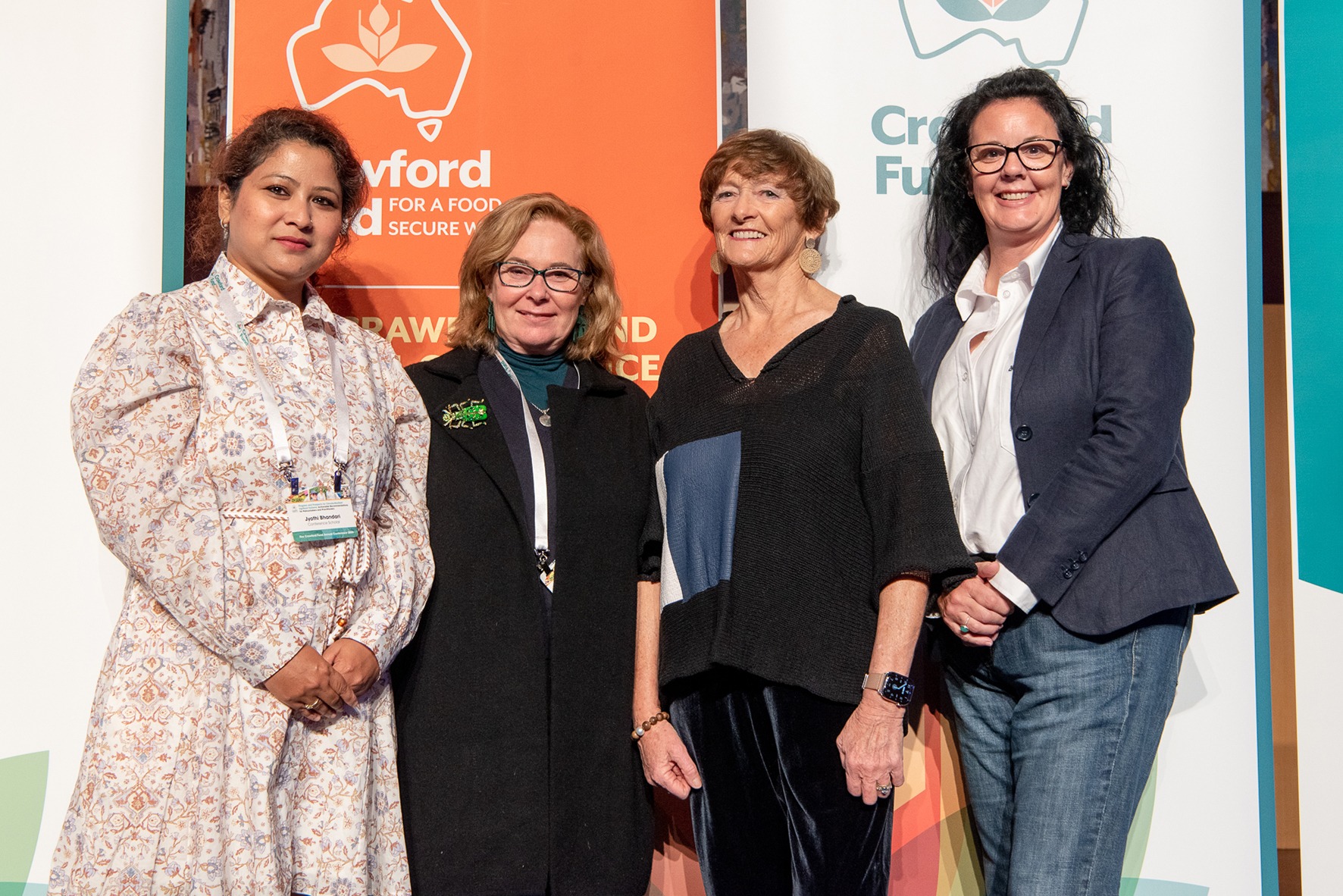
Our conference scholarship program started in 2010 in the hope that by experiencing the Crawford Fund conference and network, our special program of activities around the conference and being mentored by inspirational experienced researchers, young researchers would be inspired and energised to be more involved. The results have been fantastic, with a great mix of youth and experience at our flagship event each August and a growing and enthusiastic conference scholar alumni approaching 485.
Our competitive conference scholarships are offered to young people with a genuine interest in international agricultural research and development to attend the conference and a special set of activities that we have developed and shaped over the past 15 years.
Our other activities to encourage university students and early career researcher include highlighting opportunities in volunteering for projects overseas through the Australian Volunteers Program; our work with Researchers in Agriculture for International Development (RAID), and our special Henzell and Student Awards to enable students to experience overseas agriculture for development research while still at university.
One of the requirements of the scholarship is that each scholar provides us with a reflection on their experience. We will be providing these reflections over the coming weeks, grouped by State/Territory.
Once again, we would like to thank our wonderful mentors, mentioned alongside the scholar they supported, who volunteer their time and offer valuable guidance, support and insights to the scholars throughout the conference.
Two scholars were supported by our NT Committee. Highlights of their experiences have been captured below:
Jyothi Bhandari, Charles Darwin University
“I return home inspired, better connected, and motivated to contribute to positive change in agricultural research.”
Danielle White, Charles Darwin University
“Attending the Crawford Fund Annual Conference has strengthened my resolve and equipped me with real-world strategies to ensure my research is both technically robust and socially meaningful.”
Read on for the full reflections of each scholar:
Jyothi Bhandari, Charles Darwin University
Mentor: Tania Paul
Attending the 2025 Crawford Fund Conference in Canberra from August 11–13 was an incredibly enriching experience, both professionally and personally. As a mid-career researcher and PhD student, it was a valuable opportunity to deepen my understanding of global agricultural challenges, engage with leading scientists and policymakers, and connect with fellow scholars from across Australia.
The Hon. Joel Fitzgibbon, Crawford Fund Board Member and former Minister for Agriculture, Fisheries and Forestry, delivered the Sir John Crawford Memorial Address. His talk, “Trade-offs and Tough Choices: Lessons in Leadership from the Frontlines of Policy,” was deeply insightful, highlighting the real-world complexities of agricultural leadership.
That evening’s dinner at Parliament House was a true highlight. It celebrated collaboration across generations and sectors—scientists, policymakers, and young researchers all engaging in informal conversations that underscored the importance of shared vision and partnership in agricultural development.
The conference opened with The Hon. John Anderson AC, FTSE, Chair of the Crawford Fund, followed by a keynote by Professor Glenn Denning titled “Achieving Universal Food Security in an Adversely Changing Climate.” His focus on systemic reform, long-term government collaboration, and inclusive, gender-sensitive approaches to agriculture resonated deeply with my own research interests.
Session 2 addressed the complex challenge of feeding the world while reaching net zero emissions. Experts including Professor Richard Eckard and Dr. Leanne Webb discussed non-CO₂ mitigation strategies, anti-methanogenic solutions, and carbon sequestration opportunities through integrated systems like solar-pasture technologies—topics I found particularly engaging.
Session 3, Achieving a Pathway to Climate Resilience, showcased compelling case studies from Asia, Africa, and the Pacific. Dr. Aditi Mukherji’s research on the cascading impacts of climate change on small island nations was powerful. I was especially inspired by community resilience strategies in Fiji and water management innovations for cocoa and coffee farmers.
Session 4 focused on Resilience Through Equity, Inclusion and Community Participation. Dr. Purnima Menon and others addressed gender dynamics in climate resilience, highlighting initiatives like co-managed fisheries and livelihood diversification. These practical approaches reinforced the need to integrate women meaningfully into agricultural systems.
The final panel in Session 5 offered policy recommendations, underscoring the need for gender- responsive strategies, capacity-building, and stronger integration of R&D in climate-smart agriculture.
The RAID Network’s trivia night closed the day with warmth and connection, offering a relaxed space for scholars to bond and build professional relationships.
Scholars’ Day focused on science communication and professional development—equipping us with strategies to increase the impact of our work. A standout feature of the conference was the scholar-mentor pairing. I was fortunate to be paired with Tania Paul, whose guidance and support were invaluable throughout the event. My sincere thanks also go to the other dedicated mentors who generously shared their insights. I am deeply grateful to the Crawford Fund for the scholarship opportunity and to the RAID Network and organisers for creating such a meaningful, well-structured experience. I return home inspired, better connected, and motivated to contribute to positive change in agricultural research.
Danielle White, Charles Darwin University
Mentor: Tania Paul
Reflecting on the richness of the sessions at the 2025 Crawford Fund Annual Conference, what stood out was the powerful synergy between advanced scientific research and deep community knowledge. The presentations by Professor Graham Sem, Ms Selane Tairea, and Mr Acacio Sarmento da Silva exemplified how actionable, impactful responses to climate and food security challenges emerge from mutual respect between science and society.
Science communication was a key theme throughout the conference, with particular focus on the importance of clear and effective communication across all levels – not just among specialists and researchers. The discussions highlighted how tailoring messages for policymakers, practitioners, and communities alike is essential for bridging gaps between research and real-world application, whether it involves crafting resilient agrifood policies, designing targeted adaptation programs, or upgrading value chains.
The voices of local communities were ever-present, ensuring that proposed solutions are grounded, inclusive, and truly responsive to lived realities. Ms Tairea’s emphasis on participatory approaches – “if you want to do research in the Cook Islands but you do not work with the community, you are not going to get far” – was echoed in collaborative models discussed by other speakers. This dynamic not only produced richer data and sharper analysis but also boosted the legitimacy and uptake of recommendations among those who depend on the land and sea for their livelihoods.
A key lesson I am taking forward as I embark on my Bachelor of Science Honours in the Indo-Pacific is the absolute necessity of co-design. Science does not progress in isolation; it excels when it is translated, tested, and co-developed alongside those with local expertise and cultural insight. The presentations strongly affirmed how community-engaged science leads to interventions that are feasible, relevant, and sustainable.
Finally, the conference highlighted the critical need for gender inclusion and equity, especially in sectors like fisheries and agriculture. Mr Sarmento’s research demonstrated the fundamental, yet underacknowledged, role of women in resource management – a perspective that must be included in any research to ensure solutions meet the needs of all members of the community.
Attending the Crawford Fund Annual Conference has strengthened my resolve and equipped me with real-world strategies to ensure my research is both technically robust and socially meaningful. It has shown that the path to true climate resilience lies not just in new technologies but in building trust, amplifying local voices, and fostering ongoing dialogue between researchers, communities, and policymakers.
The Scholar Days, expertly facilitated by the RAID Network and driven by the dedication of Mikayla Hyland-Wood, offered an invaluable dimension to the conference experience. These sessions illuminated the countless opportunities available to emerging scientists, while fostering effective networking skills and practical guidance from seasoned professionals. Through real-world advice and candid discussions, the Scholar Days empowered me with concrete steps to contribute positively to climate-resilient agrifood systems, forging connections and inspiration for lasting impact.
I am deeply grateful to The Crawford Fund for providing this remarkable opportunity to learn, engage, and be inspired by leaders and communities working towards climate-resilient food systems. Special thanks to Cathy Reade for her outstanding work in creating this amazing opportunity. The experience has enriched my perspective and strengthened my commitment to impactful research. Thank you for fostering an environment of collaboration and innovation that empowers the next generation of scientists.