

Strengthening animal health across the Pacific by empowering veterinary professionals
October 14, 2025

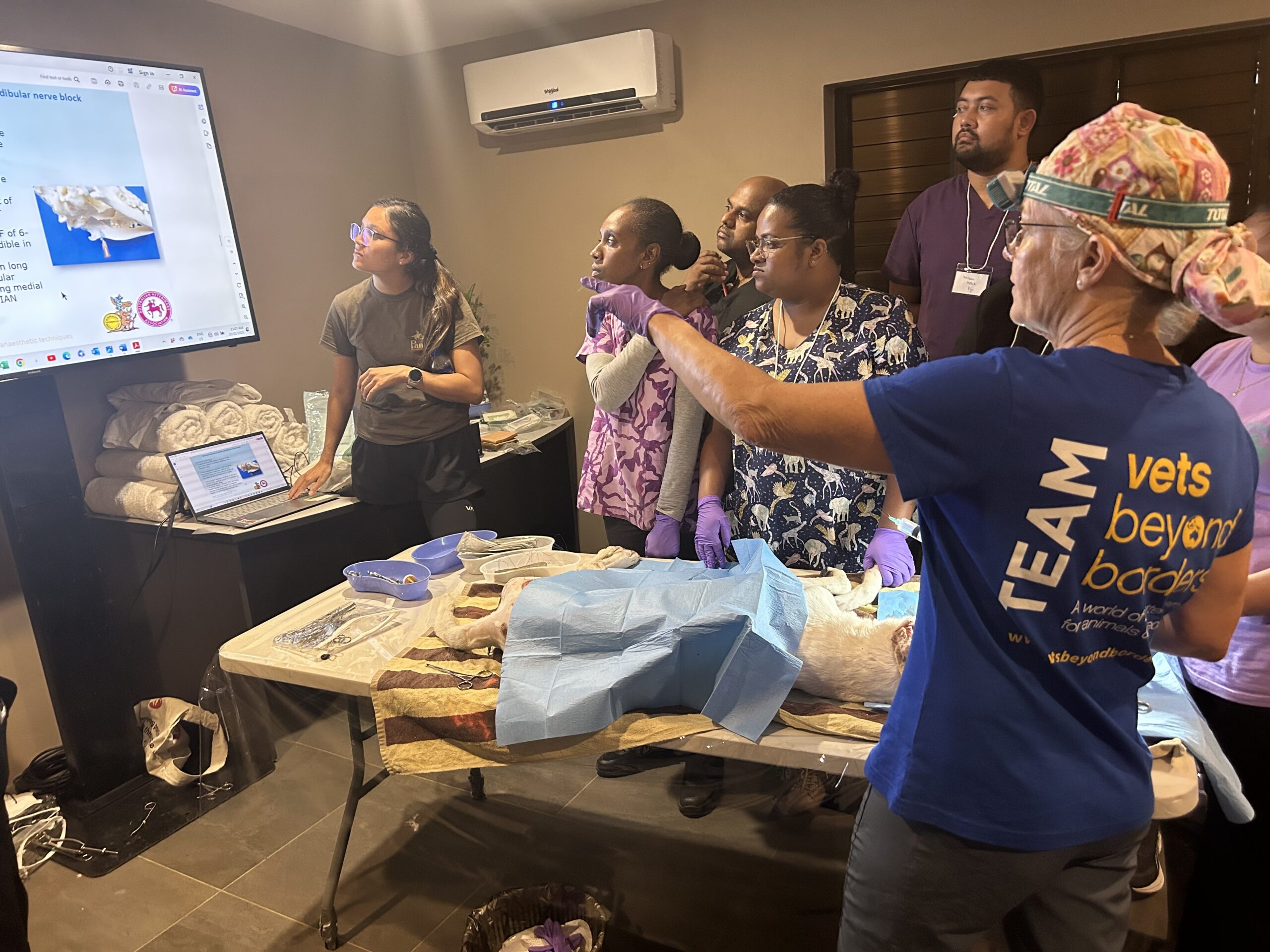
Earlier this year, Vets Beyond Borders (VBB) successfully hosted its first face-to-face VetTrain Pacific seminar in Nadi, Fiji. This landmark event brought together 18 veterinary professionals from five countries, representing six animal welfare organisations, Biosecurity Vanuatu, and the Fijian Ministry of Agriculture, to gain essential expertise aimed at improving animal welfare and public health across the region.
With support from the Crawford Fund Victoria Committee, and the Australian Government, the intensive three-day training program aimed to foster collaboration and enhance critical skills in disease surveillance, preparedness, and companion animal population management.
In the Pacific, animal movement, climate challenges, and limited veterinary resources increase the risk of disease outbreaks. Veterinarians play a frontline role in disease surveillance, early detection, and outbreak response, making training in biosecurity and disease management essential for safeguarding communities and animal populations, explained Anne Lloyd-Jones, General Manager of Vets Beyond Borders (VBB), an Australian animal welfare charity dedicated to improving the lives of animals and communities in need.
Biosecurity Consultant, from the UNFAO, the seminar provided comprehensive training tailored for resource-limited settings.
“Specifically, the VetTrain Pacific seminar strengthened disease preparedness and enhanced practical veterinary skills, equipping participants to identify, prevent, and respond to disease threats affecting both animal and public health. By building this capacity, veterinarians are empowered as key defenders of community health while supporting sustainable companion animal population management,” said Anne.
“Advanced surgical skills are equally critical, particularly in shelter medicine, where high stray populations, resource constraints, and veterinary shortages pose significant challenges. Uncontrolled dog and cat populations contribute to disease transmission, food competition, and threats to local wildlife, while zoonotic diseases such as rabies and parasites endanger both animal and human health,” she said.
The seminar participants were recognised as key contributors to disease surveillance across both companion and production animals. The surgical training emphasised high-volume sterilisation procedures, anaesthesia, and pain management under field conditions.
“Through high-volume sterilisation programs, vaccination initiatives, and community education, veterinarians can mitigate disease risks, improve animal welfare, and promote safer communities,” said Anne.
The VetTrain Pacific seminar has equipped participants with essential skills to address these challenges, strengthening veterinary capacity across the region.
As a flagship initiative of VBB, VetTrain plays a crucial role in capacity building, offering free, high-quality training to professionals in regions where such opportunities are often limited. Beyond developing technical skills, the program empowers participants to drive lasting change, strengthening veterinary services, improving disease management, and ultimately enhancing community well-being across the Pacific.
“With the support of partners like The Crawford Fund, VetTrain continues to expand its reach, ensuring that more veterinary professionals have access to the training they need to safeguard both animal and public health,” she concluded.