

Increasing knowledge and experience in tropical rock oyster and seaweed mariculture within coastal communities
October 21, 2025
The Crawford Fund’s highly sought after Student Awards are one way we support and encourage the next generation of Australians into study, careers and volunteering in international agricultural research.
The awards are funded by our State and Territory Committees and made possible by organisations including ACIAR, international centres, Australian and overseas universities and NGOs who host our awardees.
Fifteen talented university students from around Australia were awarded our 2024 Student Awards. As part of this cohort, we would like to share the experience of Layla Hadden from Charles Darwin University who travelled to Tahiti, French Polynesia to undertake research within an ACIAR host project – Supporting resilient and equitable food systems: emerging oyster and seaweed mariculture enterprises in coastal communities in Fiji and northern Australia.
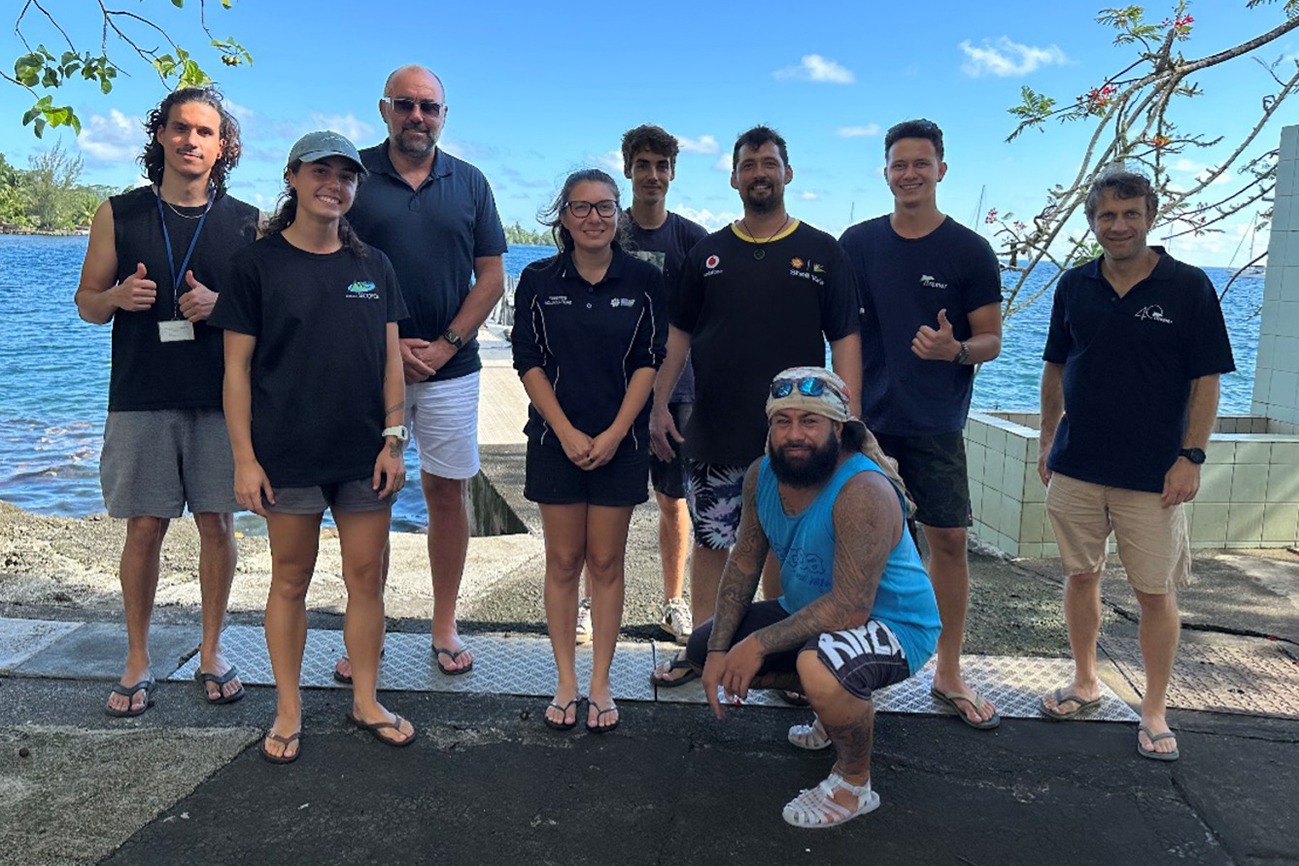
“The trip aimed to expand knowledge and experience in tropical rock oyster (Saccostrea spathulata) and seaweed mariculture, focusing on techniques and practices relevant to the Northern Territory’s developing aquaculture industry,” said Layla.
“Through hands-on training and collaboration with staff at IFREMER Pacific Centre (French National Institute for Ocean Sciences), I developed skills in oyster spawning, larval rearing, algae production, and hatchery management,” she said.
The global aquaculture industry is evolving rapidly, with a growing emphasis on sustainable and indigenous led food production. In the Northern Territory, the development of a native oyster industry represents a significant opportunity for economic diversification, Aboriginal enterprise participation, and environmental sustainability. The Northern Territory Government (NTG), through the Department of Agriculture and Fisheries (DAF), in partnership with the Co-operative Research Centre for Northern Australia (CRCNA), have been working closely with Aboriginal landowners on sea country. In addition, NTG have partnered with the Australian Centre for International Agricultural Research (ACIAR) to support emerging oyster and seaweed mariculture enterprises in coastal communities in Fiji and northern Australia.
“The Crawford Fund Student Award allowed me to undertake overseas research as part of my student project. This project aligns directly with research at the Darwin Aquaculture Centre (DAC), where I work as a Senior Aquaculture Technician for the NTG. My role involves managing the hatchery production of the blacklip rock oyster and overseeing deployment to remote aboriginal-owned oyster farms in northern Australia,” she said.
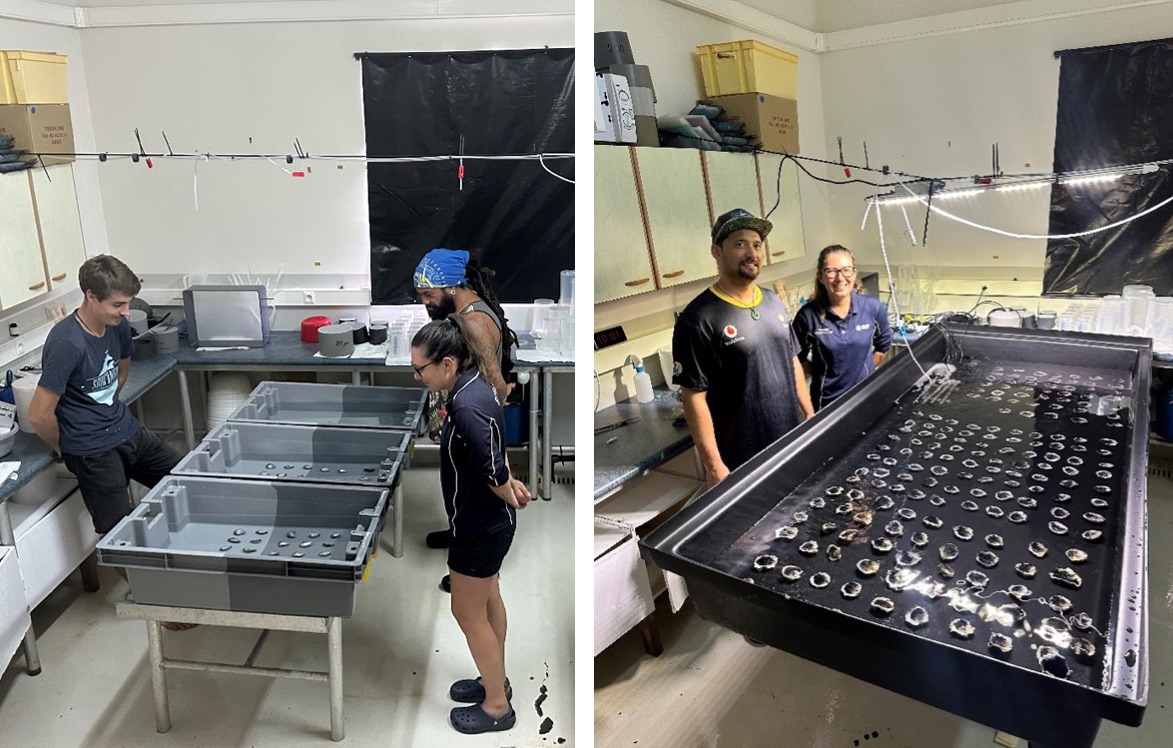
The visit to IFREMER in Tahiti allowed Layla to observe and participate in hatchery operations for tropical oyster species, building on knowledge critical to northern Australia’s aquaculture development.
“During the 10-day trip, I visited IFREMER Pacific Centre in Tahiti, where I engaged in practical hatchery work, research discussions, and facility tours. I met with Cristian Monaco, Guillaume Mitta, and Manaarii Sham Koua who have been instrumental in the research and development of tropical rock oysters at IFREMER,” she said.
“The visit provided an invaluable opportunity to gain hands on experience with tropical oyster hatchery operations, many of which are not currently practiced in Northern Australia. The IFREMER team demonstrated innovative hatchery systems, including effective flow-through setups for larvae and broodstock, advanced filtration methods, and efficient algae culture techniques. I was also able to gain insights into the smaller day-to-day activities of running an efficient bivalve hatchery, which would otherwise be overlooked in conversation,” said Layla.
“Notable learnings included improved spawning induction methods for S. spathulata, the use of mass spawning buckets for efficient fertilisation, and the importance of controlled algae dosing in larval feeding regimes. Additionally, IFREMER’s practical approaches to overcoming logistical challenges in remote island operations, such as equipment flexibility and maintaining staff continuity, offered insights that are applicable to the remote coastal communities of northern Australia,” she said.
According to Layla, the research trip strengthened international collaboration between the Darwin Aquaculture Centre and IFREMER Pacific Centre, and a communication channel has been established to facilitate continued knowledge exchange and potential joint research. The technical expertise gained in hatchery procedures will directly benefit DAC’s tropical rock oyster breeding program and the emerging seaweed co-culture research.
She cites key outcomes from the trip as:
- Enhanced technical understanding of tropical oyster hatchery operations.
- Strengthened professional networks with IFREMER scientists and technicians.
- Insights applicable to tropical aquaculture in remote locations of northern Australia.
- Increased capacity to train NT aquaculture staff and support Aboriginal led aquaculture initiatives.
“The experience has been invaluable for advancing tropical aquaculture research and fostering international cooperation in sustainable food systems,” she concluded.