

Value chain development for smallholders’ livelihoods in forest landscape restoration, case studies in the Philippines
November 4, 2025
The Crawford Fund’s Queensland Committee has again partnered with the TropAg International Agriculture Conference to assist 10 young researchers from developing countries attend and present their science at this international conference which will be held in Brisbane from 11-13 November 2025.
Successful conference scholarship candidates must be an Honours or Postgraduate student from a developing country who is currently studying at a Queensland tertiary institute, and they must be an author or co-author on a submitted TropAg 2025 Conference abstract.
In the lead-up to the conference we will be publishing short blog posts written by the young researchers about their work. Here is the latest blog.
By Thi Minh Ngoc Tran, University of the Sunshine Coast
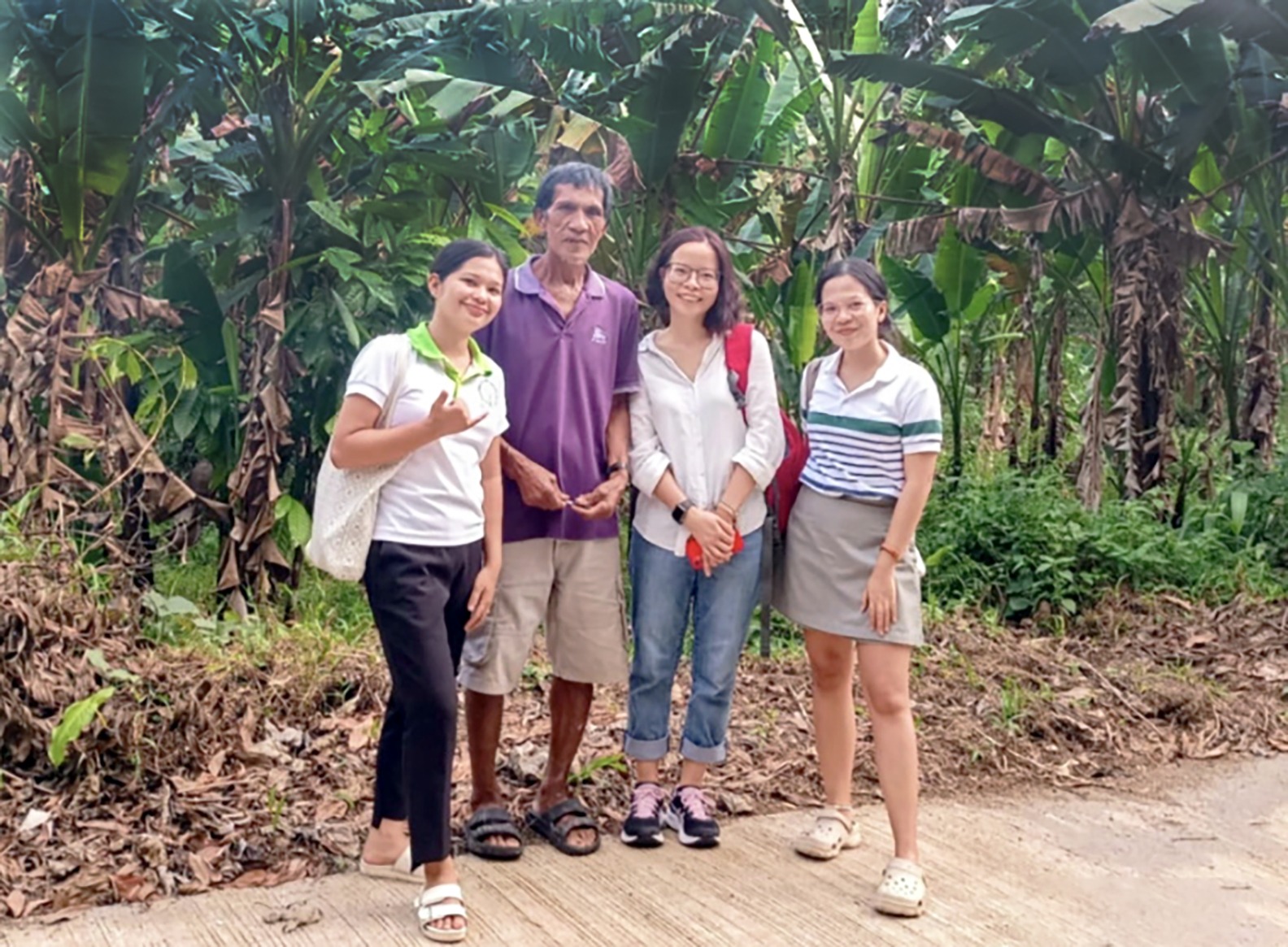
My PhD research was inspired by the realisation that restoration is not primarily about bringing back trees to deforested and degraded lands. It is just as much about people as it is about forests.
In the early stages of my research, I realised that restoration efforts had often struggled to last after the project ended. Communities initially joined, but as the immediate benefits faded, so did participation. Local communities wanted to sustain restoration outcomes, but they also needed to see how caring for the forests and lands could help meet their families’ daily basic needs. I began to wonder whether restoration, connected to the value chain approach, might help both forests and people to thrive.
My PhD journey is now midway, and the more I immerse myself in my research, the more I see that restoration is a process that cannot stand alone. For it to last, it must be connected to local people’s needs and aspirations. The linkage between the value chain approach and restoration offers potentially substantial opportunities, extending beyond livelihood improvement, but it also reveals challenges with ensuring economic benefits and keeping restoration goals. Nevertheless, if the value chain approach has the potential to address challenges in restoration, it certainly deserves further exploration.
I would like to express my sincere gratitude to the generous support from Project Tarsier, through the University of the Sunshine Coast (UniSC) International Research Scholarship, which made my PhD journey possible.