

Data driven climate adaptation programming and policy
November 12, 2025
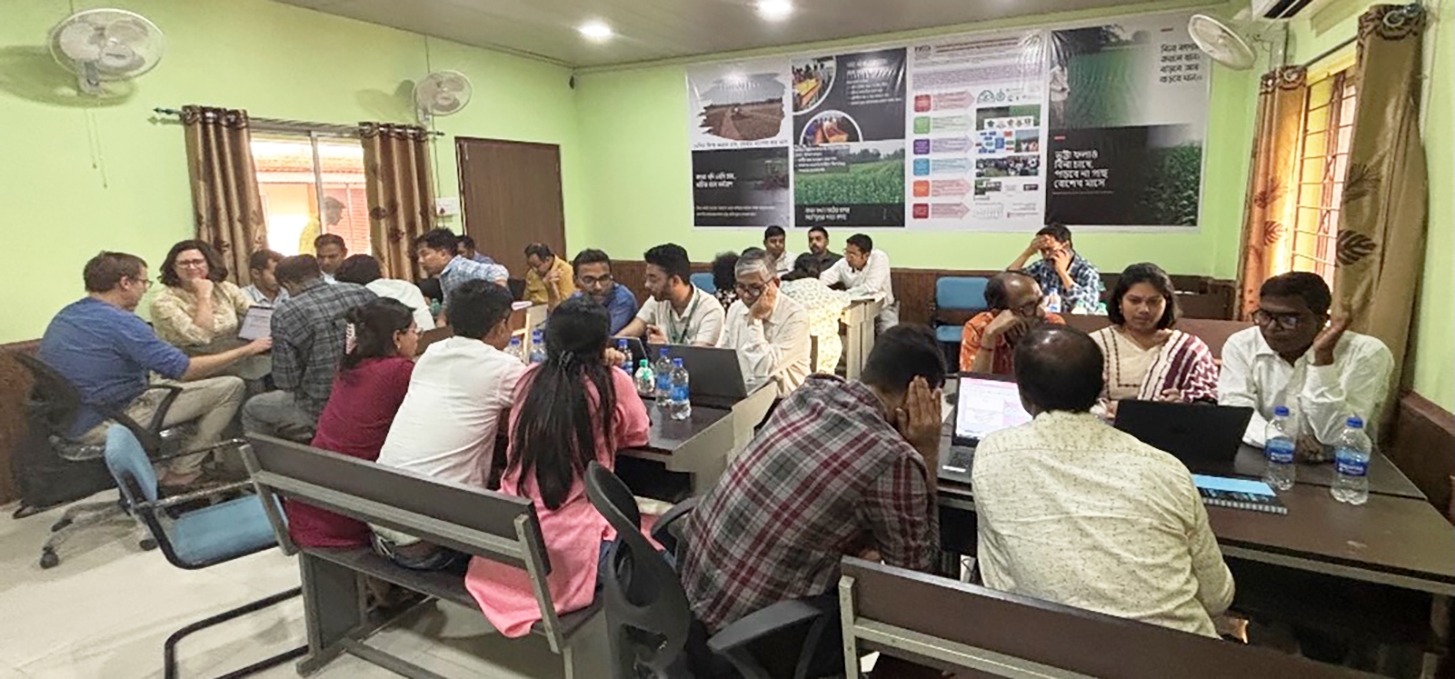
Earlier this year, with support from the Crawford Fund for Food Security South Australia Committee, two dynamic workshops were held in South Asia using the Prioritising Agronomy in Changing Environments (PAiCE) framework. These sessions brought together 48 experts from 21 organisations to tackle climate risks facing local agricultural systems.
Facilitated by Dr Brendan Brown, a research scientist from CSIRO, and Honours student and 2024 Crawford Fund scholar Mackenzie Coopman, the three day workshops focused on collation of preliminary tool inputs to characterise local agricultural systems and assess economic impacts of production and climate-related constraints, and the evaluation and prioritisation of adaptation options aimed at improving system productivity and resilience.
“The primary academic output of the workshops was a comparative assessment of agronomic strategies evaluated across social, environmental, and economic dimensions,” said Brendan.
Specifically, the training sought to build capacity among local stakeholders to engage with the PAiCE process—a structured, evidence-based approach for identifying and prioritising agronomic adaptation strategies. This demand-driven initiative responded directly to requests from the governments of West Bengal (India) and Eastern Nepal and aligned with the objectives of the ACIAR Rupantar Project.
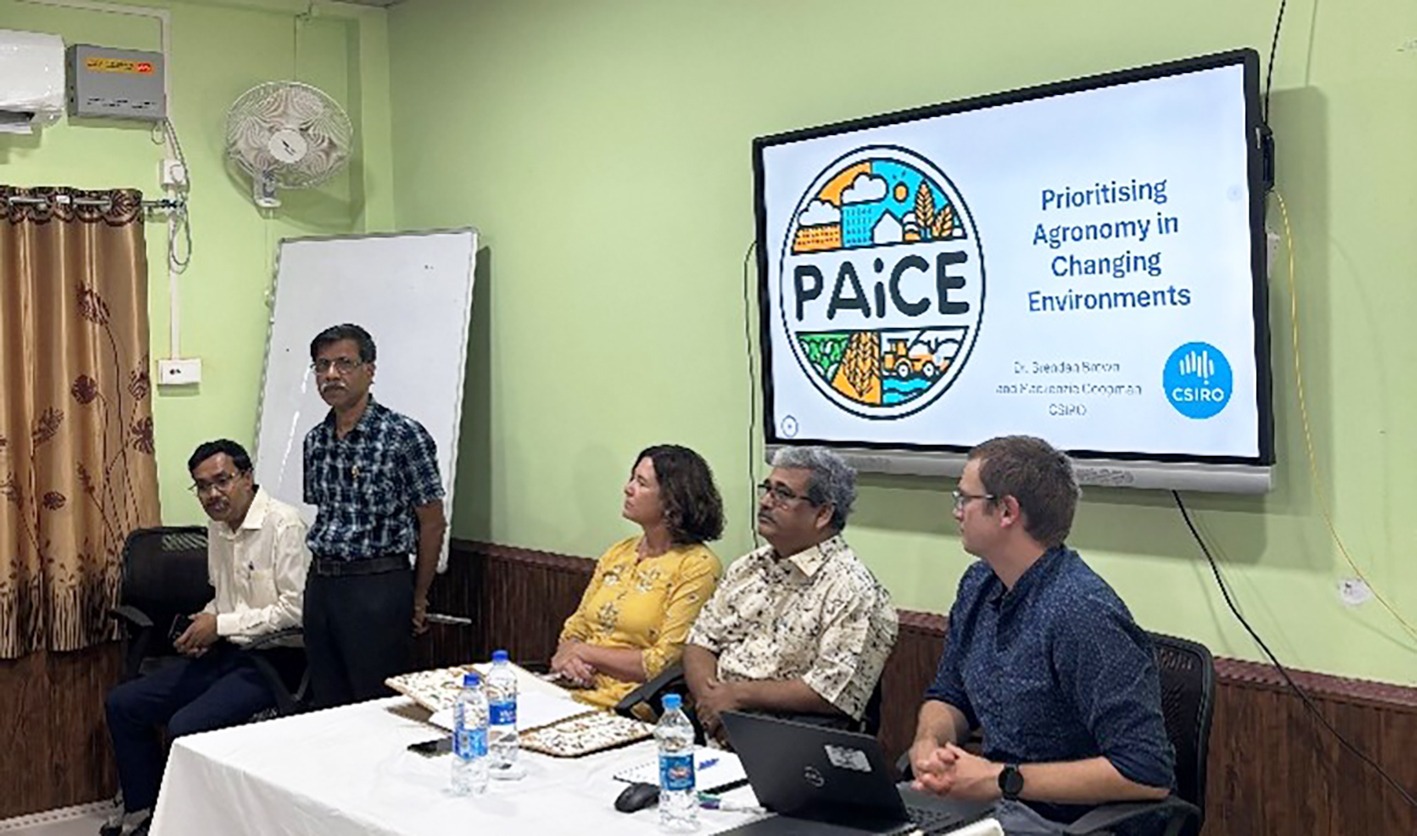
“A critical goal of the training was to empower participants to independently conduct future, locally facilitated workshops. This would enable them to refine adaptation outcomes by addressing evidence gaps and uncertainties. As local data availability improves, the PAiCE tool is expected to yield increasingly accurate, context-specific insights,” he explained.
“Engagement with the PAiCE and ADOPT tools also enhanced participants’ awareness of structured adaptation planning methods, with dedicated plenary sessions explicitly covering how to run future workshops, with guidance tailored to specific organisational or system-level priorities,” he said.
PAiCE is a structured, participatory tool that guides the co-design of climate adaptation strategies through expert consultation and data-driven prioritisation. It empowers stakeholders – farmers, researchers, and policymakers alike – to collaboratively identify key production constraints and test region-specific solutions under future climate scenarios.
“Previously deployed in 18 countries through a CSIRO-CGIAR Excellence in Agronomy partnership, PAiCE has been further expanded thanks to the Crawford Fund’s support. This round of workshops not only contributed new insights to the PAiCE dataset but also placed strong emphasis on local capacity building – helping participants gain practical experience to lead similar workshops independently,” said Brendan.
The workshops were held in Cooch Behar in India, and in Kathmandu in Nepal, and focused on mixed farming systems across Eastern Nepal Terai, Rangpur (Bangladesh), and Cooch Behar, which covers over 700,000 hectares across key seasonal windows.
“The workshops fostered inclusive discussion and co-learning on climate-smart agronomy, enabling stakeholders to design more effective and context-relevant strategies. Participants left with actionable roadmaps and an understanding of how PAiCE can support climate adaptation programming in their own institutions and regions,” said Brendan.
“By supporting these workshops, the Crawford Fund has helped bolster Australia’s leadership in agricultural research for development, while enhancing regional resilience and food security in a changing climate,” he concluded.