

“This experience has strengthened my goal to start a career that has policy impact,” – inaugural Henzell Awardee Shreya Nidumolu
January 21, 2026
In 2024, the Crawford Fund’s NextGen suite of activities to encourage the next generation of Australians in agriculture for development welcomed a much-appreciated new component – the Henzell Awards.
With the support of Ted and Frances Henzell and family, these national awards fund brief visits by Australian undergraduate students to international agricultural research projects in targeted tropical developing countries.
Our 2026 Henzell Awards are now open, don’t miss it – apply now!
Four talented university students from the University of Adelaide, the University of Sydney, and the University of Tasmania were awarded our inaugural Henzell Awards. They were selected from a competitive pool of applicants from around the country, all keen to get on the ground experience in agriculture for development early in their studies.
As part of this cohort, we would like to share the experience of Shreya Nidumolu from the University of Adelaide who travelled to Ethiopia as part of an ongoing ACIAR project accelerating genetic gain in wheat through hybrid breeding in Bangladesh, Ethiopia and Pakistan.
By Shreya Nidumolu
As an undergraduate student studying economics and development, I had the privilege of travelling to Ethiopia on a hybrid wheat breeding project with Professor Richard Trethowan from the University of Sydney. The ACIAR project, nearing the end of Phase 1, examines how wheat hybrid combinations responded to the Ethiopian environment. The success of new seed systems is significant to relieve food security stress in sub-Saharan Africa.
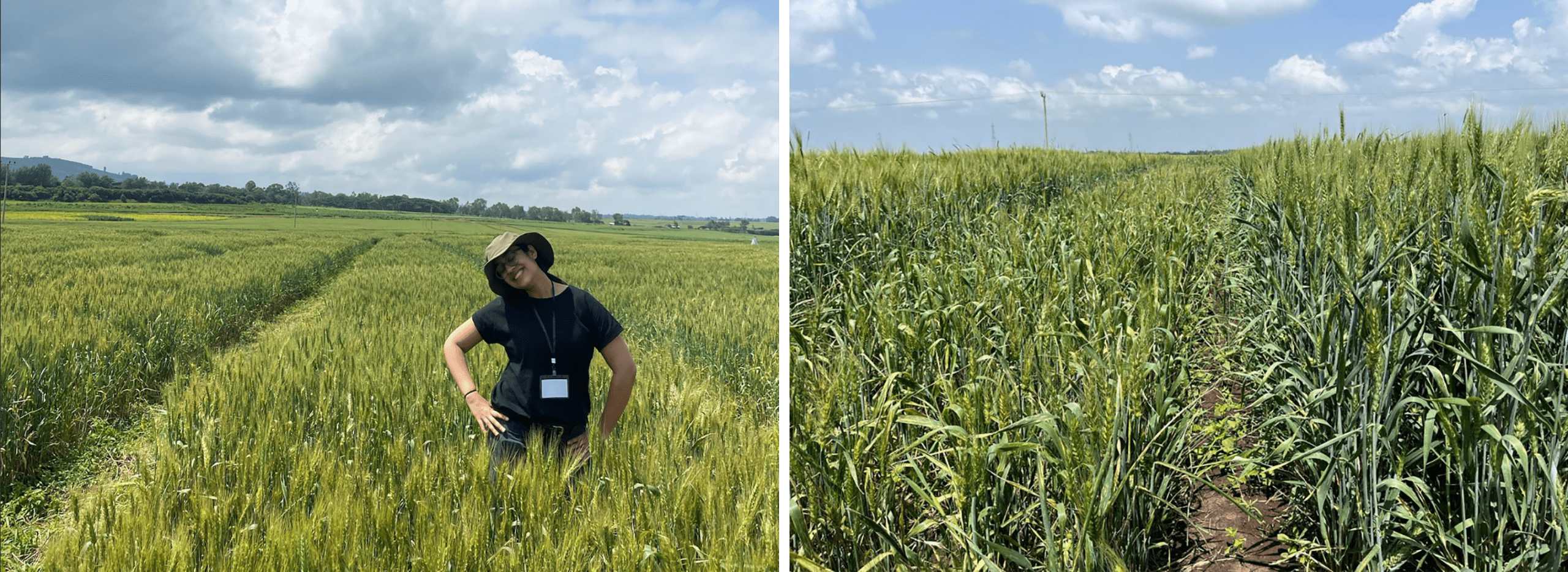
The goal of this visit was to better understand how Australian wheat varieties perform in Ethiopian growing conditions. On ground in Kulumsa, it became apparent that we saw that the Australian wheat samples did not perform in an Ethiopian environment, but most alarmingly, this had not been communicated over email and video correspondence. Witnessing this firsthand amplified the importance of in-country collaboration and honest feedback between research partners.
We also had the opportunity to visit molecular biology laboratories in Holeta. This visit gave us an insight into the country’s impressive scientific capacity, but also its challenges. The facilities were well-equipped and staffed by scientists, yet many of the essential reagents, markers, and chemicals required were in short supply. The Australian team facilitated a Zoom call between the Sydney and Holeta to explain how to treat the wheat samples as well as exploring ways to improve resource sharing and project coordination. Having members of the Australian team in Ethiopia simplified this process, avoiding miscommunication and saving time.
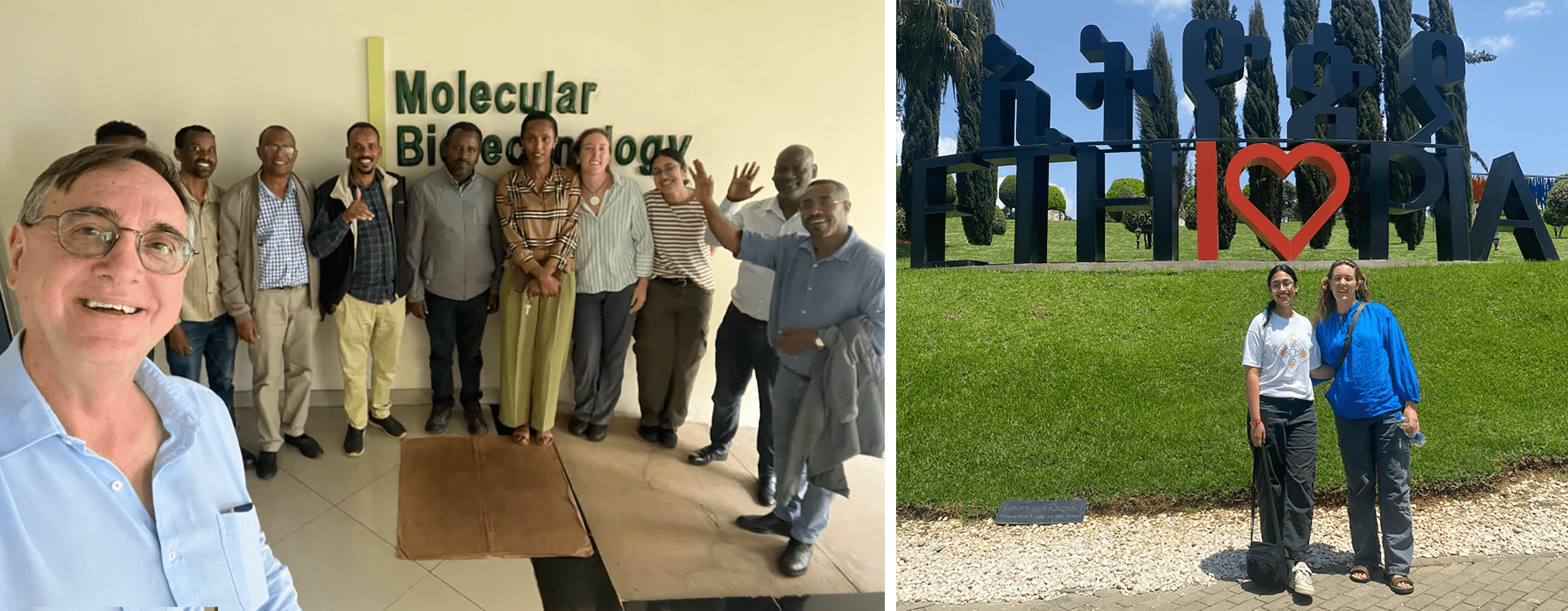
A particular highlight of the visit was engaging face-to-face with executives and scientists from the Ethiopian Institute of Agricultural Research (EIAR) to create an open dialogue that only works in person. Having the opportunity to sit in on these developmental discussions as undergraduate students was a huge privilege.
My perspective has definitely shifted on international development and agricultural policy. It has given me a real- life context for how technical research and international cooperation make an impactful difference. This experience showed me that as student, it’s not about how I can contribute right now but about learning and developing the skills to make a meaningful impact in the future. It’s given me a clearer direction for how I can grow as a professional in agriculture and development economics, and a better understanding of the kind of support different projects truly need.
As I reach the end of my undergraduate degree, this experience has strengthened my goal to start a career that has policy impact, particularly through research. I also want to pursue further studies in development economics and public policy. I would encourage other undergraduate students to pursue opportunities like the Henzell Award. Seeing research in action, meeting scientists and policymakers in another country, and contributing to an international effort to improve food security is incredibly inspiring.