

Developing soil knowledge in the Philippines
February 17, 2026
The Crawford Fund’s highly sought after Student Awards are one way we support and encourage the next generation of Australians into study, careers and volunteering in international agricultural research.
Our 2026 Student Awards are now open. Don’t miss this opportunity – apply now!
The awards are funded by our State and Territory Committees and made possible by organisations including ACIAR, international centres, Australian and overseas universities and NGOs who host our awardees.
Eighteen talented university students from around Australia were awarded our 2025 Student Awards. As part of this cohort, we would like to share the experience of Brianna Biddle from the University of New England who travelled to the Philippines to undertake research into developing soil knowledge, information and capacity to improve the productivity and sustainability of key cropping systems in collaboration with an ACIAR project.
Brianna spent a month in the Philippines working within the ACIAR soil and land management (SLAM) project SLAM/2023/146, which aims to improve the productivity and resilience of Philippine cropping systems through improved soil management. Its goals include developing cost-effective soil testing methods, soil health indicators, and a soil information framework in key provinces to underpin a future National Soil Strategy to prevent degradation, improve soil health, and strengthen food security.
For her internship Brianna was hosted by the Provincial Agricultural Offices of Bataan and Agusan del Sur as well as partner institutions University of New England (UNE), Griffith University, Bataan Peninsula State University – Abucay (BPSU) and The Agusan del Sur State College of Agriculture and Technology (ASSCAT).
“The purpose of my visit was to deepen my understanding of soil health and maintenance by assisting field trials, lab work, and capacity-building activities that support the development of a National Soil Strategy in the Philippines,” said Brianna.
As part of the internship, Brianna’s activities included field sampling and trials, site visits, laboratory work, stakeholder meetings, capacity building, and project awareness.
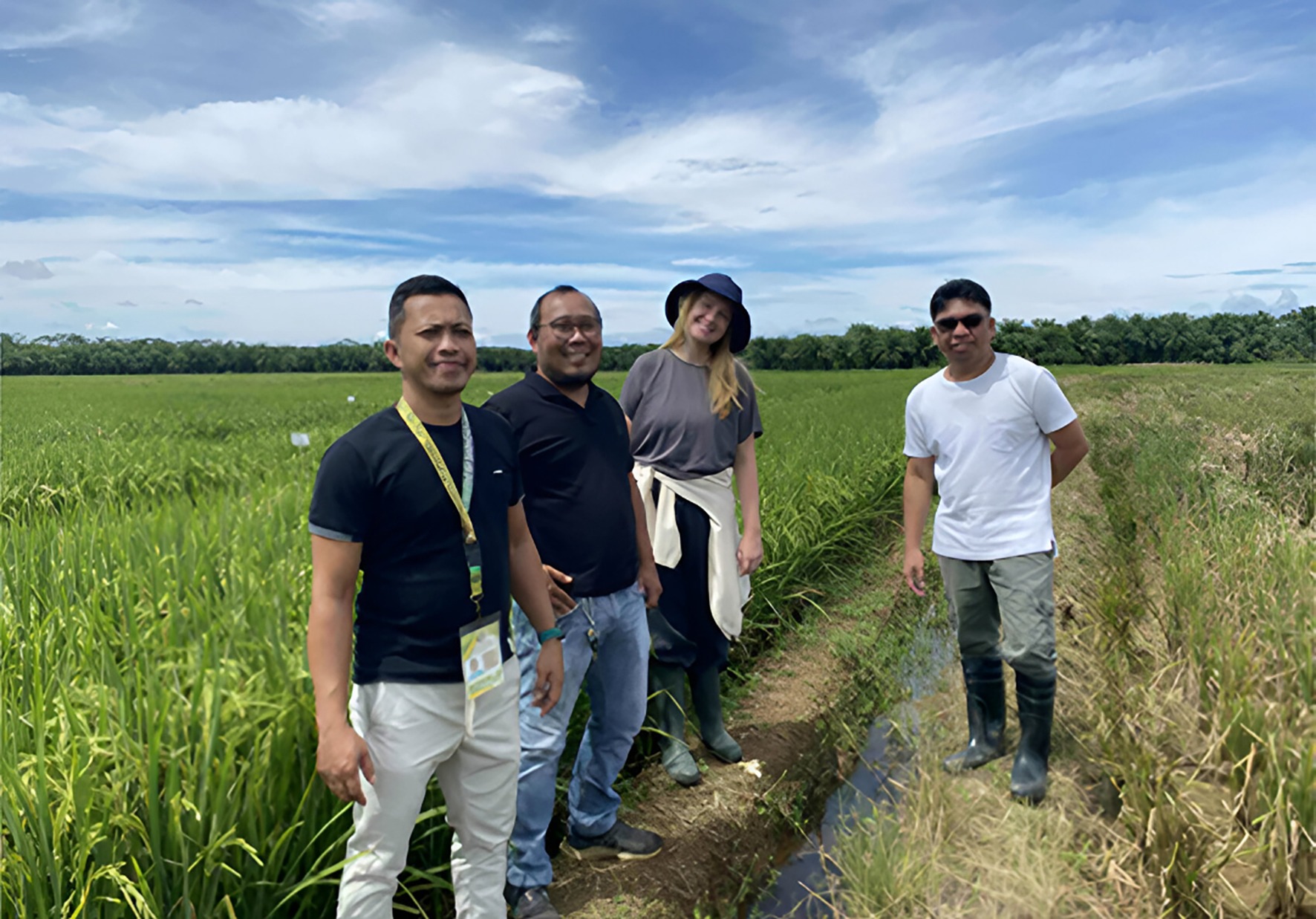
“A major project I was involved was rice fertiliser trials. Trials at four different sites in the Philippines (of which I visited two) are trialing fertiliser inputs for rice plant health and grain output. I joined local extension staff in sampling soils and plant health on demonstration farms. The results of this trial will inform recommendations made to local farmers to maximize rice output while minimising cost and environmental degradation,” said Brianna.
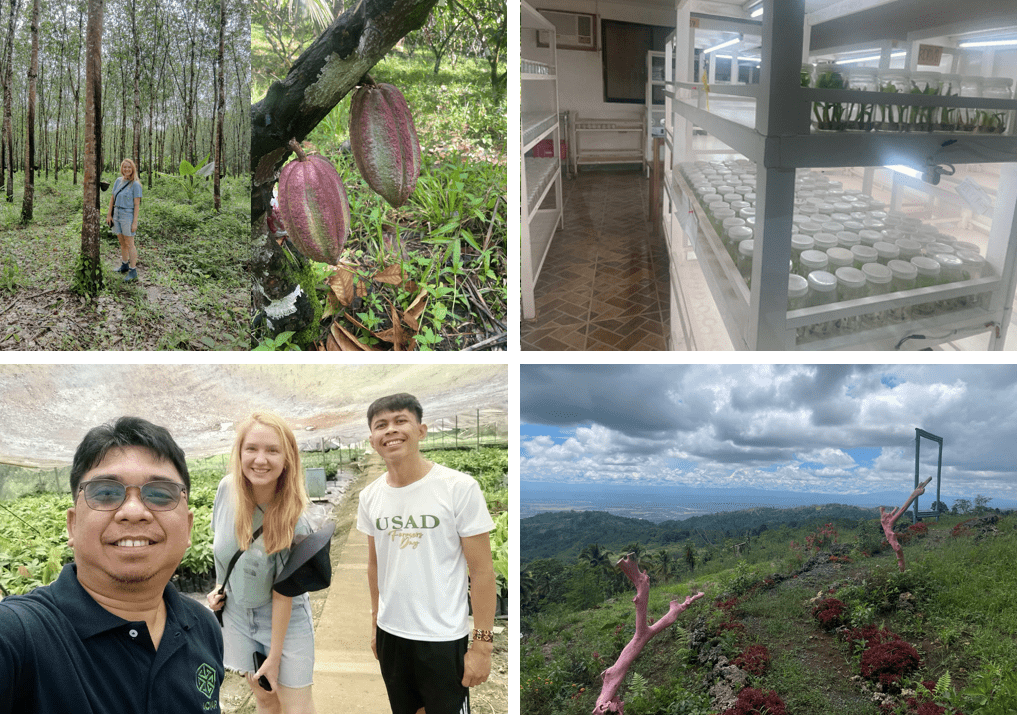
“In Agusan del Sur, I joined field technicians while they staked a new demonstration site for rubber and banana trees. This farmer’s field will allow farmers to visit and see the differences fertiliser application can make to the growth and health of trees in an environment which is likely similar to their own farms.
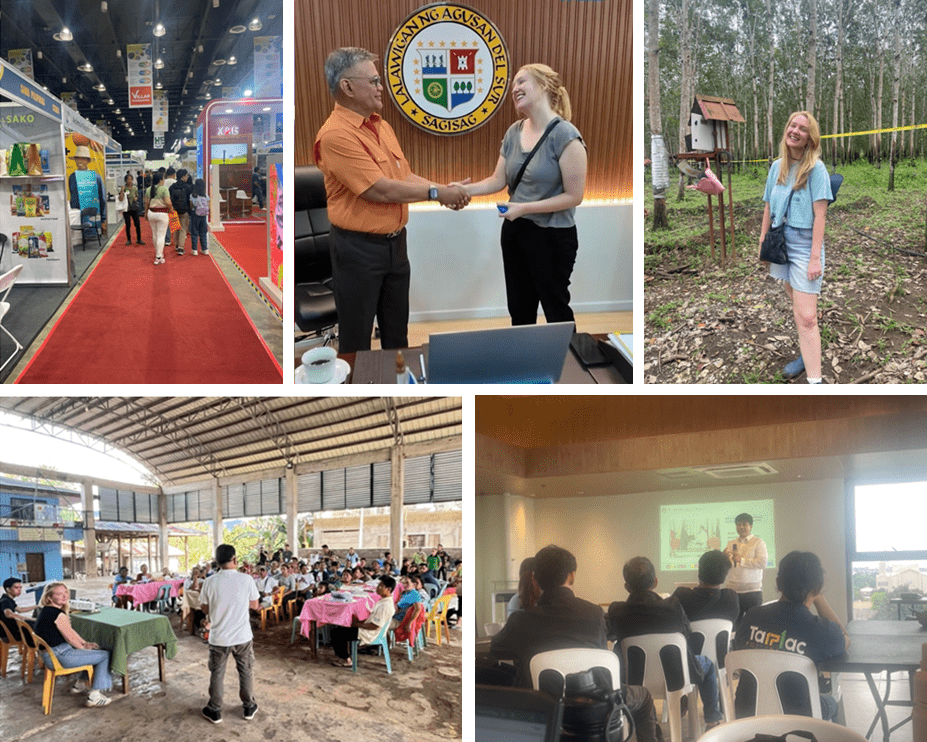
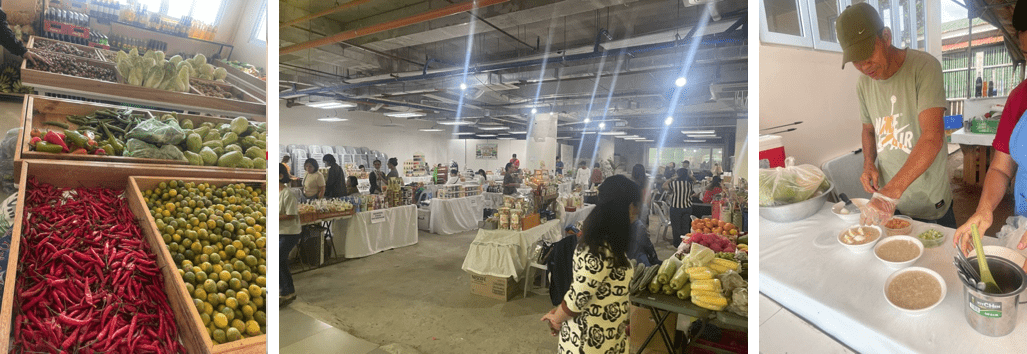
During her time in the Philippines, Brianna attended a number of site visits including: Bataan’s Kadiwa project which aims to teach marketing and entrepreneurial skills to farmers so farmers can receive better prices for their products; organic farms in Sibagat priding themselves on their strong commitment to ecotourism and organic farming methods; Upland Sustainable Agro-forestry Development (USAD) an alleviation program developed in coordination with the provincial government to support farmers in rural and vulnerable regions; and, in both Bataan and Agusan del Sur, she visited a number of farms, greenhouses, learning sites, and processing operations where she met local producers and learned about their operations.
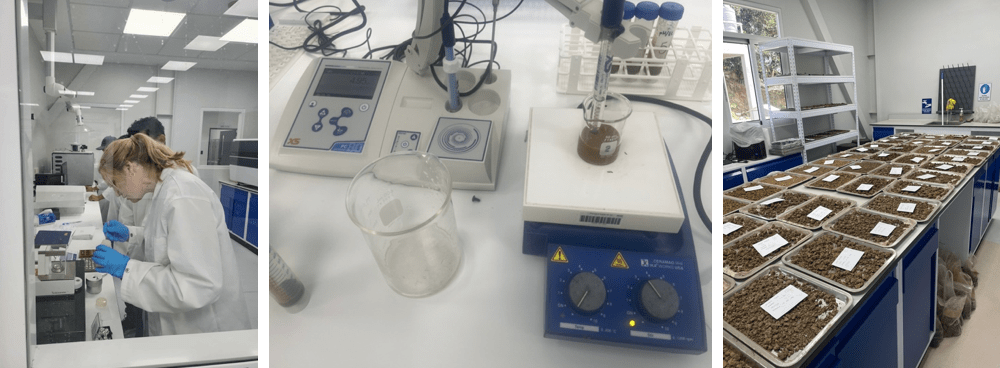
“In Agusan del Sur, I was able to learn soil analysis skills at their new lab built by the provincial government and ACIAR. This lab will be key in gathering information by soil analyses to inform the National Soil Strategy. I learned about soil collection, how to prepare samples, and ran a number of soil analyses,” she said.
“The internship provided several key insights about Philippine agriculture and its soil management, with parallels to Australian contexts. It was interesting to note how similar challenges are between Australia and the Philippines. Soil fertility is a widespread concern. Farmers in both countries struggle with uncertainty (climate, crop yields, pests and disease, market changes), succession planning with an aging farmer population (encouraging younger generations to pursue farming), access to roads and markets, resistance to the uptake of new technology, and the learning curve involved in using these new technologies. Both the Australian and Philippine governments recognise and value the important role that farmers play and are eager for them to succeed,” said Brianna.
“The experience provided practical insights into Philippine cropping systems (notably rice, rubber, and vegetables) and firsthand experience of soil health challenges such as erosion and nutrient depletion,” she said.
“Interactions with farmers and researchers highlighted parallels to Australian agriculture (for example, the need for sustainable soil management to maintain productivity) and reinforced the importance of international collaboration,” she concluded.