

Understanding dry-season variability in invertebrate small-scale fisheries in Timor-Leste
March 10, 2026
The Crawford Fund’s highly sought after Student Awards are one way we support and encourage the next generation of Australians into study, careers and volunteering in international agricultural research.
Our 2026 Student Awards are now open. Don’t miss this opportunity – apply now!
The awards are funded by our State and Territory Committees and made possible by organisations including ACIAR, international centres, Australian and overseas universities and NGOs who host our awardees.
We would like to share the experience of Benedetta Longoni from James Cook University, from our 2025 Student Award cohort, who travelled to Timor-Leste for research into understanding dry-season variability in invertebrate small-scale fisheries: supporting food security and capacity building.
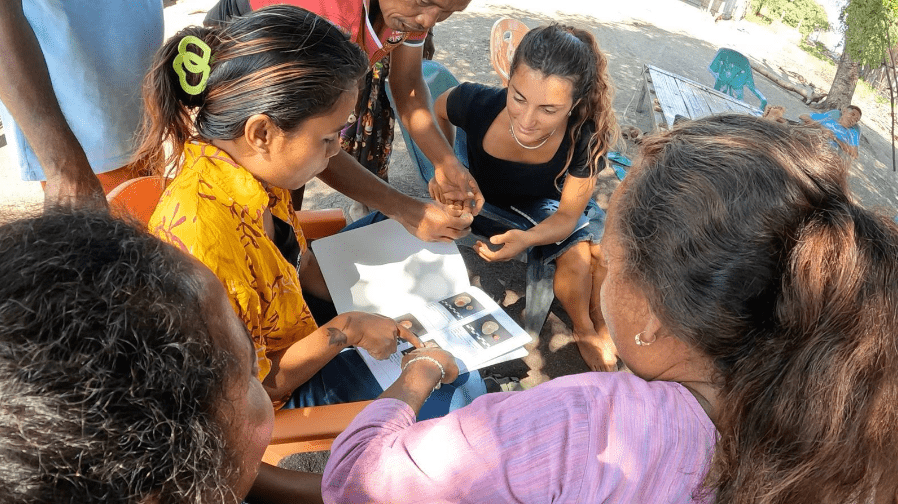
With the support of the Crawford Fund, Benedetta conducted fieldwork in Suai Loro, a coastal community in southern Timor-Leste, focusing on invertebrate small-scale fisheries. This work complemented a broader SHELLFISH Project led by IRD and WorldFish, which had already gathered wet-season data across several villages earlier in 2024.
“By spending two months living within the community during the dry season, I was able to capture the other half of the story: how gleaning and small-scale invertebrate fishing change throughout the year, who participates, and what role these activities play in daily nutrition and livelihoods,” said Benedetta.
“The fieldwork revealed clear seasonal and gendered patterns. Women were the main gleaners, collecting a wide variety of species, while men mainly targeted fish. Even when the main high-value species (such as octopus) were not abundant, women continued to glean, providing an essential and steady source of seafood for their families. Nevertheless, gleaning in Suai Lo’o is not just a way to obtain food; it reflects deep ecological knowledge, intergenerational learning, and the remarkable adaptability of coastal communities,” she said.
Gleaning, the activity of collecting of marine organisms from inter-tidal habitats, is vital for coastal households across Timor-Leste, providing daily nutrition, income, and food security. Despite its importance, it is rarely represented in official statistics or management plans. National census data indicate that, surprisingly, only five per cent of households in Timor-Leste report engaging in fishing, even though the country is surrounded by highly productive waters. However, over 80 per cent of households participate in gleaning activities at some point. This discrepancy underscores both the invisibility of this fishery and the challenges associated with accurately capturing data on such small-scale and often informal practices.
“Critical knowledge gaps include who participates in gleaning, what species are targeted, how fishing is conducted, when it occurs, and for what purpose,” said Benedetta.
The SHELLFISH Project has been documenting these fisheries across multiple communities to better understand their ecological and social importance.
“Earlier in 2024, the project collected data during the wet season (March–April). My fieldwork aimed to fill the seasonal gap by studying Suai Loro during the dry season (August–September),” said Benedetta.
Benedetta’s research activities in Timor-Leste as part of her Student Award experience included gathering data on the seasonal variation in Catch Per Unit Effort (CPUE) and species composition of and documenting techniques of gleaning fisheries and organising the first national collection of Timor-Leste and fisheries workshops.
“For two months, I lived in Suai Loro and worked closely with local fishers, mainly women, to observe and document gleaning practices. I accompanied fishers during gleaning trips, recording data on catch composition, effort, duration, and habitats. These dry-season observations were then compared with wet-season data previously collected in Suai Loro and other villages,” said Benedetta.
“The Crawford Fund Award made it possible to spend extended time in the community, which allowed me to build trust, collect detailed data, and experience first-hand the rhythms and challenges of gleaning life, as well as to organise workshops,” she said.
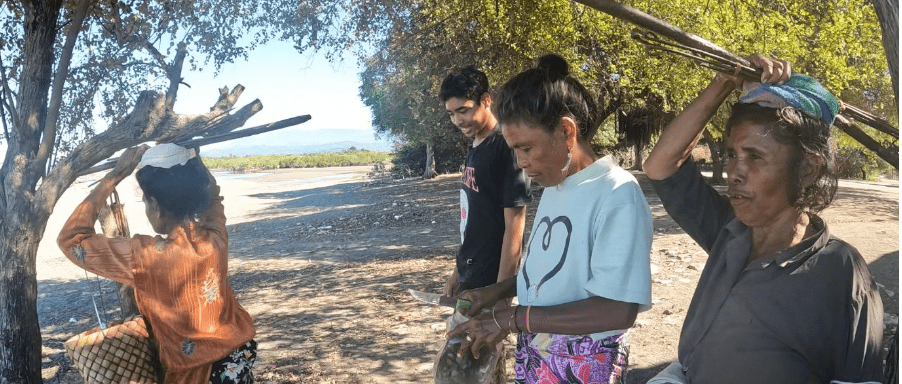
“Although gleaning may appear simple at first glance, it is a complex practice requiring skill, patience, and deep ecological knowledge. Successful gleaners must understand tides, habitats, species behaviour, and seasonal cycles, making this activity both technically demanding and ecologically informed,” she said.
“Effective management must be guided not only by ecological assessments but also by the knowledge, priorities, and goals of the fishers themselves; what they choose to harvest, when and how they do it, and what outcomes they hope to achieve. Only by combining these multiple perspectives can we capture the full role of small-scale fisheries, not merely as providers of food and income, but as essential systems that sustain culture, community, and livelihoods,” she said.
“During this project, I also worked on identifying, curating, and cataloguing specimens of Gastropoda and Bivalvia collected during previous SHELLFISH expeditions, which are now scheduled to be displayed at UNTL in 2026,” she said.
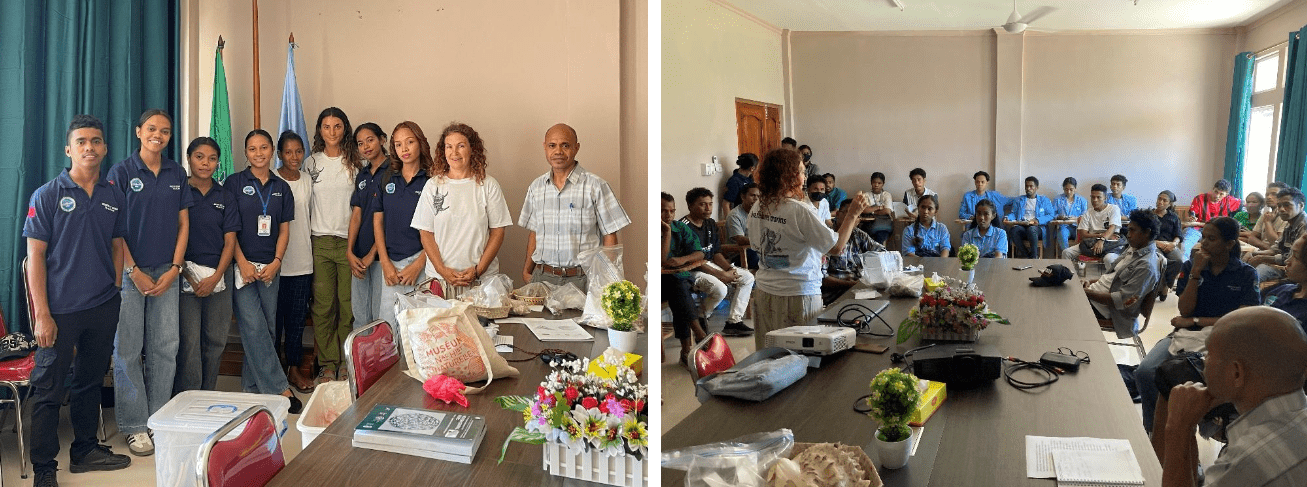
A key component of the SHELLFISH project is to build fisheries research capacity among UNTL students. During her fieldwork, Bendetta delivered technical workshops for undergraduate students, covering core skills such as CPUE monitoring, basic taxonomic identification, specimen handling, and ecological data entry.
Professor Ariadna Burgos from IRD, the Muséum National d’Histoire Naturelle in Paris, and WorldFish Timor-Leste led a workshop at UNTL in Hera alongside Benedetta and Alcira Albino from Atekru, Atauro Island, an expert gleaner and fisherwoman who shared her knowledge of shellfish and traditional fishing practices.
“This research contributes valuable, context-specific insights into one of Timor-Leste’s most overlooked fisheries, helping to make visible the everyday practices that sustain many coastal households. This work provides the evidence base needed to design equitable and gender-inclusive management strategies,” said Benedetta.
“The research helps ensure that management objectives reflect local realities and acknowledge trade-offs between sustainability, livelihoods, and food security,” she said.
According to Benedetta this study also strengthens partnerships between Timorese and international researchers.
“For Australia, these relationships have opened new possibilities. Next year, a project led by James Cook University will work on co-management of small-scale fisheries in Timor-Leste,” said Benedetta.
“Personally, this experience deepened my understanding of the importance of an interdisciplinary approach to studying complex social-ecological systems…and being immersed in the community taught me to listen, observe, and accept that some systems are meant to remain dynamic and cannot be fully captured by a single definition,” she said.
“There is something profoundly beautiful in this: it is precisely this fluidity that makes gleaning, and the communities who practice it, so resilient. Gleaning has shown me that resilience often lies in adaptability, and that knowledge passed through generations can be as valuable as data recorded in a notebook,” she concluded.