

Advancements in understanding tenacibaculosis and sustainable seafood production
September 25, 2025
The Crawford Fund’s highly sought after Student Awards are one way we support and encourage the next generation of Australians into study, careers and volunteering in international agricultural research.
The awards are funded by our State and Territory Committees and made possible by organisations including ACIAR, international centres, Australian and overseas universities and NGOs who host our awardees.
Eighteen talented university students from around Australia were awarded our 2024 Student Awards. As part of this cohort, we would like to share the experience of Karthiga Kumanan, from James Cook University, who travelled to facilities in New Zealand, Japan, and French Polynesia to study advancements in understanding tenacibaculosis and sustainable seafood production.
“The aim of this Crawford Fund-supported collaboration was to understand the causal factors of tenacibaculosis in marine aquaculture and to evaluate the strategies used by different farms to mitigate disease risk while supporting sustainable production,” said Karthiga.
“Tenacibaculosis is a serious marine fish disease that affects the aquaculture industry globally, including in Australia where it impacts Tasmanian Atlantic salmon. As the disease continues to emerge in new locations and more than 30 marine fish species, including in Asian sea bass/Barramundi, it is essential that we remain proactive and prepared in case it emerges in Queensland Barramundi aquaculture,” she explained.
“With Crawford Fund I had the opportunity to explore how tenacibaculosis is managed internationally, especially in Japan where it was first reported in marine aquaculture,” said Karthiga.
“While Japan initially experienced serious disease outbreaks, its aquaculture sector has since advanced significantly, particularly through the adoption of recirculating aquaculture systems (RAS),” she said.
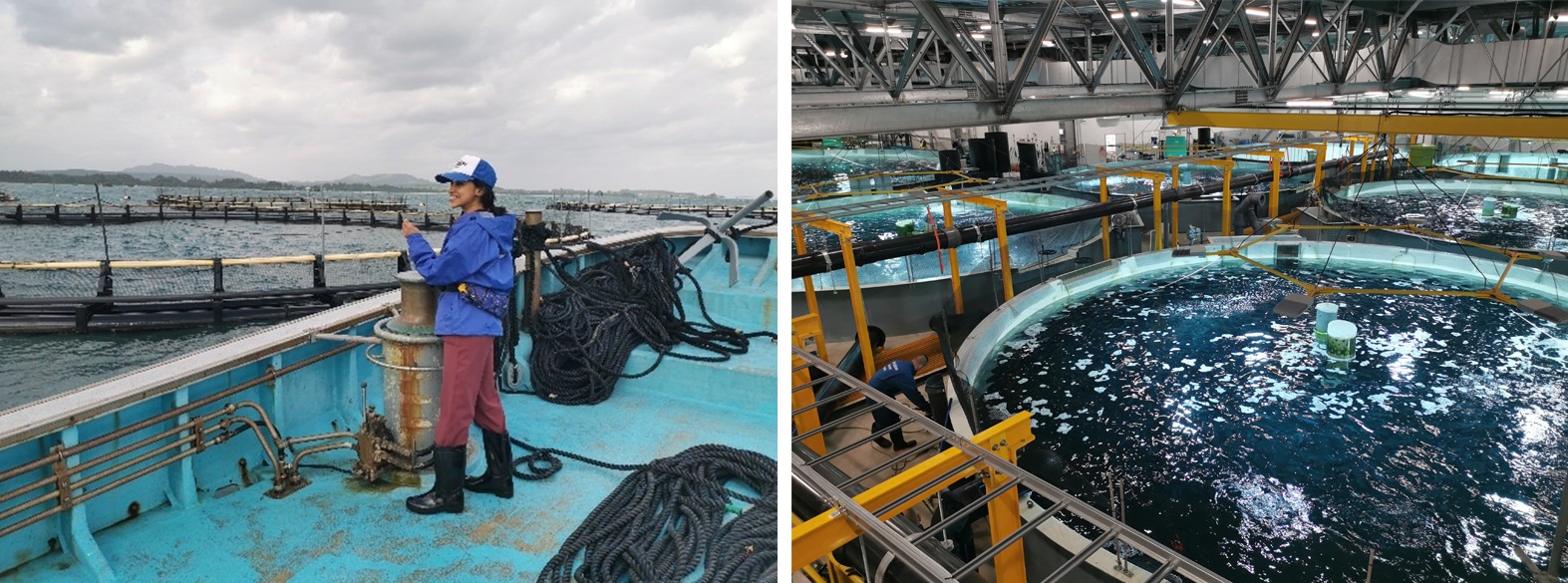
“My visit to Japan included both RAS and open sea cage systems to explore how different operations manage health and sustainability,” she said.
Karthiga’s research trip involved visiting Japan’s first recirculating Atlantic salmon aquaculture systems at Proximar; Tuna Dream in Okinawa; and Tahiti Fish Aquaculture (TFA) and research initiatives with IFREMER and DRM in Tahiti, French Polynesia.
At Proximar, Japan’s first RAS facility for Atlantic salmon, Karthiga observed how the use of bore water in a closed-loop design has effectively minimised exposure to environmental pathogens like tenacibaculum. This represents a successful shift toward more biosecure and sustainable production systems. In addition to improving biosecurity, this land-based system reduces the risks faced by sea farms due to temperature fluctuations and enables year-round salmon production under controlled conditions, supporting both fish welfare and operational consistency.

“I then visited Tuna Dream Okinawa, a blue fin tuna farming facility that has closed the tuna life cycle and developed its own production cycle to support sustainable aquaculture without relying on wild stock,” she said.
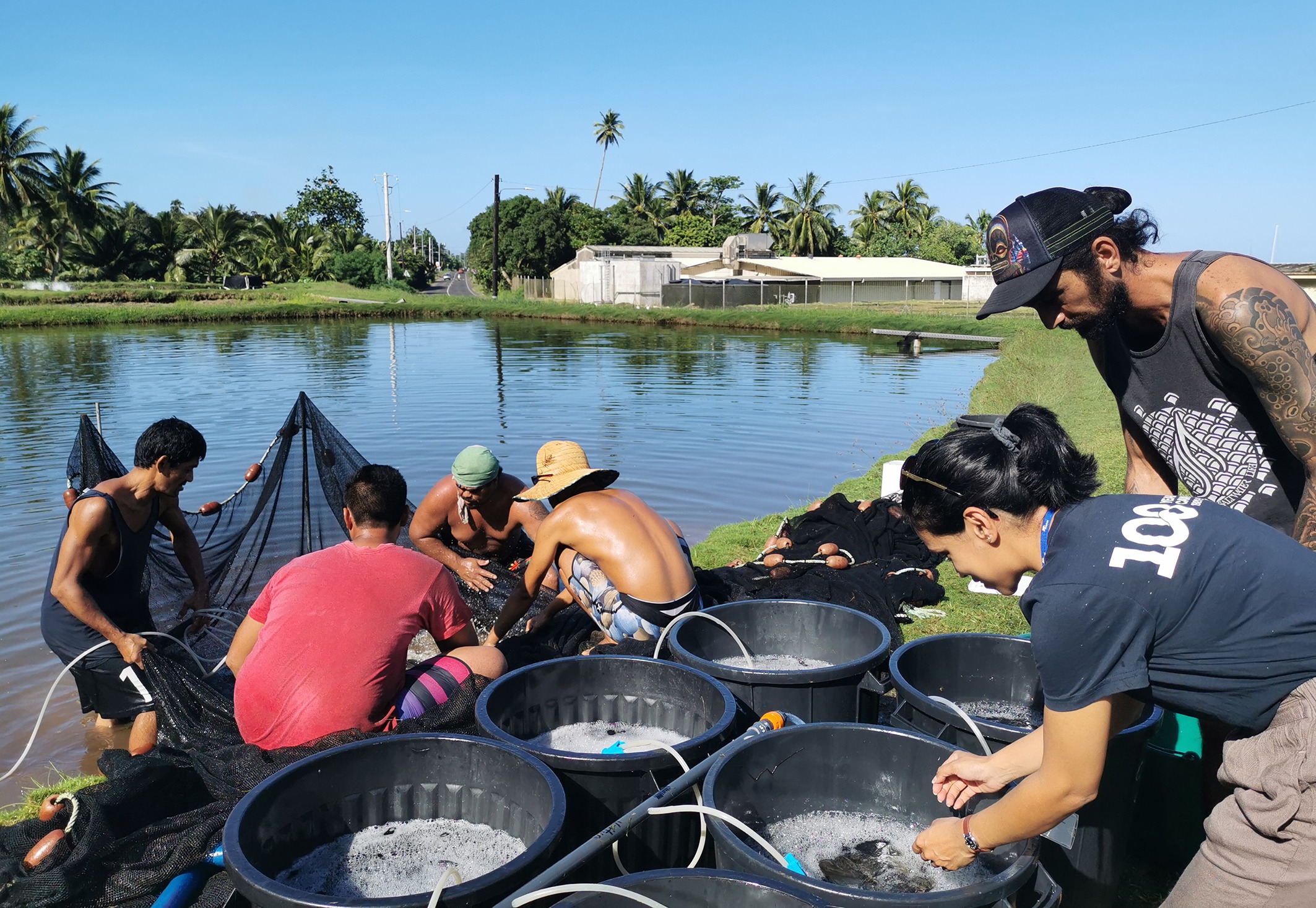
In Tahiti, Karthiga studied tenacibaculum-related challenges at a marine fish farm culturing Platax orbicularis (batfish), a species of cultural significance to Polynesians, which has been hampered by the disease over the last 10 years. As the only finfish aquaculture industry in the region and a culturally important species, supporting its development toward sustainable farming is crucial.
“I collaborated with Tahiti Fish Aquaculture, the local research institute (IFREMER), and the Direction des Ressources Marines (DRM) to investigate the disease, observe firsthand fish transfer methods and routine health checks, and participate in experimental trials to assess pathogenicity in juvenile batfish and observe their selective breeding program aimed at developing disease resistant stocks,” she said.
In response to disease outbreaks, farmers have started stocking larger fish from the nursery, which has significantly improved survival rates. However, a major challenge remains the logistical capacity and infrastructure to rear juvenile batfish to the optimal size in nursery environments, which limits consistent application of this strategy she explained.
“Importantly, I had the opportunity to present the findings from my New Zealand research to Tahiti’s Direction des Ressources Marines (DRM), who are actively involved in supporting aquaculture development and assisting with the batfish breeding program. By sharing these insights researchers and aquaculture professionals in Tahiti gained exposure to transferable tools and strategies that could be adapted to their own systems,” said Karthiga.
“Barramundi is a key species for Queensland, and is known to be susceptible to tenacibaculosis, so this research is very important from an Australian perspective. By examining tenacibaculosis across different geographic, environmental, and technological contexts, my educational and collaborative visits contribute to a more holistic understanding of this disease and sustainable farming,” she said.
“The knowledge gained through my work can help Queensland’s aquaculture industry grow in a more sustainable and resilient way,” she said.
According to Karthiga, the project has also strengthened international research ties between the countries involved and encouraged insights from salmon and batfish farming, including nursery management, early diagnosis, identifying disease causing agents and potential breeding for resistance, that could offer practical tools to help Queensland farmers reduce losses and improve fish health.
“If the disease does occur, having the right tools and knowledge ready means we can respond quickly, reduce its impact, and protect both the fish and the industry. The knowledge gained through this research is transferable to any fish species, making it highly valuable for a wide range of aquaculture systems across Queensland and beyond,” she concluded.