

Understanding what influences agricultural mechanisation adoption in Fiji
December 11, 2025
The Crawford Fund’s highly sought after Student Awards are one way we support and encourage the next generation of Australians into study, careers and volunteering in international agricultural research.
Our 2026 Student Awards are now open. Don’t miss this opportunity – apply now!
The awards are funded by our State and Territory Committees and made possible by organisations including ACIAR, international centres, Australian and overseas universities and NGOs who host our awardees.
Eighteen talented university students from around Australia were awarded our 2024 Student Awards. As part of this cohort, we would like to share the experience of Sarah Fulton from the University of Tasmania who travelled to Fiji to answer the research question: “How do agricultural stakeholders perceive the factors and interactions shaping the adoption of agricultural mechanisation?” as part of a DFAT-funded project led by CSIRO Agriculture and Food, Pacific resilient farming systems for climate change adaption and improved resource-use efficiency.
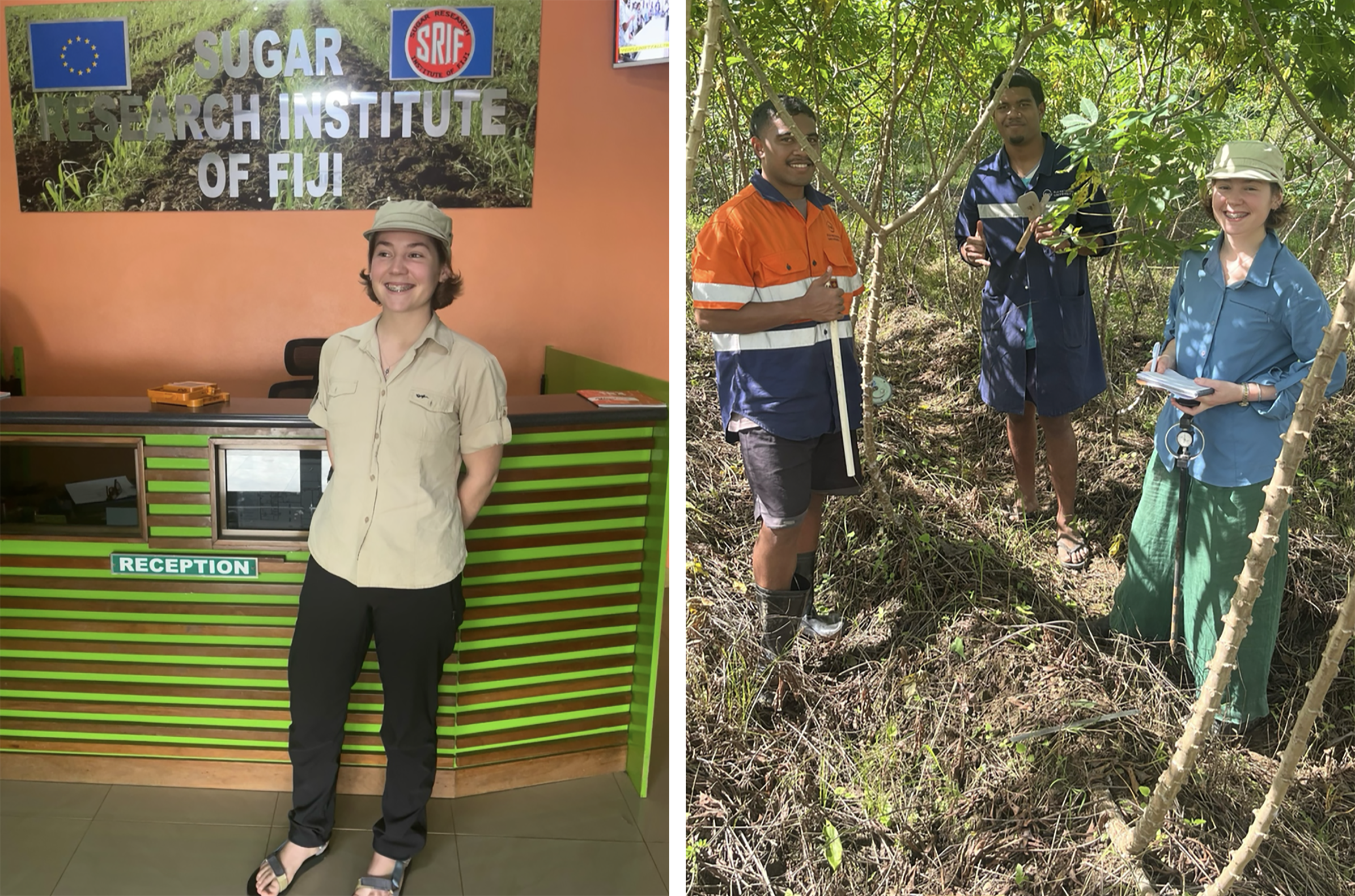
“Through the Crawford Fund Award, I examined how agricultural stakeholders in Fiji perceive the factors and interactions influencing the adoption of on-farm mechanisation, including small and heavy machinery,” said Sarah.
“In Fiji, worsening farm labour shortages and other challenges threaten food and income security. To address this, the Ministry of Agriculture has identified mechanisation as a key strategy for improving productivity and resilience. Despite significant government efforts to promote mechanisation, adoption remains low, with only 14.2% of farmers using machinery,” she said.
“Although numerous theories and tools exist to study and predict innovation adoption in agriculture, most rely on quantitative, linear approaches that have been increasingly critiqued for overlooking broader contextual influences, and few studies explore how these factors interact within an interconnected system,” said Sarah.
“To address this gap, I sought to answer the research question: “How do agricultural stakeholders in Fiji perceive the factors and interactions shaping the adoption of agricultural mechanisation?’,” she said.
Sarah conducted semi-structured interviews with ten key stakeholders (farmers, extension officers, machinery suppliers, development partners, and academics) using open-ended questions. Interview data was analysed through a systems thinking approach incorporating cognitive mapping, thematic coding, and causal loop diagrams.
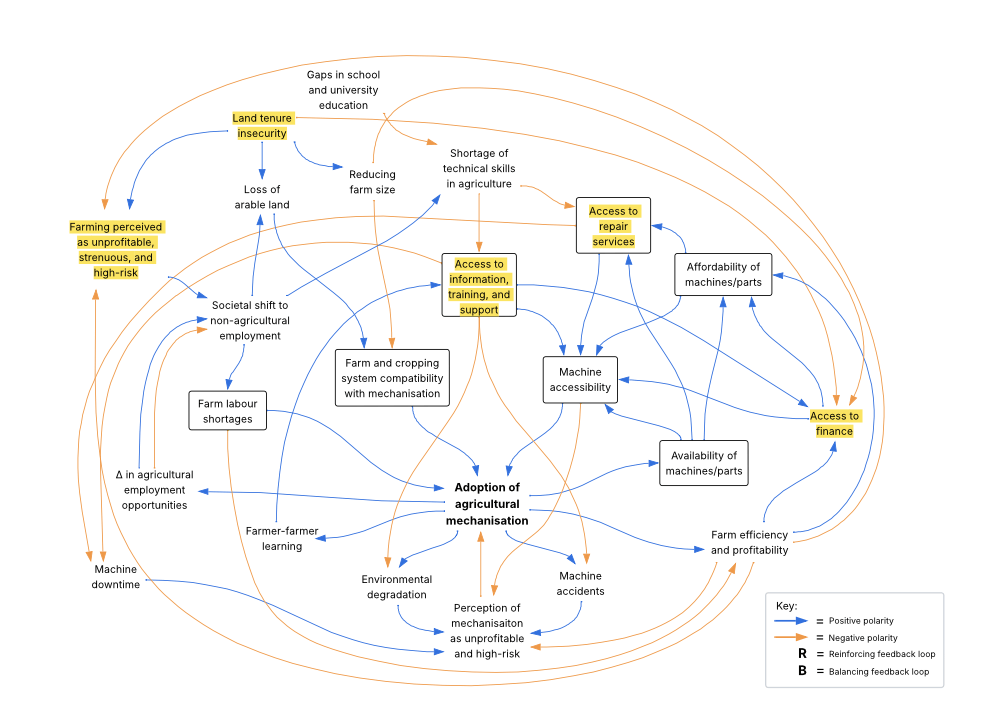
“Stakeholder perspectives revealed that labour shortages are the primary driver of mechanisation, reflecting a broader societal shift away from agriculture. Mechanisation is widely viewed as essential for improving efficiency, reducing costs, and sustaining production, yet adoption is constrained by small farm sizes, unsuitable terrain, and financing barriers,” she said.
Her research found that, although financing options exist, strict requirements and low financial literacy limit access, concentrating mechanisation among better-resourced farmers. Alternatives such as hire services and cooperatives provide options but face supply and governance challenges. Further, limited training, technical support, and repair services contribute to unsafe use, equipment downtime, and environmental impacts, weakening demand and discouraging suppliers.
“Key leverage points include improving perceptions of agriculture, reforming land tenure laws, and expanding access to finance, information, and repair services. Strengthening these areas would likely generate positive flow-on effects for mechanisation uptake and enhance the resilience of Fiji’s agricultural sector,” said Sarah.
According to Sarah, although this study was limited by its small sample size, its findings offer valuable insights into the systemic factors shaping mechanisation adoption and can inform future research and development initiatives in Fiji. Furthermore, the study demonstrates the value of qualitative systems thinking approaches for understanding complex challenges such as innovation uptake. These methods enable researchers to integrate diverse stakeholder perspectives, map system dynamics, identify leverage points, and anticipate unintended consequences which is critical for responsible innovation.
“The methodology applied here is relevant across contexts and could be practically utilised during the design phase of many research projects,” she concluded.