

Australian and Pakistani wheat researchers collaborate to improve global health
January 7, 2026
The Crawford Fund For Food Security’s Victorian Committee supported a training activity linking researchers from the University of Melbourne (UoM) and the University of Agriculture Faisalabad (UAF) in Pakistan to exchange critical knowledge and develop iron (Fe) and zinc (Zn) biofortified wheat to address the global problem of hidden hunger.
“This collaborative approach will combine extensive research expertise at both institutions and advance the global wheat biofortification effort for eventual deployment in Pakistan, a highly populated country where most women and children (>100 million people) suffer from Fe and Zn deficiencies and wheat provides 35% of daily calorie intake,” said Dr Jesse Beasley, Research Fellow at the University of Melbourne.
“Research achievements at each institution are high impact and complementary: UoM has developed an effective wheat Fe and Zn biofortification trait and UAF possesses technical know-how and capacity to cross this trait into locally adapted germplasm and deregulate GM biofortified crops. Furthermore, a GM biofortification trait will be particularly well received in Pakistan due to the focus on improving human nutrition,” he said.
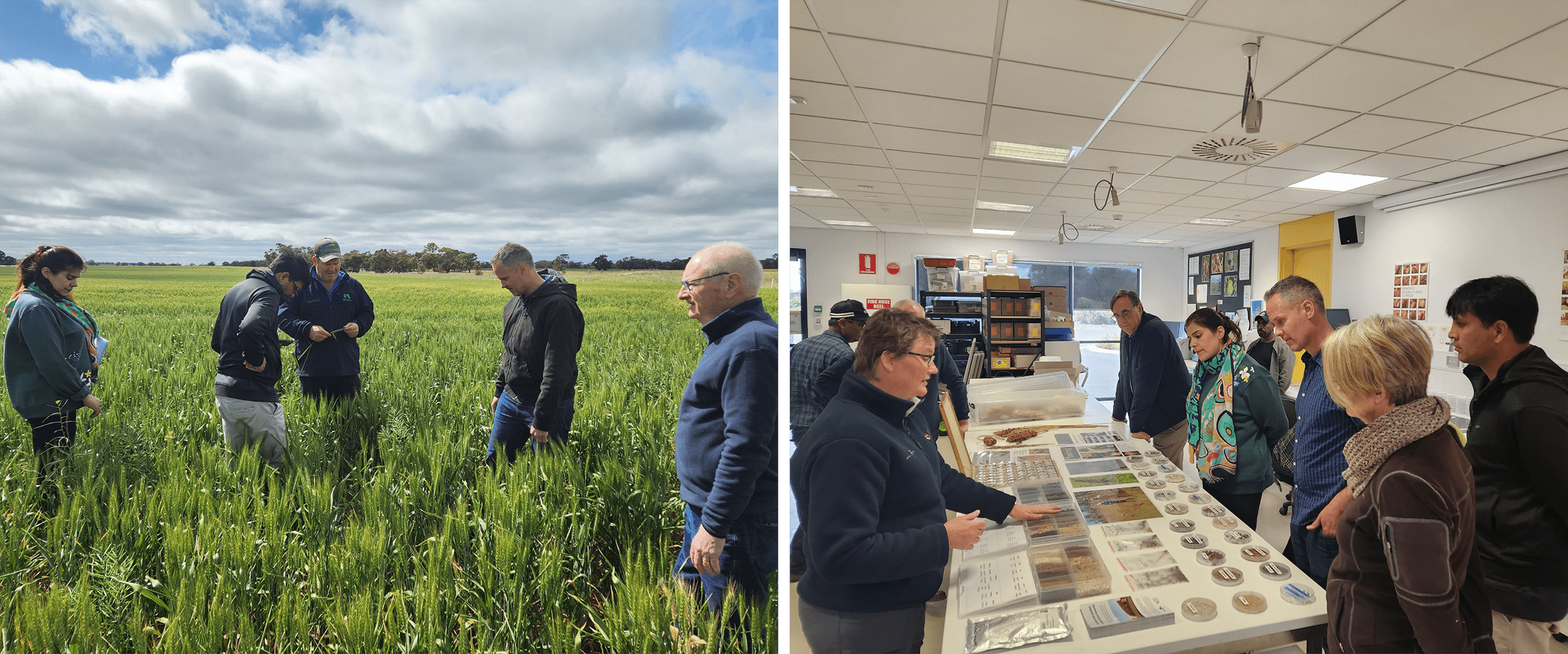
The training activity included two components. The first activity involved the training of researchers from UAF by expert researchers at the UoM in molecular techniques and confined field trial evaluation of GM crops. As a part of this activity, two UAF researchers (Dr Raheela Rehman and Dr Zaheer Ahmed) travelled to UoM for one week and participated in campus tours (both Parkville and Dookie campus), field- and lab-based research techniques, collaborative meetings, seminar presentations and tours of regional Victorian farms and the Australian Grains Genebank.
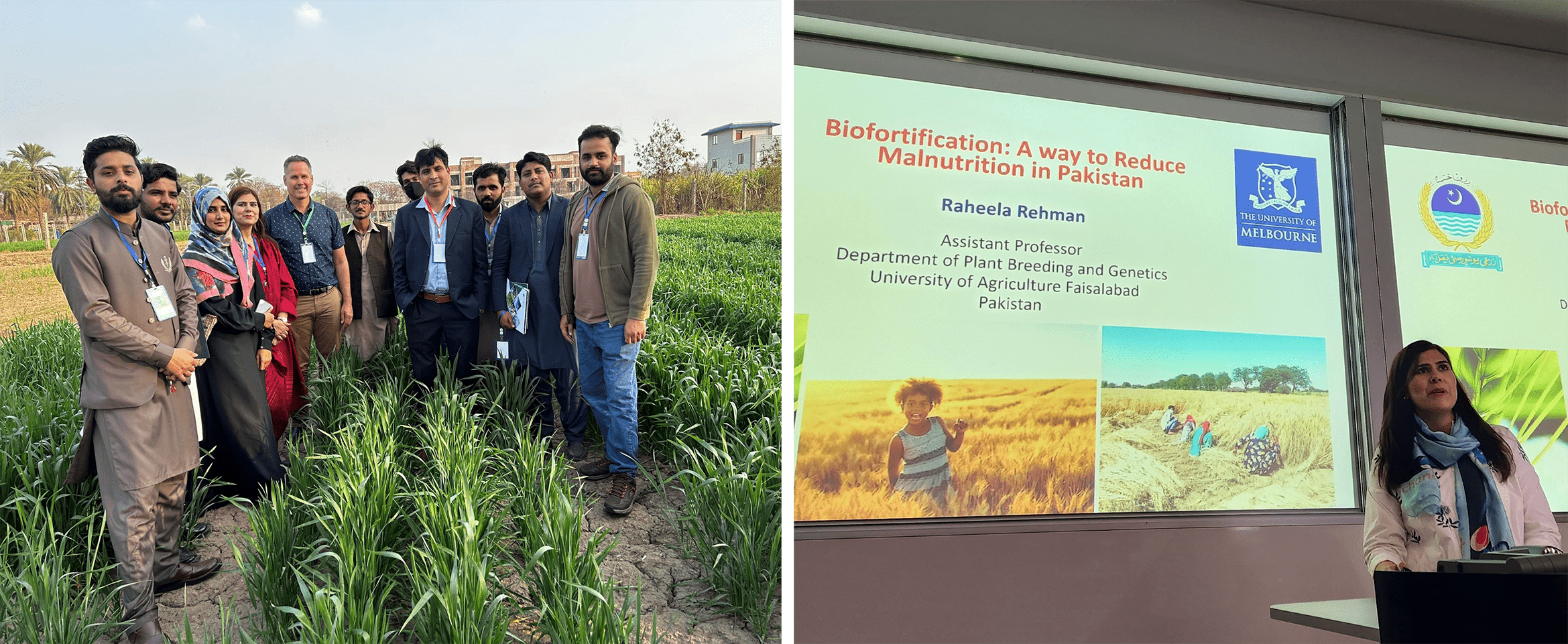
The second phase of the training activity involved training of UoM researchers by experts at UAF in germplasm selection, backcrossing, speed breeding and field evaluation. Professor Alex Johnson travelled to UAF for one week to give a plenary talk at an international conference (including a virtual presentation by Dr Beasley), visited the National Institute of Genomics and Advanced Biotechnology and participated in tours of labs, speed breeding facilities and field sites in Faisalabad and Islamabad.
“These activities were directly enabled through the support of the Crawford Fund for Food Security and have led to the formation of an ongoing research collaboration between UoM and UAF with a shared goal of developing biofortified wheat aimed at improving global health,” said Jesse.
“All participants in the training program were thrilled to travel overseas and experience the research environments and agricultural systems of both Australia and Pakistan. As both wheat research programs are well-resourced and advanced, the focus of the training program was on transfer of research skills and germplasm,” he concluded.