

Biosecurity and disease surveillance training in Timor-Leste
December 11, 2025
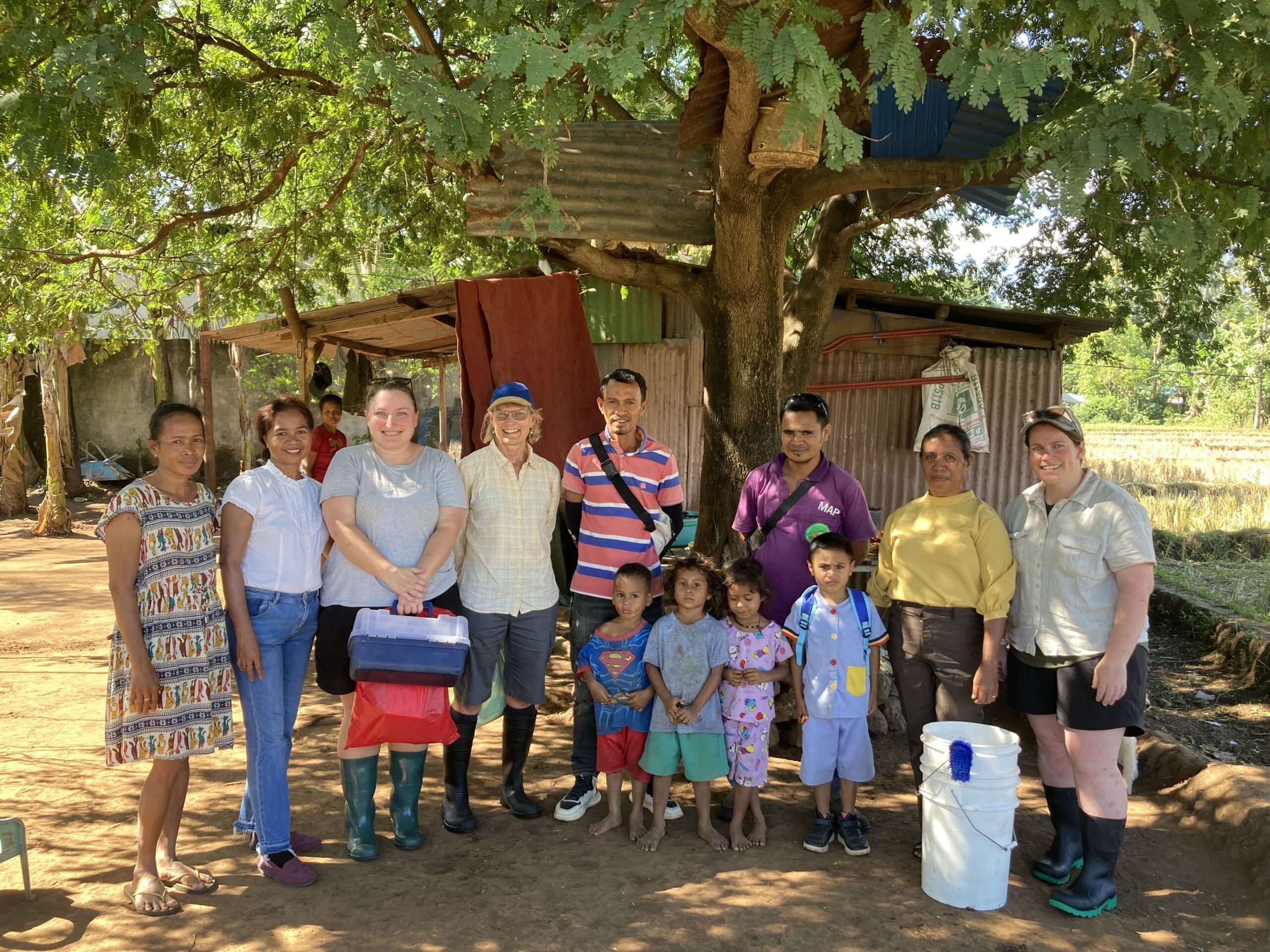
Earlier this year, the Victorian committee supported Dr Dianne Phillips, the Principal Veterinary Officer from Agriculture Victoria, who travelled to Atauro Island and Bobonaro in Timor-Leste to teach the triple B approach to biosecurity and disease surveillance to animal health technicians in the Timor-Leste Animal Health Service.
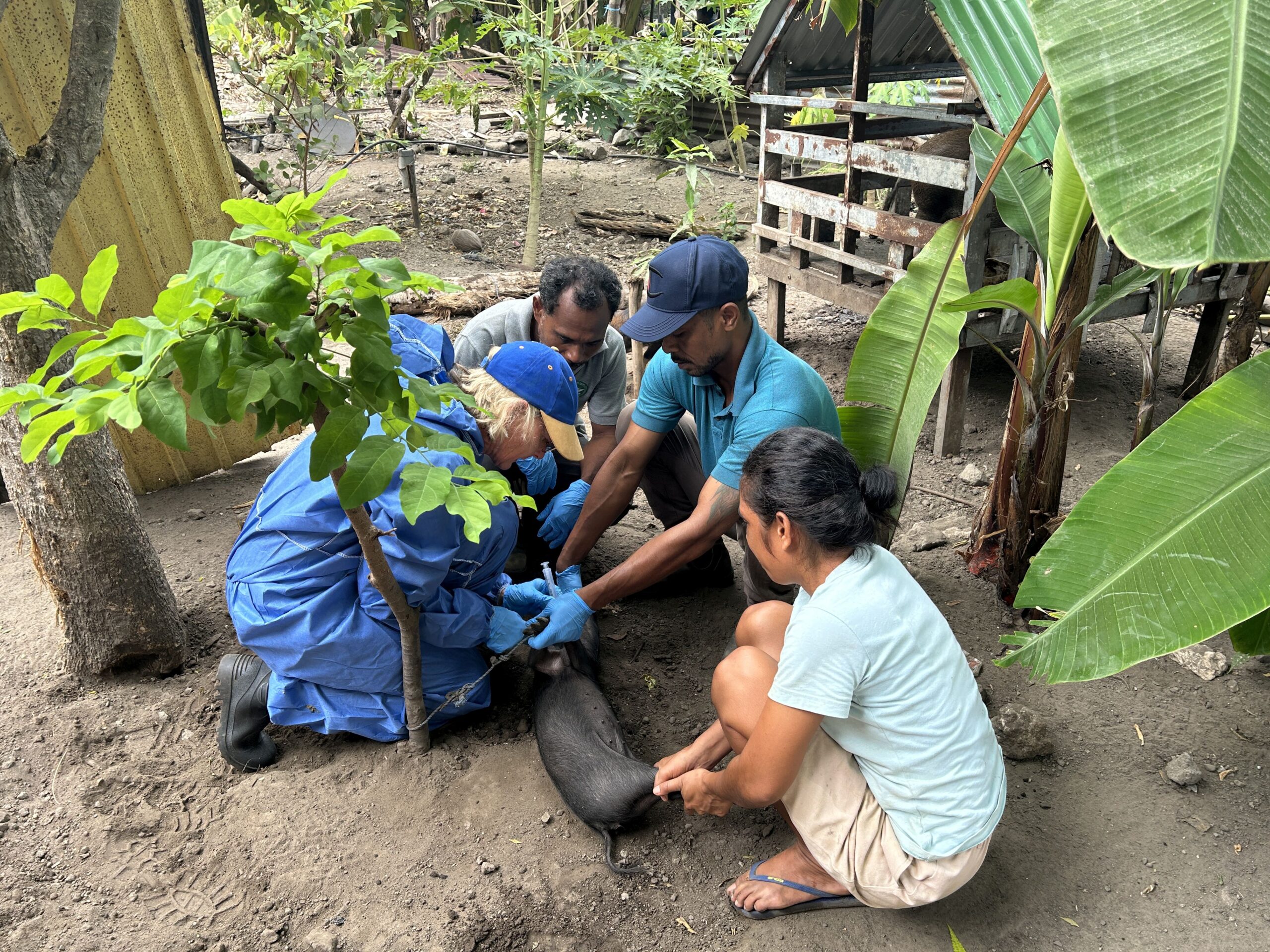
Using the Triple B approach – ‘Basic, Budget, Biosecurity’ – and readily accessible materials and concepts, Agriculture Victoria vets and animal technicians, demonstrated and taught local animal health technicians appropriate methods to safely enter and exit village livestock holdings in order to improve control of disease transmission. In addition, basic disease surveillance with sampling and testing using African Swine Fever as a model was trialled to assess the ability to reduce disease transmission at a village level.
“Six Timorese animal health technicians were trained in this protocol on Atauro Island and in Bobonaro. Preliminary surveillance sampling on Atauro Island in four villages was very well received and did not detect any current evidence of African Swine Fever (ASF) or Classical Swine Fever (CSF) infection,” said Dianne.
“Ongoing engagement with the village and additional surveillance activities (for village livestock and wild boar) will add confidence to disease freedom from ASF and assist in maintaining the health of village pigs on Atauro Island,” she said.
“Surveillance activities in Bobonaro detected a single outbreak of ASF. Early advice from local animal health technicians and use of the Triple B biosecurity approach minimised any disease transmission both within the pig holding and to other village pigs from this outbreak, demonstrating the value of surveillance for early detection and containment of ASF in village settings, and the timely advice we provided for the quarantine of affected livestock and thorough cleaning and disinfection of equipment and staff (hands and boots),” said Dianne.
“Expanding the training in Triple B biosecurity and sampling techniques, development of end-to-end communications for surveillance results and education of villagers in biosecurity measures to reduce the risk of disease introduction will assist in achieving better disease surveillance, control and where possible, proof of freedom in villages from important diseases like ASF,” she said.
“The Timor-Leste animal health technicians were very engaged in the training and adoption of the triple B biosecurity approach to disease surveillance,” she said.
According to Dianne, demonstration of sampling techniques resulted in a variable level of skill in obtaining a sample, partly reflecting pre-existing experience in this area and the frequency of opportunities to practise. Further practice and familiarisation with sample collection as part of passive and targeted disease surveillance will assist with this skill development, and additional training sessions will be important to develop these skills in more municipalities.
“On Atauro Island, village engagement with proof of freedom surveillance was high. Suko chefs were very keen for more engagement and training for their village pig owners about biosecurity measures to reduce the risk of disease introduction and surveillance for both early detection and to keep their villages free of ASF,” she said.
ASF sampling packs and instructions have been left onsite at suitable village locations for wild boar sample collection.
“Supporting better disease surveillance, control and working towards disease freedom means more livestock survive to the benefit of the villagers who own them and contribute to improved nutrition and prosperity in an environment where there are very few sources of external income,” said Dianne.
“Every effort makes a difference. Even in a two week field visit I could see the interest and engagement of the village chefs, village pig owners and animal health technicians in achieving these better outcomes and hope to continue to support and develop these skills and knowledge in the hope of achieving areas of disease freedom from important diseases like ASF,” she said.
“The Australian staff also benefitted significantly from being involved in this project, they practised their skills in pig restraint and sample collection and were able to examine a pig with ASF (a disease currently exotic to Australia). They also had the opportunity to examine disease transmission, surveillance and biosecurity options for control in environments where resources are very limited and/or in remote locations and understand the important first principles in each of these processes. These skills are important in Victoria and Australia where it may not always be possible to apply gold standards in the face of emergency animal disease outbreaks, such as when dealing with backyard livestock holders, feral animals and in remote locations,” she concluded.