

Building global partnerships to boost mango breeding
December 8, 2025
Last year, the Crawford Fund for Food Security’s QLD Committee announced four recipients of their International Engagement Awards which support targeted training and mentoring of overseas scientists and extension officers by experienced Queensland counterparts working on similar agricultural research challenges.
One of the successful projects was proposed by Dr Asjad Ali, from the Queensland Department of Primary Industries. The project titled, Capacity-building of researchers from the Philippines for efficient mango breeding and post-harvest fruit evaluations has now been completed. He delivered the report below.
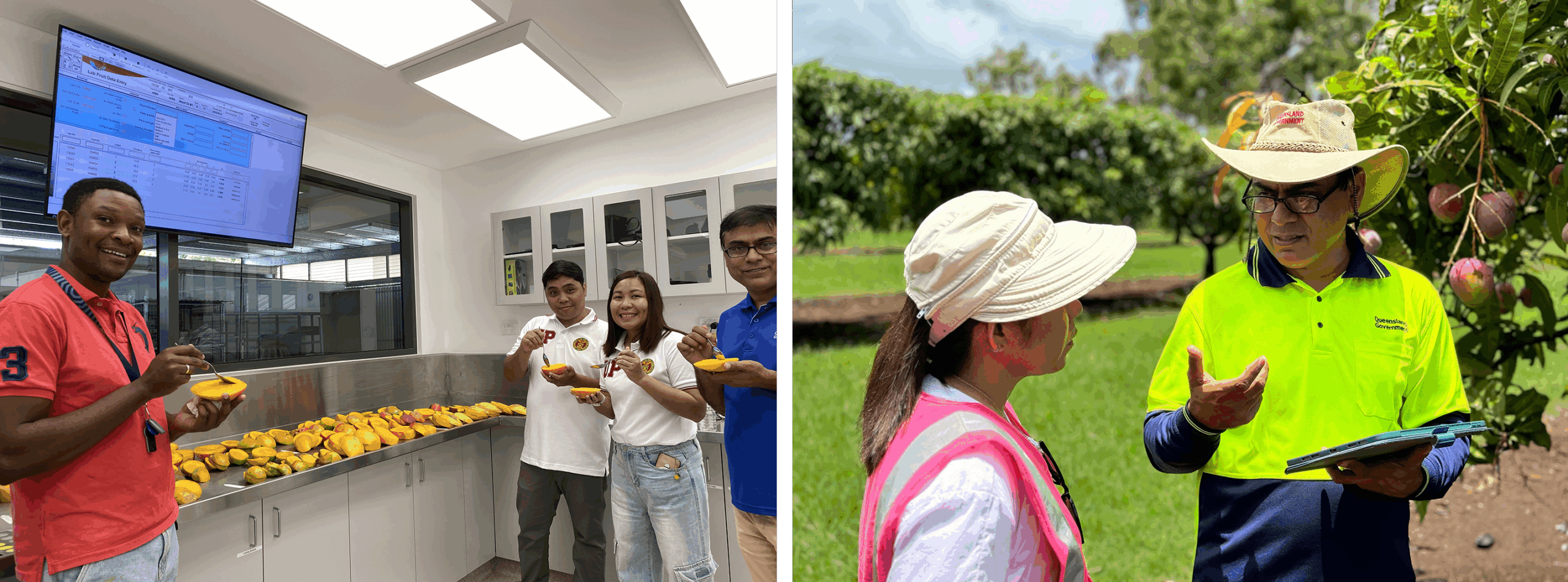
“This training initiative is strengthening mango breeding efforts in both the Philippines and Australia,” said Dr Ali, who led the hands-on technical training initiative for Filipino mango breeders from the University of the Philippines Los Baños (UPLB), and shared his expertise in modern selection techniques.
“The training aimed not only to enhance mango breeding capacity in the Philippines but also to generate valuable insights that could support a more climate resilient mango industry in Queensland. By improving breeders’ ability to select high-performing trees, the project contributes directly to better fruit quality, higher yields, and long-term crop sustainability,” he said.
This work reflects the Crawford Fund’s ongoing commitment to supporting agricultural advancement in partner countries while delivering benefits back home. Importantly, the collaboration offered two-way benefits.
“By engaging with mango-growing practices and genetic resources in the Philippines -including underutilised Mangifera species and innovative flowering induction techniques – Queensland researchers also gained valuable insights. These are already being tested in trials aimed at improving flowering control under variable Australian climate conditions,” he said.
“With Queensland’s mango industry valued at $96.8 million, advancements in breeding have the potential to directly support increased productivity, better fruit quality, and improved resilience to climate and biosecurity challenges, make a lasting impact on Australia’s vibrant fruit industry,” he said.
“This project highlights how knowledge exchange and global partnerships can deliver shared solutions for improvements in mango breeding and sustainable production,” he concluded.