

Consumer behaviour and food security in the Philippines
April 10, 2026
The Crawford Fund’s highly sought after Student Awards are one way we support and encourage the next generation of Australians into study, careers and volunteering in international agricultural research.
Our 2026 Student Awards are now open. Don’t miss this opportunity – apply now!
The awards are funded by our State and Territory Committees and made possible by organisations including ACIAR, international centres, Australian and overseas universities and NGOs who host our awardees.
We would like to share the experience of Jodie Bell from La Trobe University, who is part of our 2025 Student Award cohort, who travelled to the Philippines to undertake research into informal fruit and vegetable markets in Low middle Income countries (LMICs): Consumer behaviour and food security for low-income urban households. Her research is related to an Applied Horticultural Research (Australia)-funded research project entitled “FRESH: Fruit and vegetables for sustainable healthy diets Work Package 4 – Post-harvest and inclusive markets.”
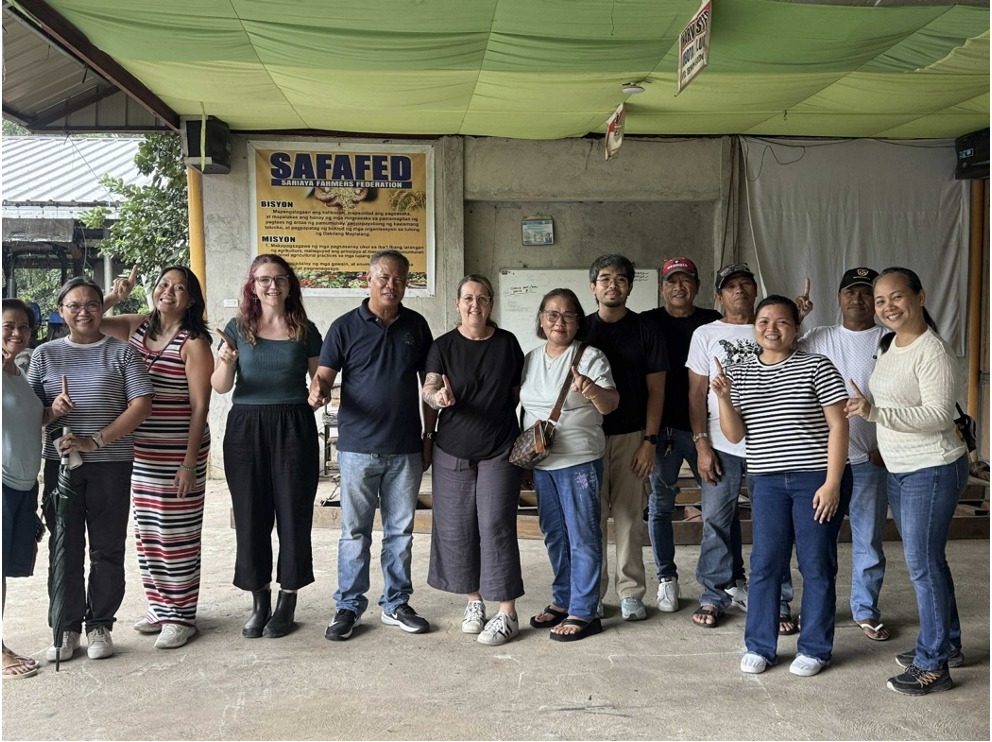
Jodie (4th from left) with staff from the Farmers association, LTU team and UPLB team.
“The Crawford Fund Student Award enabled me to travel to Southeast Asia to conduct honours research on consumer behaviour and food security within low- and middle-income countries. Specifically, it gave me the opportunity to conduct research in Sariaya, a major agricultural hub supplying fruit and vegetables to metropolitan Manila in the Philippines,” said Jodie.
“Further, I was able to expand my professional network and work with the team from the post-harvest research training centre (PHRTC) from the University of the Philippines Los Banos (UPLB),” she said.
Jodie’s research aimed to investigate issues of trust, credence, and challenges in Sariaya’s food system, ultimately contributing to a broader understanding of how local dynamics shape food security outcomes. Specifically, she wanted to:
- examine how trust, perception, and stakeholder participation influence the vegetable supply chain in Sariaya.
- identify and analyse the key challenges that hinder efficient farm to market linkages.
- assess how supply chain dynamics impact food availability, affordability, and nutrition outcomes.
Whilst in country Jodie was able to conduct key informant interviews with participants from a cross the food supply chain. With support form the team at UPLB, she was able to meet and interview as well as chat informally with farmers, contract farmers, farmer associations, market retailers, wholesalers, buyers, marketing officials, trading post officials, agricultural technicians and a community development officer.
“My research found that while freshness and price drive consumer choices, deeper issues like food safety, pesticide use, and quality produce rely on trust between suppliers and buyers. In Sariaya’s informal markets, trust and long-term relationships are essential for keeping the supply chain running, especially when facing challenges like oversupply, price fluctuations, climate impacts, and limited infrastructure,” she said.
“Spending time with the farmers and market vendors was an experience I will never forget, in particular talking with the farmers’ association about challenges as well as improvements they are making in buyer power and negotiations for improvement in farming practices was a privilege. The biggest challenge the farmers repeated is oversupply and extreme weather like typhoons, that can wipe out their crops,” said Jodie.
“Talking with agricultural technologists that are walking side-by-side with the farmers to improve yield, pesticide use and facilitate the gaps in farming practises, such as a planting calendar to avoid oversupply was enlightening. There was a passion from all involved on the importance of farming and the farmers themselves that they are providing healthy nutritious food for all their buyers,” she said.
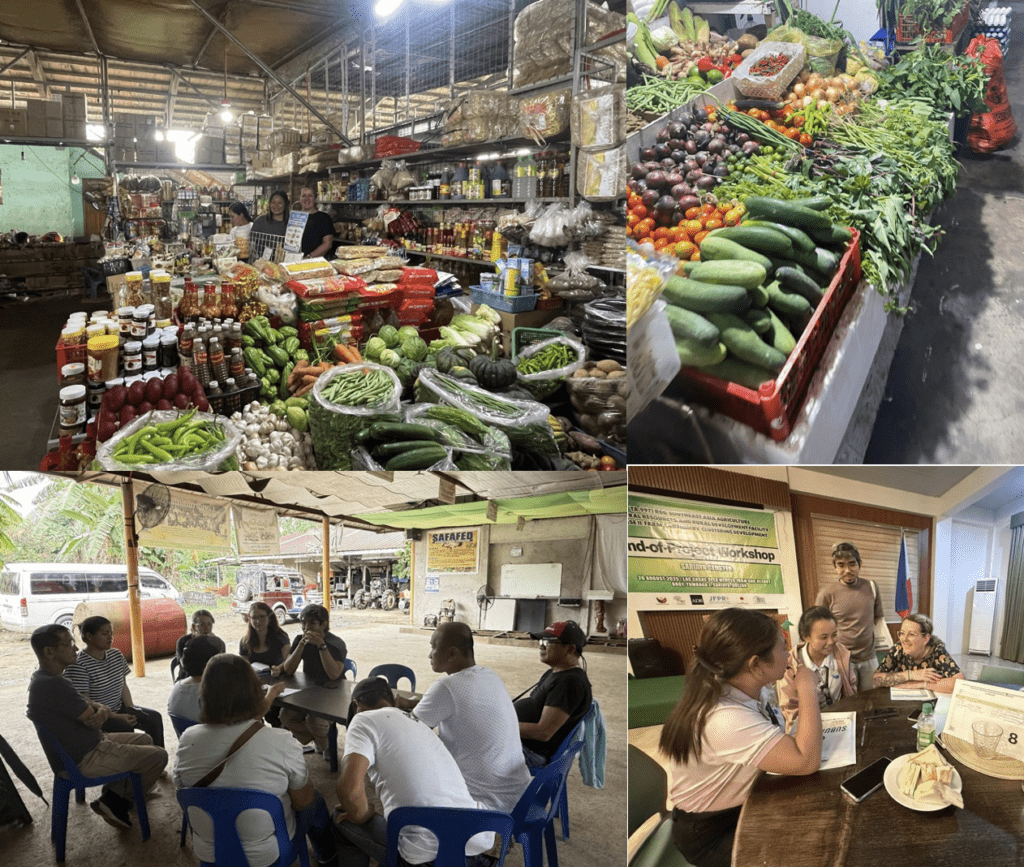
Clockwise: Jodie with a retailer at local trading post, a local market stall, interviewing agricultural technicians, and farmers from the local Farmers Association.
According to Jodie, the Philippine situation is not unique and aligns with the “informal and expanding” food system characterised by a reliance on staple foods, limited supermarket reach and perseverance of traditional markets alongside urban retail growth. This reflects a transition between rural traditional and formalised systems. While the food system is dominated by small-holder farmers, often family owned and run, it relies heavily on informal markets and faces persistent challenges including but not limited to high post-harvest losses, limited to non-existent cold-chain infrastructure and vulnerability to climate impacts and price volatility.
“Many participants believed that as long as food is a vegetable, it must be healthy, so they didn’t worry much about its actual nutritional value. But this assumption hides a serious problem, communities are facing what’s called the “triple burden of malnutrition,” said Jodie.
This is illustrated by the fact that:
- 33 per cent of children under five are stunted (too short for their age due to poor nutrition)
- 30 per cent of adults are overweight or obese
- 20 per cent of children lack essential vitamins and minerals (known as “hidden hunger”)
- Around 67 per cent of households don’t get enough calories each day
“On top of this, the way people shop makes things worse. Most buying decisions are based on price and how food looks, not on how nutritious it is. This leads to diets that lack variety and important nutrients,” she said.
“I believe that future studies should look more closely at how trust and nutrition are connected. People often assume vegetables are automatically nutritious, but they don’t think much about whether their diets are balanced or rich in vitamins. This may be because researchers haven’t asked enough about the consumer’s perspective,” said Jodie.
“By listening to farmers, sellers, and community leaders, my research showed how trust relationships and the “suki” system (where buyers and sellers build loyalty over time) influence shopping habits and market stability. However, ongoing problems—like weak farm-to-market connections and limited crop variety—make it hard for local markets to fully support better nutrition and food security,” she concluded.