

Engineering the future orchard: advanced genome editing techniques for superior crop varieties
October 16, 2025
The Crawford Fund’s Queensland Committee has again partnered with the TropAg International Agriculture Conference to assist 10 young researchers from developing countries attend and present their science at this international conference which will be held in Brisbane from 11-13 November 2025.
Successful conference scholarship candidates must be an Honours or Postgraduate student from a developing country who is currently studying at a Queensland tertiary institute, and they must be an author or co-author on a submitted TropAg 2025 Conference abstract.
In the lead-up to the conference we will be publishing short blog posts written by the young researchers about their work. Here is another blog.
By Juel Datta, Queensland University of Technology
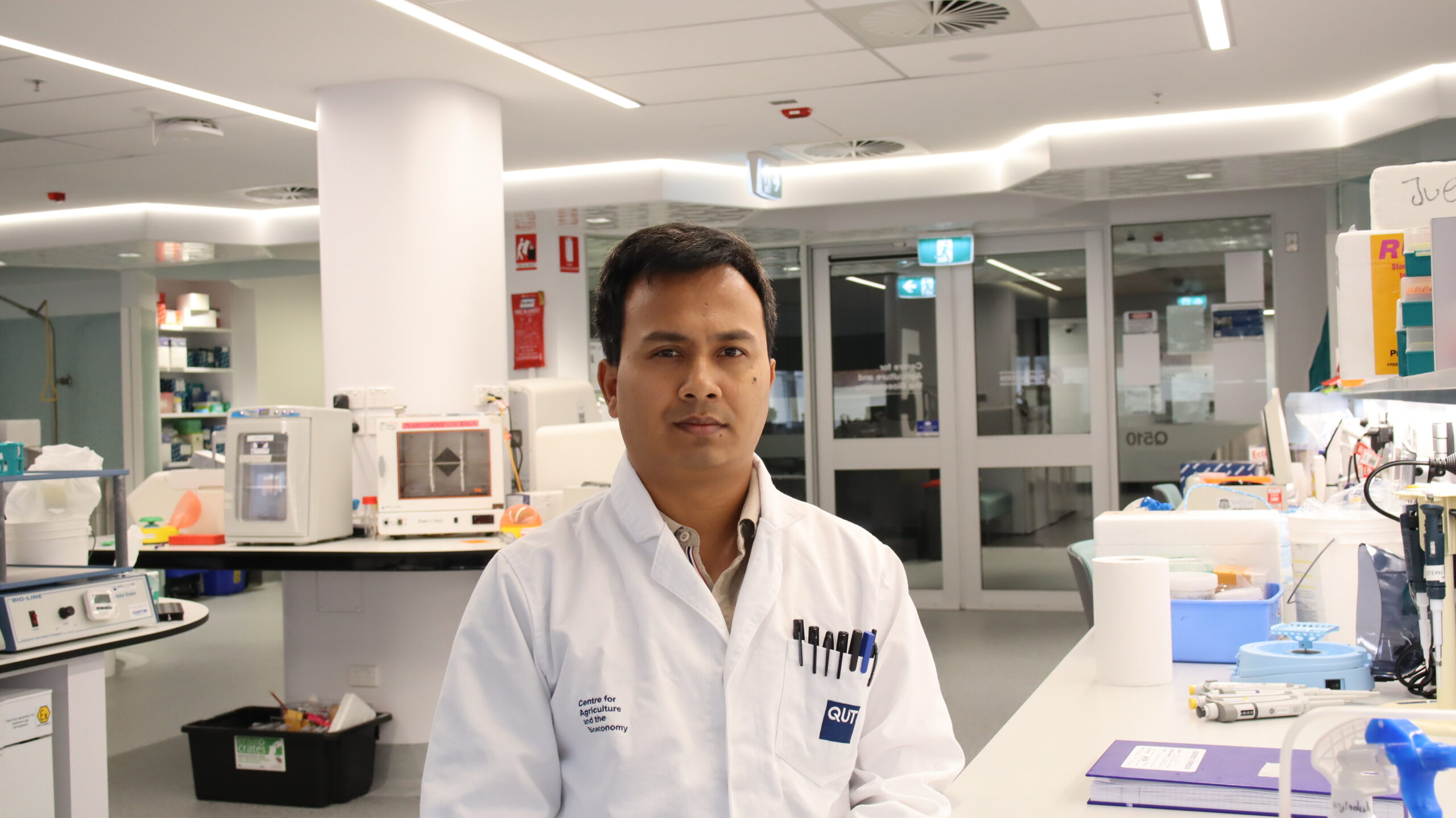
As a PhD researcher at Queensland University of Technology (QUT), I focused on advancing citrus breeding through cutting-edge genome editing technologies. While Australia’s citrus industry continues to grow, citrus species such as sweet orange and mandarin faces challenges due to its extended juvenile period lasting 5 to 15 years before first flowering, which significantly slows breeding progress and varietal improvement.
Among the molecular factors that regulate the extended juvenile period, the TFL1 gene plays a key role in supressing flowering. Scientists have shown that modifying TFL1 in other plant species can speed up flowering. Taking this approach in my PhD research, using CRISPR to edit TFL1 in sweet orange and to explore how genetic change could shorten the breeding cycles and benefit the industry.
While CRISPR-based genome editing has been used in citrus species before, most of them have focused on disease resistance. My PhD project taking a new direction applying this precise editing tool to a fundamental developmental trait. Using an Agrobacterium-mediated transformation system, I delivered a CRISPR construct targeting TFL1 into sweet orange epicotyls. Along the way, I encountered significant challenges, particularly in plant regeneration that required me to optimise the plant tissue culture system, which enabled me to generate transgenic citrus plants within just four months after transformation. Subsequent analyses including PCR amplification and Sanger Sequencing confirmed successful editing of the TFL1 gene in regenerated sweet orange plants.
This research, supported by the Genetics for Next Generation Orchards project funded by Hort Innovation, represent a key step towards overcoming a major bottleneck in citrus breeding. Support from Crawford Fund enables me to share insights of my PhD research with the global scientific community that can translate them into real-world impact.