

Exploring opportunities for live seafood holding, transport and marketing in Timor Leste
July 8, 2025
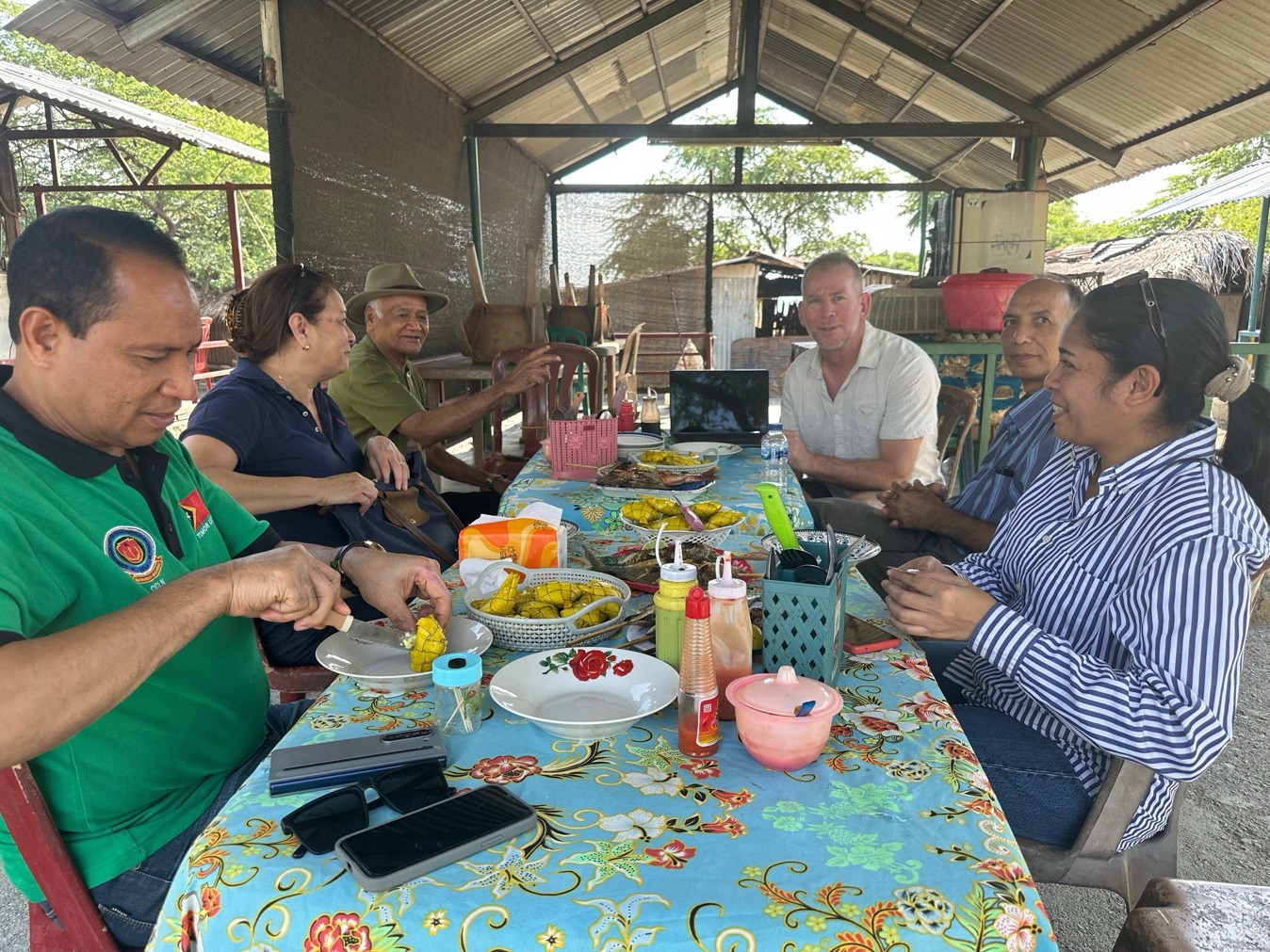
The Crawford Fund Tasmania Committee recently funded a scoping project investigating the development of seafood handling practices in Timor-Leste to improve the livelihoods of local communities through better use of their local seafood resources.
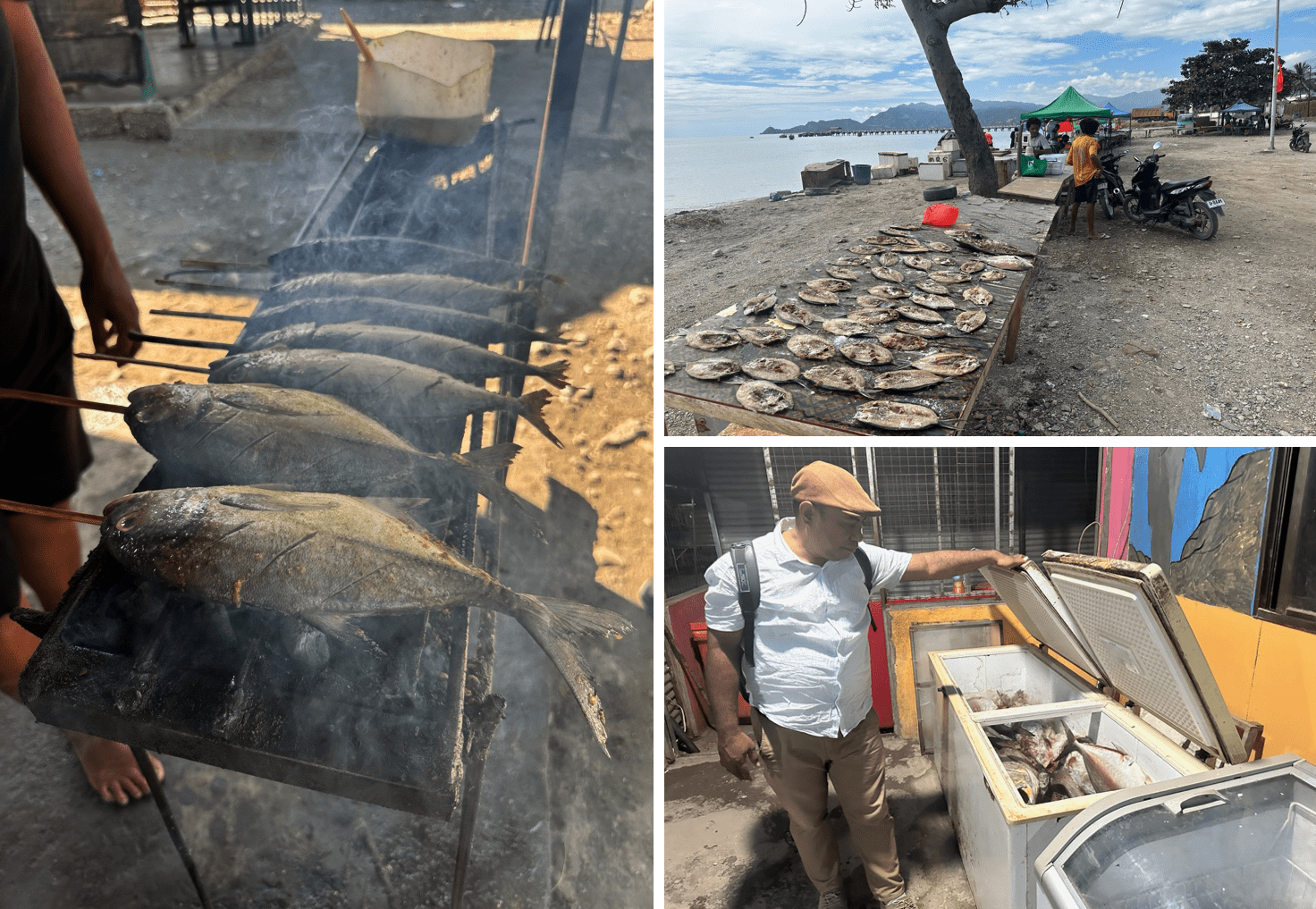
“It’s important to understand that traditional local seafood consumption involves selling unrefrigerated, ungutted whole fish via street vendors. This is usually barbequed at home and is a delicious product that can’t be improved if the fish has just been caught,” said Professor Caleb Gardner from The Institute for Marine and Antarctic Studies (IMAS) at the University of Tasmania, who led the project.
“The opportunity examined in this project is for moving some of this Timorese fish production into other markets such as hotels and restaurants where other product forms such as fillets and or freezing is required. This will create financial benefit to coastal communities,” he explained.
“Timor Leste has outstanding, delicious fish. Unfortunately, the quality of fresh fish can be poor in local supply chains. Basic seafood preservation methods are sometimes used, such as salted and then sun-dried or simply frozen whole but the product is far from optimal and local fishers can’t access higher value markets,” explained Caleb.
“We’re providing training and support to locals so that they can achieve higher prices by preparing products suitable for high-end restaurants and hotels. These buyers currently mainly rely on imported seafood because of concerns about the handling of locally produced seafood,” he said.
“This project had a special emphasis on rock lobster due to their high value as a test species. It builds on previous investigations and was prompted by recent progress with community leaders in the island community of Atauro,” he said.
The project involved exploring three main opportunities:
- Meeting retail supply chains in the Dili region. Meetings were held with retailers in Villa Verde in Dili as these retailers buy fish from fishers and provide consumers with one of the few options to buy frozen fish. The fish are just frozen whole in chest freezers, not gutted or cleaned, and there is a filleting service but very rough. These firms are enthusiastic about training and improving operations with help from expertise from Australia including allowing use of their facilities. Meetings were also held with the facility management of the retail centre “Dili Plaza” to explore costs for retail outlets – similar to those already there promoting regional agricultural products with government support.
- Atauro island is approximately one hour from from Dili by boat, and it is an important source of seafood, and because crocodiles are largely absent, diving can occur for high value product like rock lobster. Meetings were held on the island with council members, the municipal president, and the operator of a tourist facility to discuss access to sites for live holding facilities and logistics such as electricity and a potential site for promotion and training.
- Organised through the office of the Timor Leste Ambassador to Australia, a meeting in the south coast village of Same was held to explore collaboration with the Timorese Veteran’s Association who manage a large investment fund and support regional activities to the benefit of their members. This meeting included a site visit to a proposed lobster farm which we concluded was not viable due to transport logistics and wave exposure. But the main benefit was for building these links for more feasible projects elsewhere, with discussions focused on converting the abandoned port at Com for low-tech caged lobster production as per methods in Vietnam.
“The opportunity for improving livelihoods through improved seafood production has been well established in Timor Leste in previous visits and also by other agencies. The purpose of this trip was to move beyond the theoretical to establish some clear simple ways of moving forwards. The project was highly successful against this measure with number of pragmatic approaches now confirmed,” said Caleb.
Confirmed approaches to continue momentum for this project are:
- Training for frozen seafood handling techniques. There are a number of issues limiting the local fishing community from maximising the value of their catch, including freezing techniques. There is opportunity for travel support and training at collaborator seafood processing facilities in Australia with the retailers in Villa Verde agreeing to host extension support for scaling this up in Timor Leste.
- The establishment of live holding facilities. Currently, high quality seafood such as lobster is sold dead and at only 20 per cent of the potential value it would have if it could be stored and sold live. Sites for holding tanks in Atauro and Dili have been established, and access to 24-hour electricity supply has now been resolved on Atauro island. A retail outlet site has been established in Dili through agricultural promotion store. Skills training or short placement opportunities in Australia at a live holding facility collaborator are needed, as well as training on packing and live transport for export markets. There are flight links to Guangzhow China now running weekly.
“These all require further action but are plausible and simple with solid support from local collaborators,” concluded Caleb.