

Understanding the freshwater fisheries value chain and food systems change framework in the Lower Mekong Basin
November 14, 2025
The Crawford Fund’s highly sought after Student Awards are one way we support and encourage the next generation of Australians into study, careers and volunteering in international agricultural research.
Our 2026 Student Awards will be launched later this month!
The awards are funded by our State and Territory Committees and made possible by organisations including ACIAR, international centres, Australian and overseas universities and NGOs who host our awardees.
Eighteen talented university students from around Australia were awarded our 2024 Student Awards. As part of this cohort, we would like to share the experience of Yen Le from the Australian National University who travelled to Vietnam and Laos to investigate the freshwater fisheries value chain in the Lower Mekong Basin, in the context of a food systems change framework as part of an ACIAR project (Project ID: CS/2020/209).
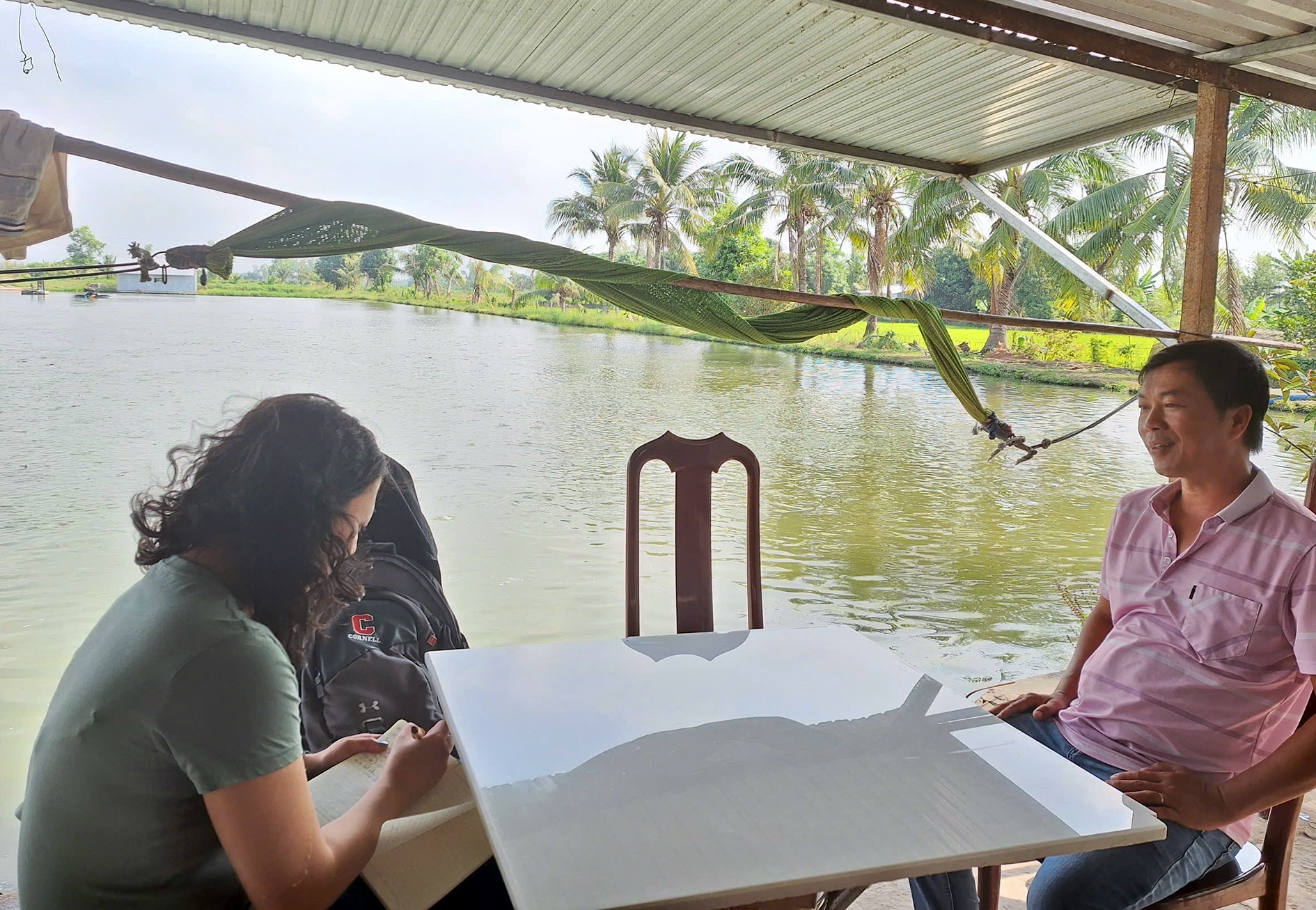
“My research aims to understand the freshwater fisheries value chain, wider food system drivers and outcomes. Through field observations, in-depth interviews with fishers, aquaculture farmers, local government officials, and researchers, and discussions with local project teams, I gained valuable insights regarding the freshwater fisheries value chain and food systems change framework,” said Yen.
According to Yen, her research insights highlight the sustainability challenges and opportunities in the freshwater fisheries sector in Vietnam and Laos and the key differences between the two countries in the freshwater fisheries value chain, particularly in market and technology development, fisheries management, the impact of climate change, and the potential for policy-driven improvements.
The Lower Mekong Basin is a vital region for freshwater fishery production. Over recent decades, traditional wild-catch fisheries in Laos and Vietnam have declined, largely due to the construction of hydropower dams, population growth, and supportive policies. This decline has driven the expansion of aquaculture, bringing economic benefits—particularly for Vietnam, which is now one of the world’s largest exporters of farmed catfish. However, as aquaculture continues to expand and reshape associated food systems, concerns about its environmental impacts, shifts in dietary patterns, changes in protein sources, and social inequities for communities dependent on wild-catch fisheries are emerging.
“The aim of my study is to understand the contemporary food system based on freshwater fisheries value chains and identify the key challenges affecting freshwater fishers in the Lower Mekong Basin, with a focus on Vietnam and Laos,” she said.
“As part of my university studies, I conducted a desk review which identified the need to rethink the current freshwater fishery food system in the Mekong. I argued that the growth of intensive aquaculture should not come at the expense of biodiversity or the social well-being of rural communities, as these elements are vital for sustainable food systems,” she said.
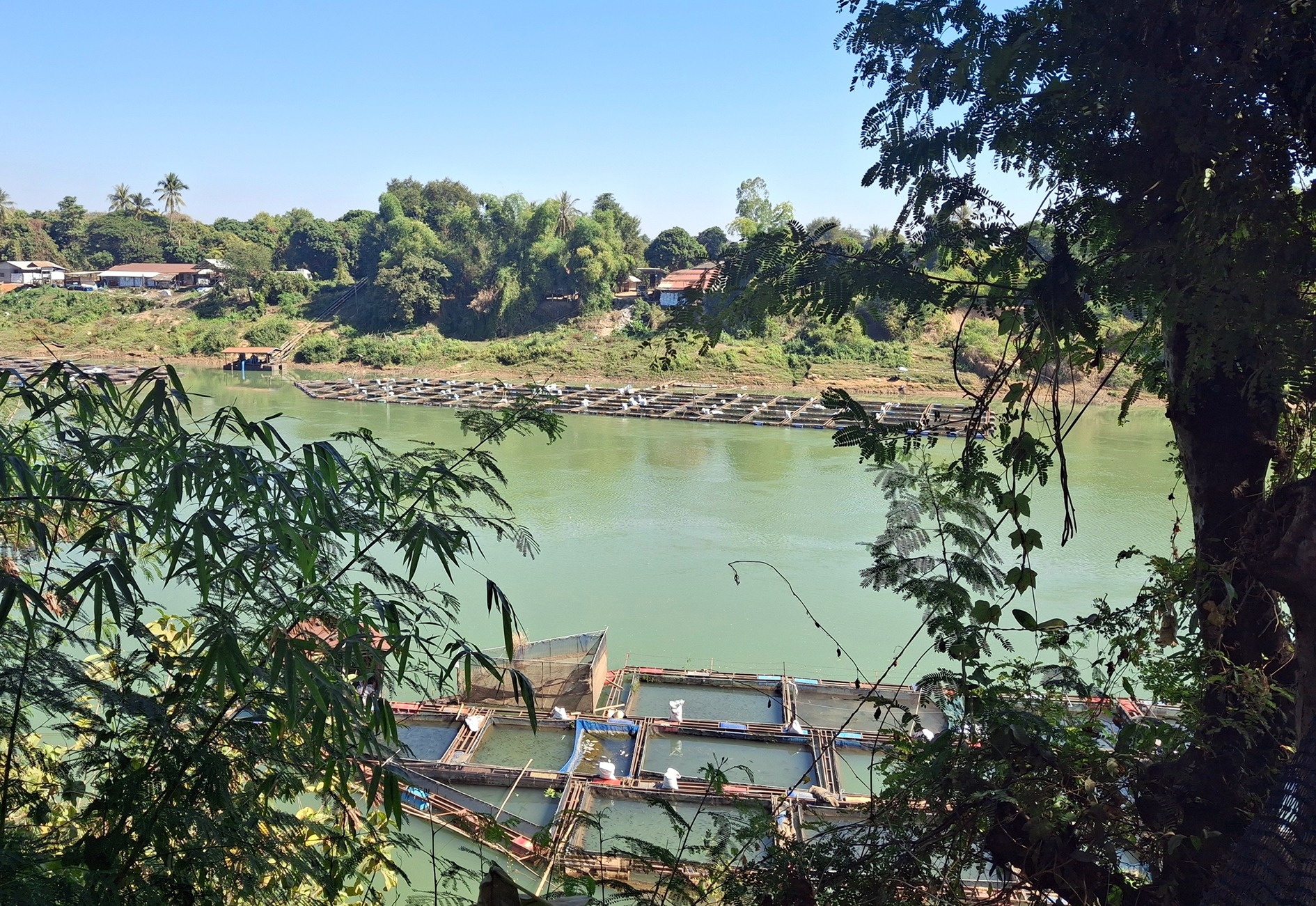
With the support of the Crawford Fund Award, Yen conducted field research to validate her findings from the literature review and gain firsthand insights from local experts and fishing communities in the Lower Mekong River Basin. The visit allowed her to bridge academic research with real-world perspectives and refine her understanding of the broader context.
During her visit, Yen:
- Presented her literature review and discussed food system changes with project teams at An Giang University in Vietnam and the National University of Laos, which helped her refine her research focus and align it with local realities.
- Conducted field observations at fish farms, and wild-catch fishing areas in both countries to document production methods, infrastructure conditions, and sustainability challenges.
- Interviewed a wild-catch fisher and an aquaculture farmer in each country to understand their daily operations, economic challenges, and environmental concerns.
- Interviewed researchers and government officials to assess policy frameworks affecting the fisheries sector.
“I also had the opportunity to engage with an ACIAR project team (CS/2020/209 – Food Loss in the Pangasius Catfish Value Chain of the Mekong River Basin) to gain insights into their field activities, particularly their assessment of food loss in local catfish value chains. This provided valuable cross-country comparative insights between Vietnam and Laos,” she said.
“While my desk review identified key drivers, interviews with local stakeholders revealed variation in their impact of these drivers and the challenges each faced. For example, I initially viewed deforestation as a likely consequence of the shift from wild-caught to farmed fish, but stakeholders emphasised more pressing concerns, such as declining wild fish stocks and changing livelihood options,” she said.
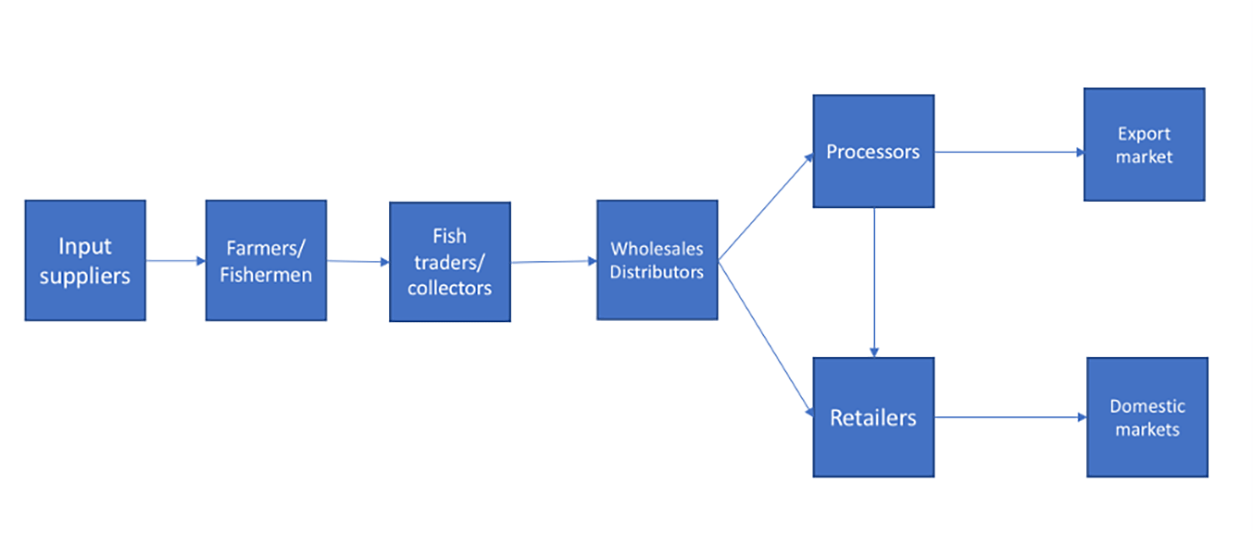
Through field visits, Yen explored key differences in the freshwater fisheries value chains of Vietnam and Laos. Fish farming now meets a growing share of global demand, driven by population growth, food security, and sustainability goals. Initially, she created a single value chain diagram for aquaculture in both countries, but her fieldwork revealed significant differences among corporate, medium-scale and small-scale, fish farmers in both countries.
The initial value chain diagram based on Yen’s desk review is presented in Figure 1:
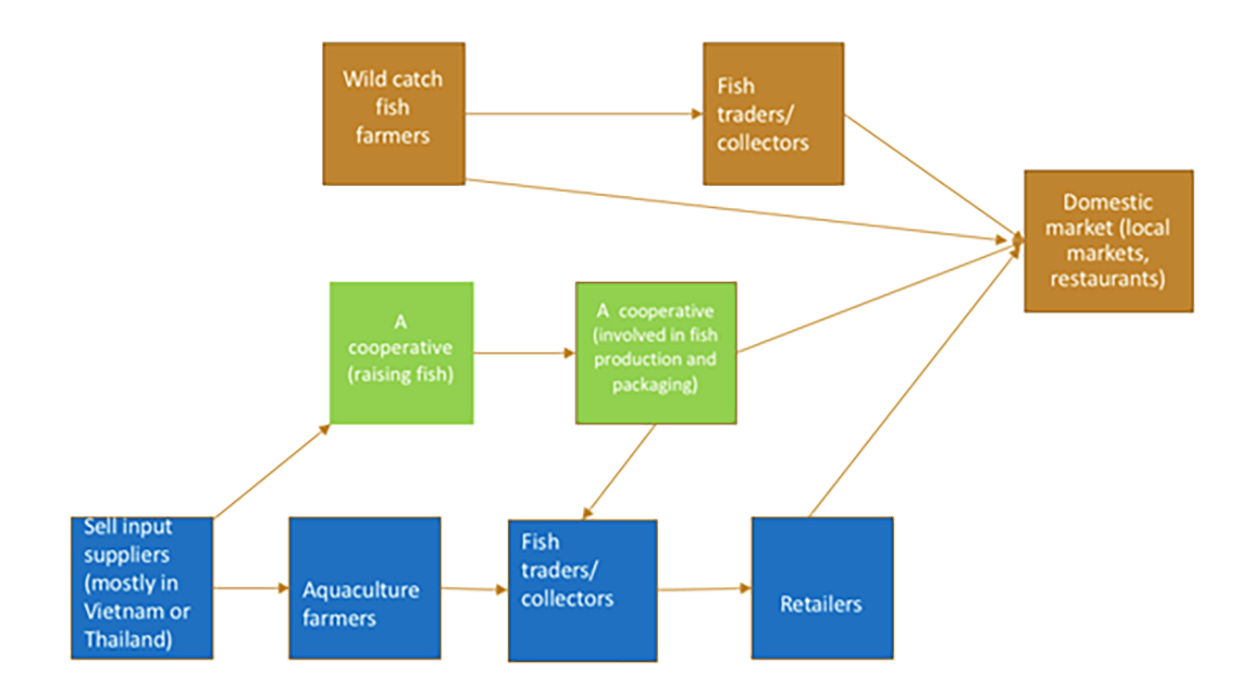
Based on her field work, Yen modified this representation to describe separate value chains in each of Laos and Vietnam. In Laos, she identified three types of freshwater fisheries value chains: wild-caught fish (yellow), small aquaculture farms (blue), and cooperatives (green), as shown in Figure 2.
In Vietnam, she identified two main value chains. Companies highlighted in brown in Fig. 3 below can manage the entire value chain or collect from local farmers. In contrast, the local fish farmer value chain, shown in blue, is longer and depends on the stage of raising fish until they are sold.
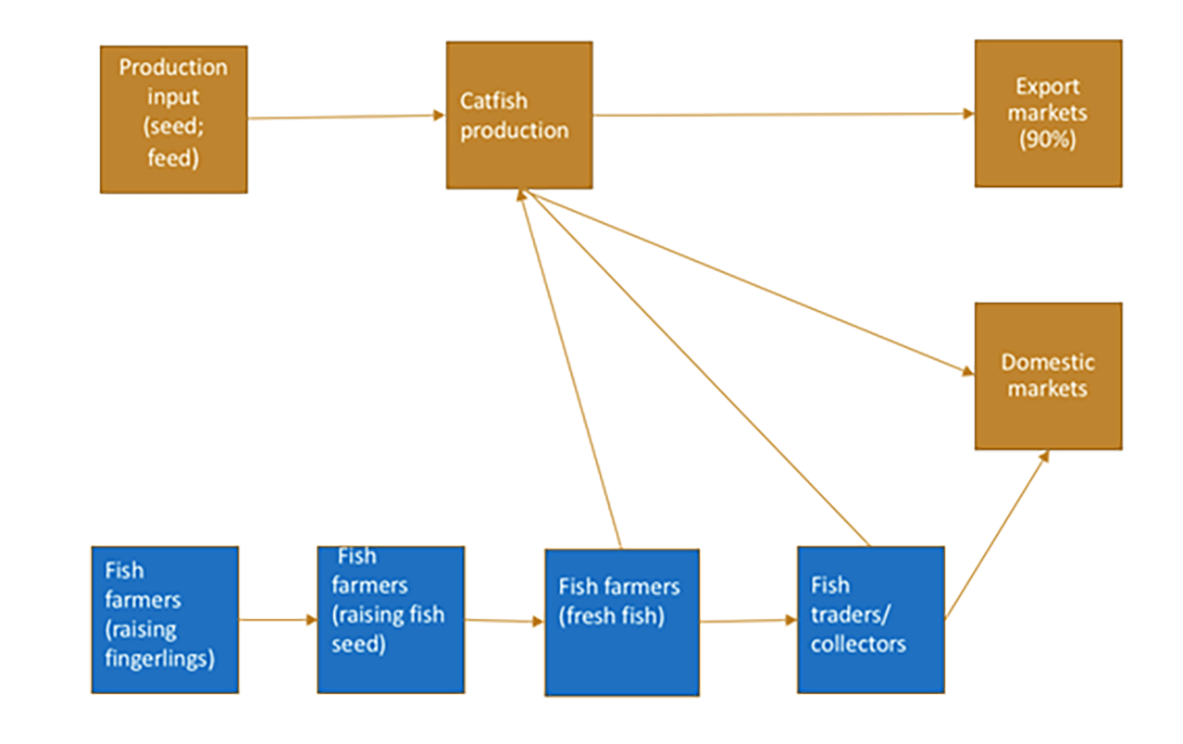
Yen found that Vietnam’s aquaculture industry is highly developed, with catfish farming prioritised for export (around 90% of production). In contrast, Laos primarily farms tilapia, and only a small volume of catfish, and its industry remains in the early stages, selling only to domestic markets. While Vietnam has large companies managing the entire value chain, Laos just has a single small cooperative of three families. Laos still relies on wild fishing, particularly among poor communities living along the Mekong River. However, in Vietnam, local stakeholders reported that wild-caught fish are less common than those from aquaculture.
“This trip provided valuable insights into how international research projects, such as those funded by ACIAR, are designed and implemented in three Lower Mekong countries. This project has promoted knowledge exchange between Australian scientists and local scientists to better understand global issues such as food insecurity and food safety through research on food loss in the fisheries value chain,” she said.
“This experience has not only enriched my academic understanding but also equipped me with practical knowledge and expanded my professional network, which will inform my future work in environmental sustainability and development. I am deeply grateful for the Crawford Fund and those who hosted me in making this learning journey so meaningful and impactful,” she concluded.