

Gender, networks, and knowledge: advancing sustainable soil and land management in Philippine vegetable farming, Trop Ag
October 31, 2025
The Crawford Fund’s Queensland Committee has again partnered with the TropAg International Agriculture Conference to assist 10 young researchers from developing countries attend and present their science at this international conference which will be held in Brisbane from 11-13 November 2025.
Successful conference scholarship candidates must be an Honours or Postgraduate student from a developing country who is currently studying at a Queensland tertiary institute, and they must be an author or co-author on a submitted TropAg 2025 Conference abstract.
In the lead-up to the conference we will be publishing short blog posts written by the young researchers about their work. Here is the latest blog.
By Bongat Hadasha, Griffith University, Visayas State University
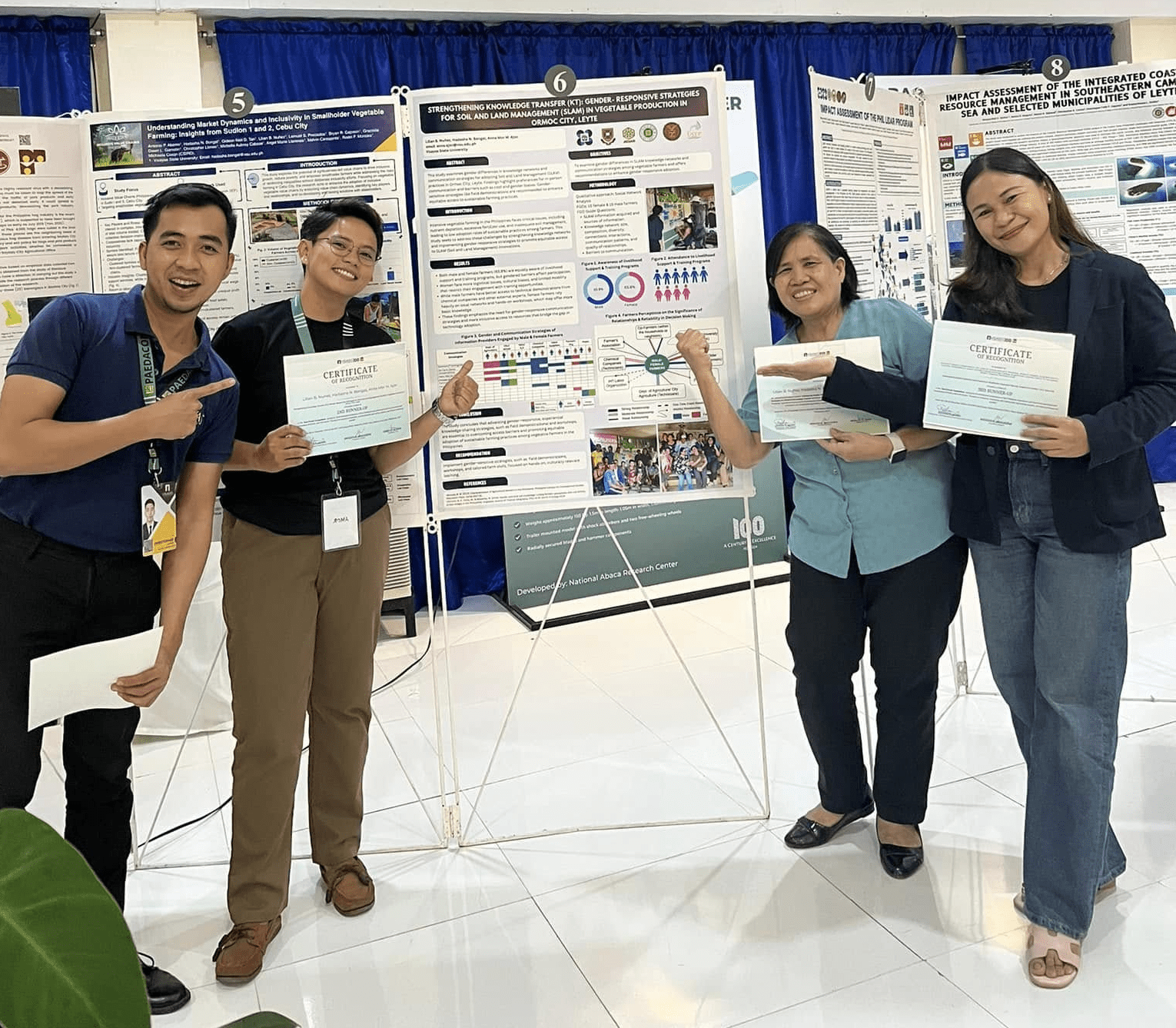
Filipino women farmers are a vital yet often underrecognized force behind vegetable production in regions such as Leyte, Benguet, and Misamis Oriental, Philippines. They invest long hours in labour-intensive tasks including planting, weeding, and detailed farm record- keeping. However, findings from the research project “Development of a Gender-Responsive Knowledge Transfer Pathway (KTP)” revealed that traditional gender norms have rendered existing agricultural knowledge systems largely gender-insensitive.
Although women actively participate in training sessions, the knowledge they gain is frequently perceived as less credible or valuable. In many cases, their adoption of new soil and crop management practices depends on validation from their husbands. This deeply rooted patriarchal dynamic limits women’s agency and slows the uptake of essential agricultural technologies within their communities.
Led by Dr. Lilian B. Nuñez and Gomathy Palaniappan, completed in May 2025, the project addressed these challenges through extensive field surveys and focus group discussions across the three regions. The study found that women farmers often demonstrated greater openness, resilience, and willingness to adopt new techniques compared to their male counterparts. In response, the project developed an innovative Gender-Responsive KTP designed to promote inclusivity and equity by tailoring knowledge delivery to local gender dynamics. A key recommendation is to strengthen the capacity of women farmers to serve as confident, competent, and trusted providers of agricultural knowledge and skills.
This approach has already shaped policy recommendations that are currently under review by local governments, laying the groundwork for a strategic shift toward a more equitable and efficient future for sustainable agriculture in the Philippines.
Paper authors: Gomathy Palaniappan 1, Lilian B. Nunez 2, Hadasha N. Bongat 2, Anna Mor M. Ajoc 2, Nelda R. Gonzaga3, Laya Lou C. Montecalvo3, Marianne R. De Luna4, Farawyn E. Sarmiento4
1- University of Queensland, 2- Visayas State University, 3- University of the Philippines Los Baños, Los Baños, Laguna, 4- University of Science and Technology of Southern Philippines