

“An energising experience, enlightening me to the on-the-ground workings of international research,” – inaugural Henzell Awardee Amelia Ross
February 19, 2026
In 2024, the Crawford Fund’s NextGen suite of activities to encourage the next generation of Australians in agriculture for development welcomed a much-appreciated new component – the Henzell Awards.
With the support of Ted and Frances Henzell and family, these national awards fund brief visits by Australian undergraduate students to international agricultural research projects in targeted tropical developing countries.
Our 2026 Henzell Awards are now open, don’t miss it – apply now!
Four talented university students from the University of Adelaide, the University of Sydney, and the University of Tasmania were awarded our inaugural Henzell Awards. They were selected from a competitive pool of applicants from around the country, all keen to get on the ground experience in agriculture for development early in their studies.
As part of this cohort, we would like to share the experience of Amelia Ross from the University of Sydney who travelled to Ethiopia as part of an ongoing ACIAR project accelerating genetic gain in wheat through hybrid breeding in Bangladesh, Ethiopia and Pakistan.
By Amelia Ross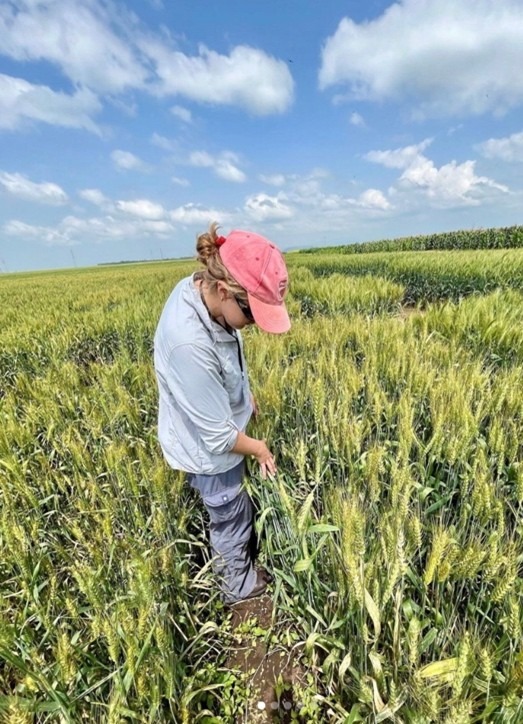
My short foray to Ethiopia to gain insight into the work of international agricultural researchers was an edifying and rewarding experience beyond anything I could have imagined. Alongside Professor Richard Trethowan from the University of Sydney and my fellow Henzell awardee, Shreya Nidumolu of the University of Adelaide, we crossed the Indian Ocean to the historic and reverential Ethiopia — a land rich in history and origins.
Travelling to such a consequential region for the purpose of such important work felt fitting, discovering in parallel the history and culture of this beautiful country and its people, alongside the significance of the wheat breeding project and of plant breeding efforts in general.
Wheat breeding holds a revered place among agricultural work – the most ‘noble’ of professions, as we were oft reminded by our kind-hearted companion from ICARDA – lest we forget the contributions of significant breeders such as Norman Borlaug and the Green Revolution they inspired. Ethiopia, the second-largest country by population on the African continent and the tenth-largest globally, urgently needs a stable food system.
The country’s agricultural system is based primarily on subsistence and small-scale farming, with large areas dedicated to productive maize, as well as more traditional – and perhaps less land-efficient – crops such as tef. In recent years, the agriculture sector has contributed around 35% of the nation’s GDP and employs an estimated 65% of the population. Wheat has only recently become the largest land use in the country, and holds significant potential within the nation. Improving the average yield, which the wheat breeding program aims to achieve, will result in a substantial increase in the wheat available nationally.
The focus on in-country capacity building was something that stood out immensely on this trip. It is not enough to simply establish a wheat breeding program; success also depends on access to markets, storage, transport, licensing, and production capacity, as was discussed on this trip with a wide foray of local stakeholders and international partners. This interconnection of all aspects of the process, and the necessity of clear communication among the working actors, has left a strong impression on me. Global collaboration between institutions underpins agricultural research for the benefit of all, and it was wonderful to be encapsulated in such a diverse team from across the globe, working together for a mutual goal. It is only through this open and willing exchange of knowledge, ideas, germplasm, and protocols that all countries can secure their own food independence, rather than being subject to the whims of political cycles.
This trip proved to be an energising experience, enlightening me to the on-the-ground workings of international research. It was an exceptional privilege to be welcomed so warmly by both the USYD and Ethiopian teams. I hope to return to this beautiful country again and to further explore the exciting path of international research in agriculture, contributing to global food security.
I am extremely grateful to the project team, particularly Professor Trethowan and ICARDA lead breeder Dr Tadesse, who graciously talked Shreya and me through the project, never rebuffing our tedious questions or basic observations, and for many hours of delightful conversation and global problem-solving.
I would also like to extend my gratitude to the Crawford Fund for supporting this trip, and of course to the Henzell family for their generous financial support and vision in creating this award. I am deeply honoured to be among the inaugural cohort of Henzell Awardees, and I hope this award continues to support the curiosities and dreams of many other early-career researchers.