

“This award deeply affirmed my aspiration to work in global agricultural development” – inaugural Henzell Awardee Ava Christie
December 4, 2025
In 2024, the Crawford Fund’s NextGen suite of activities to encourage the next generation of Australians in agriculture for development welcomed a much-appreciated new component – the Henzell Awards.
With the support of Ted and Frances Henzell and family, these national awards fund brief visits by Australian undergraduate students to international agricultural research projects in targeted tropical developing countries.
Our 2026 Henzell Awards are now open, don’t miss it – apply now!
Four talented university students from the University of Adelaide, the University of Sydney, and the University of Tasmania were awarded our inaugural Henzell Awards. They were selected from a competitive pool of applicants from around the country, all keen to get on the ground experience in agriculture for development early in their studies.
As part of this cohort, we would like to share the experience of Ava Christie from the University of Tasmania who travelled to Vietnam as part of an ongoing and long-term forestry research and training collaboration supported by the Crawford Fund Tasmania Committee.
By Ava Christie
The Crawford Fund Henzell Award provided me with the invaluable opportunity to visit the ongoing results of Acacia forestry research in Vietnam. I accompanied Drs Chris Harwood and Rod Griffin in travelling to the Institute of Forest Tree Improvement and Biotechnology (IFTIB) in Hanoi. I was able to observe how long-term international partnerships translate scientific innovation into real outcomes for communities.
As a University of Tasmania student majoring in plant science and sustainable agriculture, I found this experience both beneficial for my understanding of genetics and experimental design, and deeply motivating for my future study and career goals.
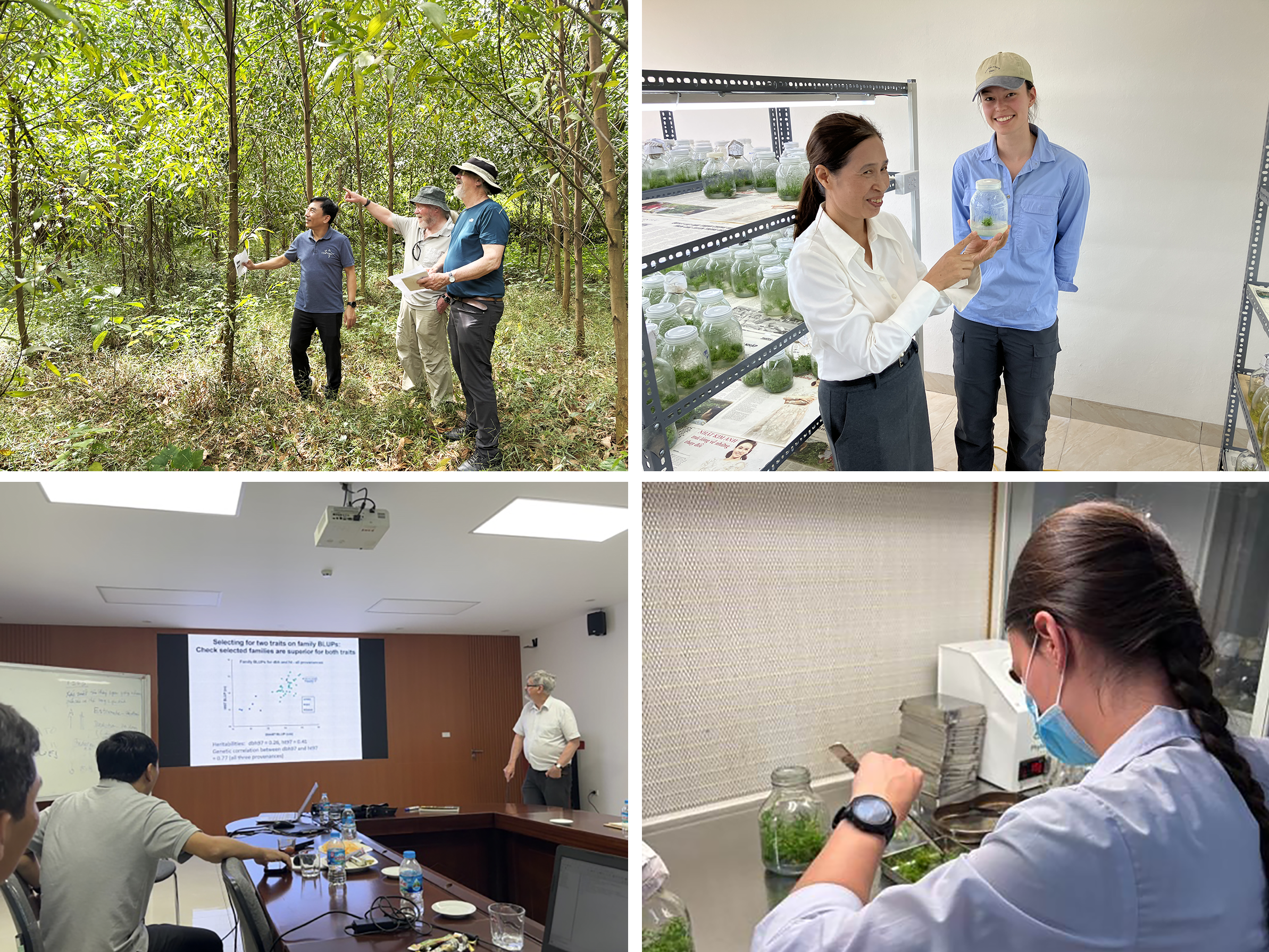
A key lesson from this experience was how valuable long-term collaboration is in facilitating progress. In this case, decades of collaboration between Vietnamese and Australian institutions has spurred the Acacia industry in Vietnam through ongoing breeding and genetic improvement. My perspective on research and development has broadened significantly thanks to this experience. I can now see scientific and technical advancement as a portion of a wider system that interacts with local livelihoods, long-term plantation resilience (in the face of typhoons, pests and other risks) and the small-holder growers largely responsible for the success of the industry’s production.
The first week of the visit allowed me to observe discussions and seminars around data analysis, tree pathology, and polyploid breeding management. The second week provided work experience in flow cytometry, tissue culture, agar media preparation and nursery maintenance that I know will be invaluable in my career. This combination was instrumental in my ability to connect theoretical science and production goals with the technical skills required to create true change.
A recent survey by IFTIB of nurseries across Phu Tho and Hue provinces found there was a lack of access to timely information on new Acacia hybrids. Designing a prototype mobile-accessible database of available clones felt like a small opportunity to contribute meaningfully that I was so fortunate to have received. This also reinforced my desire to work at the interface between science and implementation to ensure that research effectively reaches those it is intended to benefit.
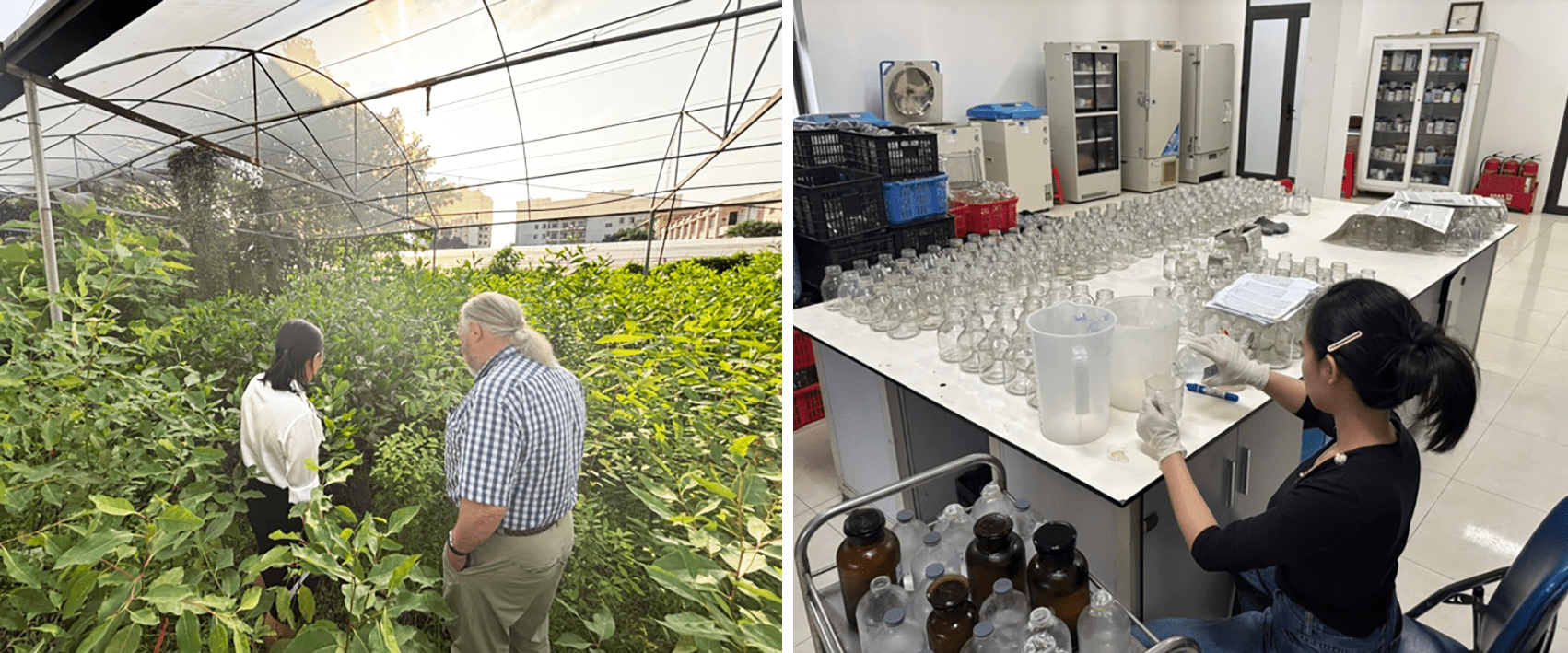
Ultimately, this experience furthered my enthusiasm to learn how scientific concepts can be applied to critical global challenges. I saw how rural livelihoods, food security, access to resources, and production sustainability can be improved through research and development only possible through long term international relationships.
This award has broadened my scientific skills and deeply affirmed my aspiration to work in global agricultural development for sustainable futures.