

“This experience has profoundly shaped my perspective on international agricultural research” – inaugural Henzell Awardee Ava Robertson
November 19, 2025
In 2024, the Crawford Fund’s NextGen suite of activities to encourage the next generation of Australians in agriculture for development welcomed a much-appreciated new component – the Henzell Awards.
With the support of Ted and Frances Henzell and family, these national awards fund brief visits by Australian undergraduate students to international agricultural research projects in targeted tropical developing countries.
Our 2026 Henzell Awards will be launched later this month!
Four talented university students from the University of Adelaide, the University of Sydney, and the University of Tasmania were awarded our inaugural Henzell Awards.
They were selected from a competitive pool of applicants from around the country, all keen to get on the ground experience in agriculture for development early in their studies.
As part of this cohort, we would like to share the experience of Ava Robertson from the University of Sydney who travelled to Samoa as part of an ongoing CSIRO and ACIAR project around soil health and soil survey training.
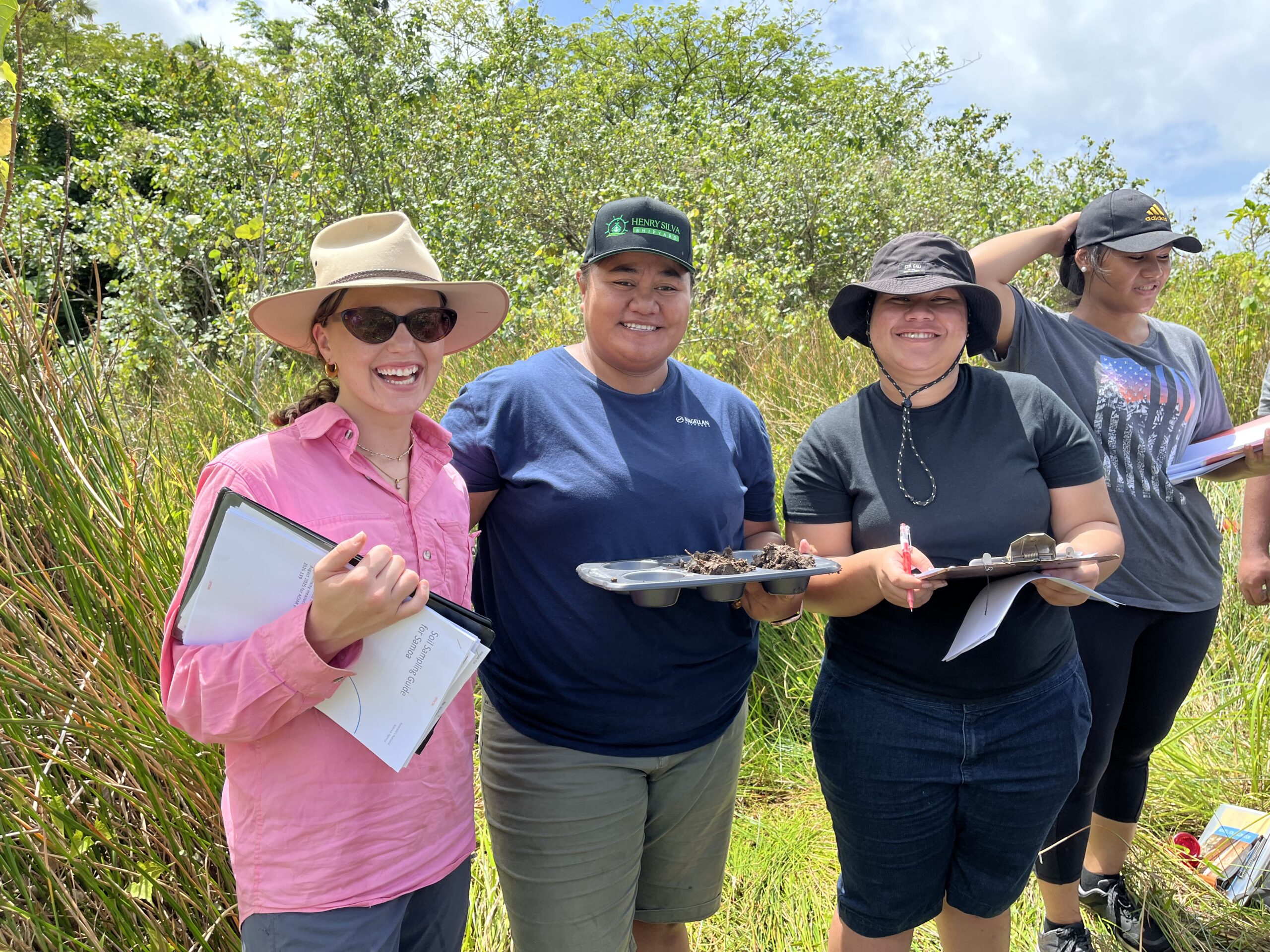
By Ava Robertson
Agriculture in Samoa is predominantly subsistence-based, with most crops grown to meet the needs of individual households or villages rather than for commercial sale. Consequently, the country remains heavily dependent on imported foods, with limited food processing infrastructure and few large-scale plantations.
Taro is the principal crop grown across the islands, but widespread soil nutrient deficiencies exist, and in recent years, below-average rainfall has further reduced yields, leaving many farmers under significant financial strain.
During our visit, we met with farmers including Sala, Polito and Motillie, who are actively seeking cabinet support to access World Bank funding to import Australian livestock under the incoming FAST party government. Livestock numbers in Samoa are currently at historic lows, with a shrinking genetic pool.
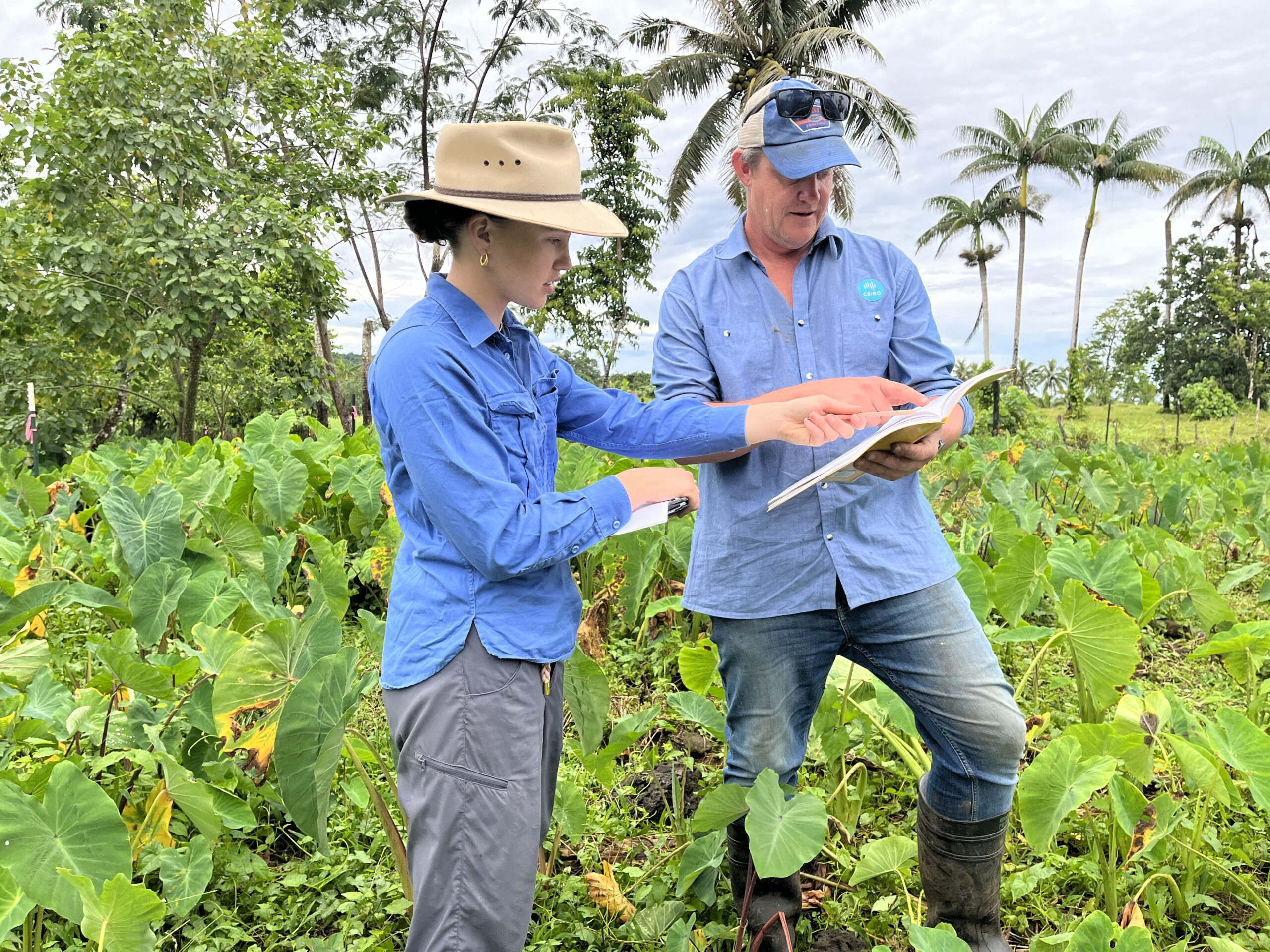
These observations highlighted for me the critical importance of the work being led by CSIRO and ACIAR to build resilience and improve productivity across Pacific farming systems. Soil health knowledge is limited, and there is little awareness of the impacts of livestock introduction on soil compaction. Over the course of the trip, I witnessed both the challenges and the opportunities of conducting agricultural research in this context.
This was an invaluable learning experience. Observing Dio Antille work with the farmers to negotiate, listen and mentor them demonstrated the importance of building trust and co-designing research that meets community needs. It gave me a deeper appreciation for the complexity of international research.
Samoa was one of the most vibrant, welcoming and warm places I have ever visited. Everywhere we went, people greeted us with a smile and a cheerful “how are you?”, creating an atmosphere of openness that blended reggae music and the island’s relaxed way of life. I gained a deeper understanding of Samoan culture by meeting and working closely with students from the University of the South Pacific (USP).
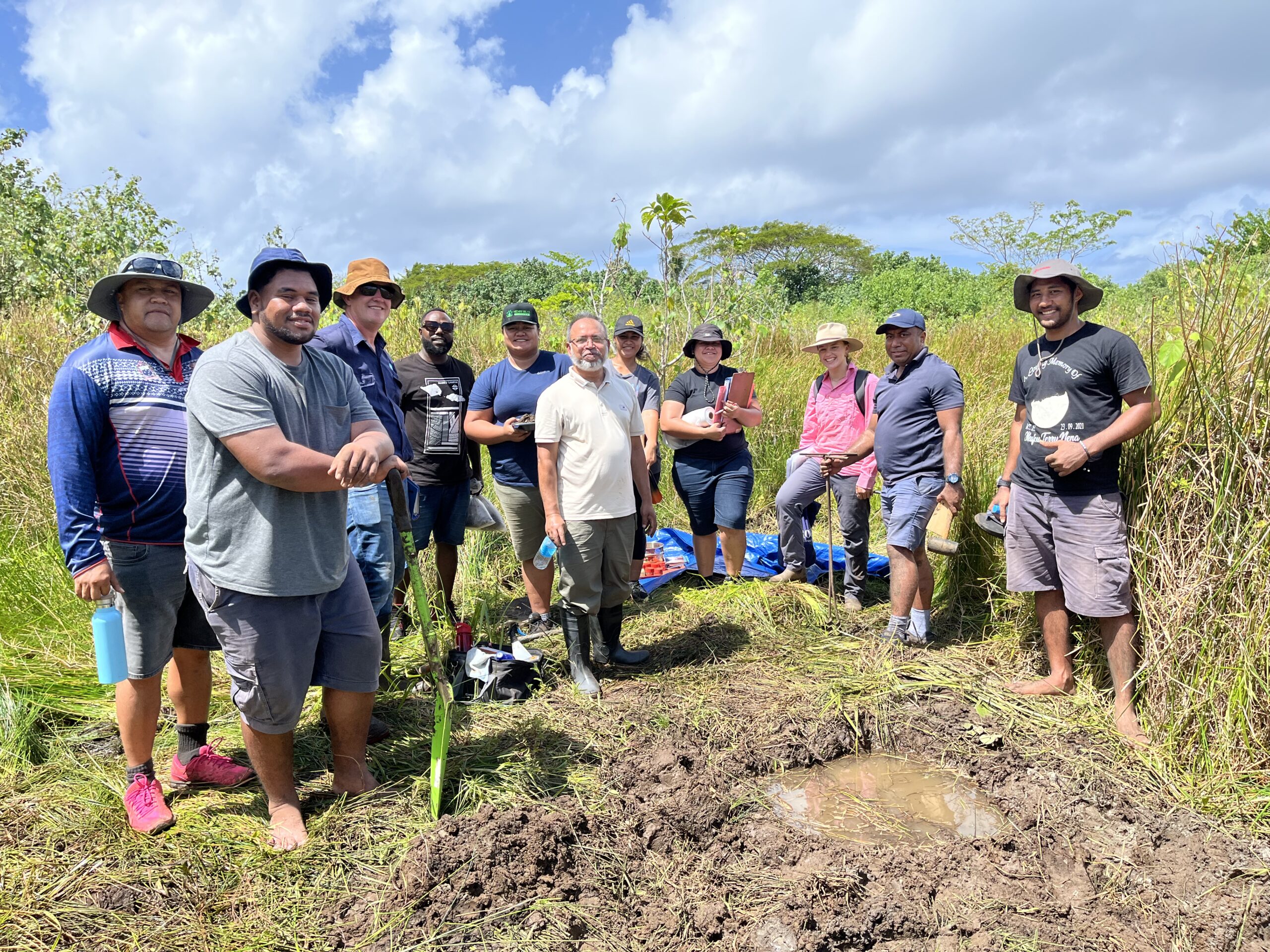
Our team collaborated with USP staff and students to conduct soil surveys as part of the ACIAR Pacific Soil Portal Phase 2 (https://www.aciar.gov.au/project/slam-2020-139), led by CSIRO. This collaboration offered an invaluable opportunity to connect with fellow soil science students Tala, Grace, Dante, Pule and Roger. These interactions developed into meaningful professional relationships and personal friendships that I believe will last well beyond this trip.
Under the guidance of Uta Stockmann and Brendon Malone (CSIRO), I contributed to training USP students in soil and land survey techniques which for many was their first experience outside the laboratory. The impact was immediately visible: students and staff expressed their excitement to continue taking field trips and engaging more deeply with farming communities. This hands-on training gave them the confidence and skills to classify and describe soils, strengthening Samoa’s capacity to perform soil survey work and improve local knowledge to contribute meaningfully to agronomic decisions. Ultimately, increasing soil health literacy will play a crucial role in building resilient food systems through sustainable soil management and greater access to data on the Pacific Soil Portal.
As part of this initiative, we also revisited sites first surveyed in the 1960s by the New Zealand Department of Scientific and Industrial Research (https://samoa-psp.landcareresearch.co.nz/). These legacy datasets have remained largely underutilised in Samoa, so our aim was to document how soils have changed over time and to revitalise the value of this information for local researchers and farming communities. A key priority for ACIAR and CSIRO is quantifying changes in soil organic carbon across the islands, as significant SOC losses have already been reported in neighbouring Fiji and Tonga. Understanding these changes will be critical for guiding future sustainable agricultural intensification in Samoa.
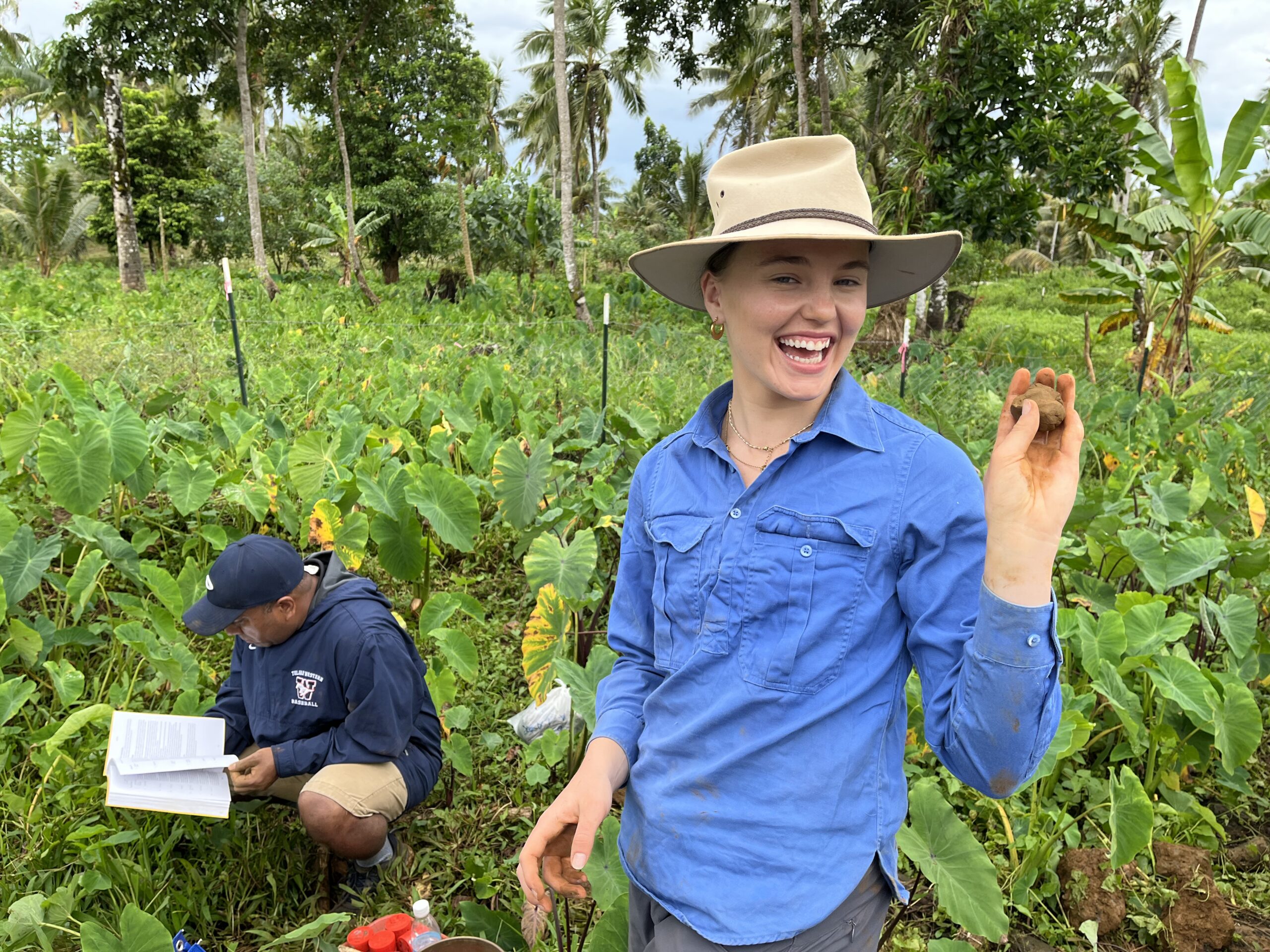
We surveyed over five sites spanning diverse toposequences, soil types, land uses and regions to capture the variability of soil change. Notably, one site had been significantly impacted by the 2009 tsunami, with sand incorporated deep into the profile. The findings from these surveys will provide an invaluable baseline for understanding soil health and fertility in Samoa and will support both agricultural development and academic research.
I am sincerely grateful to Uta Stockmann, Brendon Malone and Dio Antille from CSIRO, whose guidance was invaluable throughout the trip. Beyond technical training, they shared insights into the life of a researcher and the broader impact of international agricultural research. I learnt so much and I thank them for having me along.
Finally, I extend my deepest thanks to the Henzell family and the Crawford Fund. Without your support, this experience would not have been possible. I never imagined when I began university that I would receive an award enabling me to travel to Samoa and work alongside CSIRO and USP on such a meaningful project. This experience has profoundly shaped my perspective on international agricultural research and inspired me to consider it as a future career.