

Increasing the yield and water use efficiency of African sorghum
July 10, 2025
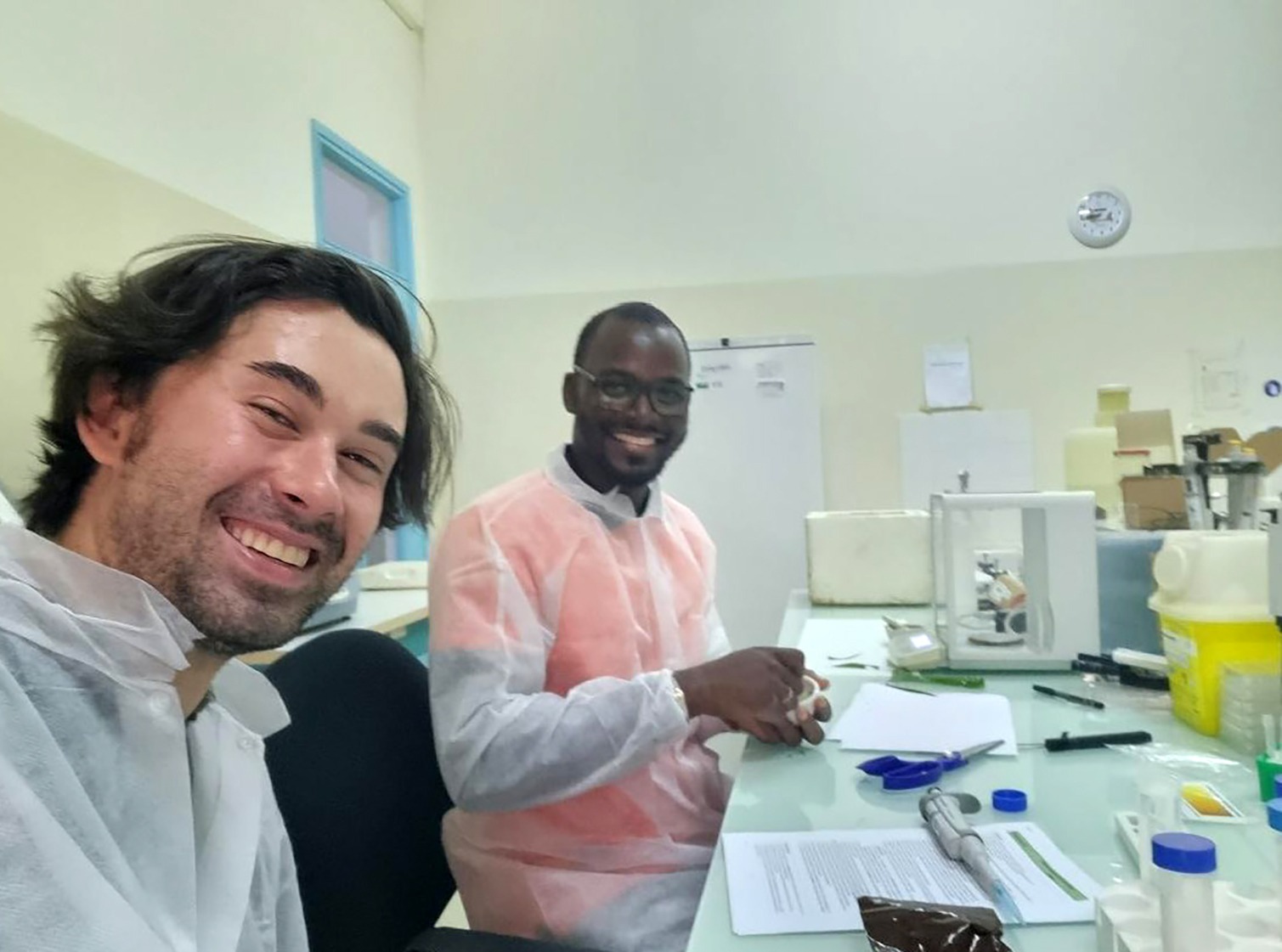
The Crawford Fund’s highly sought after Student Awards are one way we support and encourage the next generation of Australians into study, careers and volunteering in international agricultural research.
The awards are funded by our State and Territory Committees and made possible by organisations including ACIAR, international centres, Australian and overseas universities and NGOs who host our awardees.
Fifteen talented university students from around Australia were awarded our 2024 Student Awards. As part of this cohort, we would like to share the experience of Luke O’Regan from Monash University who travelled to Senegal to undertake research into increasing the yield and water use efficiency of African sorghum in collaboration with the Senegalese Institute of Agricultural Research (ISRA).
“Working closely with Joseph at ISRA, I investigated 21 elite lines of Senegalese stay-green sorghum. My overarching goal was to understand relationships between stay-green QTLs, dhurrin content and photosynthetic efficiency in these 21 genotypes,” said Luke.
“Sorghum is a vital crop in Sub-Saharan Africa, playing a central role in food security and rural livelihoods, but its production is hampered by droughts, poor soil fertility, and erratic rainfall,” he said.
“Optimising sorghum production in the SSA region hinges on identifying and developing genotypes with ideal combinations of beneficial traits. A key trait for this is the stay-green phenotype. The stay-green trait, which involves retaining photosynthetically active leaves during grain-filling or stress, has been shown to increase yields by 10-30% under drought conditions,” said Luke.
“Dhurrin, a plant defence compound, is also thought to be recycled in stay-green sorghum, potentially providing nitrogen and carbon for grain filling under drought,” he said.
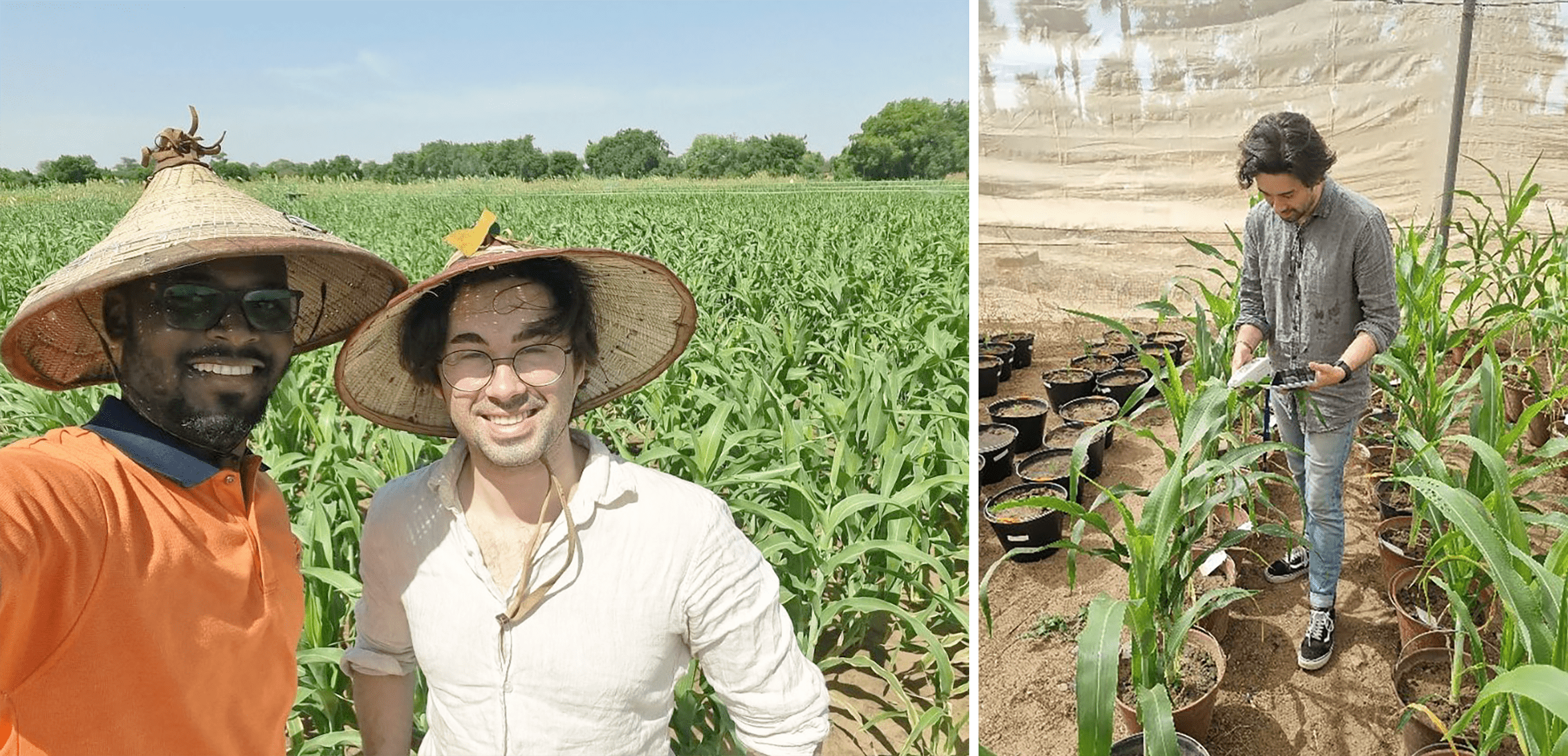
The project investigated the genetic links between stay-green genetic markers and dhurrin, and the relationship between dhurrin and photosynthetic efficiency parameters like effective quantum yield of photosystem II (Phi2) and non-photochemical quenching (NPQ).
The research involved assessing the cyanogenic potential of sorghum genotypes using the qualitative Feigl-Anger test and the more precise picrate assay to quantify cyanide release.
Photosynthetic efficiency was measured using a MultispeQ device to determine Phi2 and NPQ.
“The findings, while requiring further analysis, will contribute to identifying superior sorghum lines for enhanced drought tolerance and food security in marginal environments,” said Luke.
“This project has significant implications for enhancing drought resilience and food security in Sub-Saharan Africa and offers potential benefits for Australia. By identifying beneficial trait combinations in Senegalese stay-green sorghum, the work directly contributes to breeding more drought-tolerant and higher-yielding varieties, crucial for food security in marginal environments,” he said.
“The investigation into dhurrin’s role and its link to photosynthetic efficiency can provide novel insights for breeders to select varieties with superior photosynthetic efficiency and drought resilience,” he said.
“The research strengthens international collaborations by establishing new research links between Australia and the ISRA, and furthermore, the knowledge and principles derived from this project, especially concerning plant stress responses, are likely to have wider relevance and application in Australia, potentially benefiting Australian agriculture facing similar drought challenges,” he concluded.