

Integrated weed management training for farmers and advisors in Bangladesh
March 4, 2025
Earlier this year, with support from the Crawford Fund for Food Security NSW Committee, three integrated weed management (IWM) workshops were held at Sher-e-Bangla Agricultural University, Hajee Mohammad Danesh Science and Technology University, and the Eco-Social Development Organisation (ESDO) in Bangladesh.
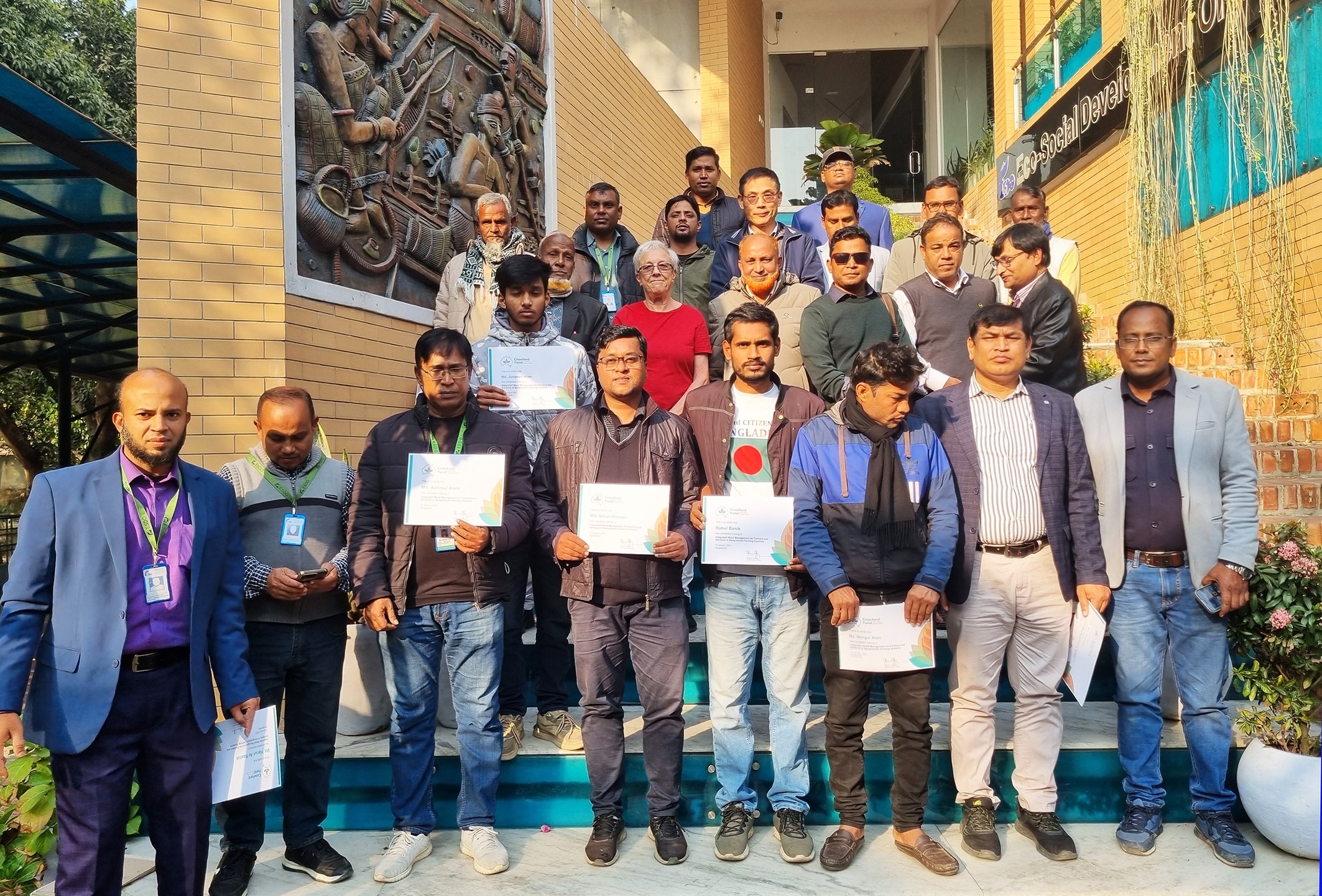
Facilitated by Dr Asad (Md) Asaduzzaman, Dr Hanwen Wu, and Prof Deirdre Lemerle, the training workshops focused on improving knowledge of herbicide use, detecting, and addressing herbicide resistance, and promoting integrated weed control strategies by connecting Australian experts with Bangladeshi stakeholders.
“The training facilitated valuable knowledge exchange and foster long-term partnerships for sustainable agriculture,” said Dr Asad (Md) Asaduzzaman, Lecturer in Crop Science, Charles Sturt University and course convenor.
“Farmers and extension officers gained a deeper understanding of, and technical skills around, sustainable weed control techniques, modern technologies for weed monitoring, and responsible herbicide use to minimise environmental and health risks,” said Dr Asad.
“Additionally, the introduction of digital tools and remote sensing technologies enabled participants to integrate precision agriculture into weed management practices,” he said.
“A network of trained weed management advocates within local institutions has now been established because of this training initiative, and these trained participants have been encouraged to act as trainers within their respective communities, creating a ripple effect for knowledge transfer,” he said.
“To this end, training materials, including presentations and field demonstration videos, have been shared with local agricultural extension officers for broader dissemination. Additionally, post-training surveys and follow-up workshops have been planned to reinforce learning and assess the adoption of new practices,” said Dr Asad.
To gain a deeper understanding of weed management challenges, Drs Asad and Wu and Prof Lemerle also met with key stakeholders, including the Ministry of Agriculture, the Australian High Commission, and representatives from Krishi Govenshona Foundation (KGF). The Australian team also discussed weed issues with Supreme Seeds Pvt. Ltd., Wheat and Maize Research Institute, and Kurigram Agricultural University.
Overall, during this period, the Australian team engaged with over 200 participants, both directly and indirectly involved in agricultural production systems.
“Local farmers now have access to safer, more effective weed control methods, reducing crop losses and increasing productivity, and this increase in knowledge of herbicide safety will reduce environmental contamination and health risks. Furthermore, the integration of digital agriculture tools will open pathways for modernising weed management approaches in the country,” he said.
“Ultimately, this initiative has laid the foundation for a more resilient and productive agricultural sector in Bangladesh, aligning with national food security and sustainability goals. The training aligns with the UN’s Sustainable Development Goals, further solidifying Australia’s leadership in global agricultural innovation, and strengthening diplomatic and trade relations with Bangladesh,” he concluded.
The workshops also identified critical areas in weed management for future training and research and development collaborations between the two countries.