

Investigating the influence of biochar on the nitrogen fixation process of cowpeas
December 10, 2025
The Crawford Fund’s highly sought after Student Awards are one way we support and encourage the next generation of Australians into study, careers and volunteering in international agricultural research.
Our 2026 Student Awards are now open. Don’t miss this opportunity – apply now!
The awards are funded by our State and Territory Committees and made possible by organisations including ACIAR, international centres, Australian and overseas universities and NGOs who host our awardees.
Eighteen talented university students from around Australia were awarded our 2024 Student Awards. As part of this cohort, we would like to share the experience of Sarah Fraser from Charles Sturt University who travelled to the Mekong River Delta region in Vietnam to undertake research into biochar’s influence on the nitrogen fixation process in cowpeas, as part of an ACIAR project.
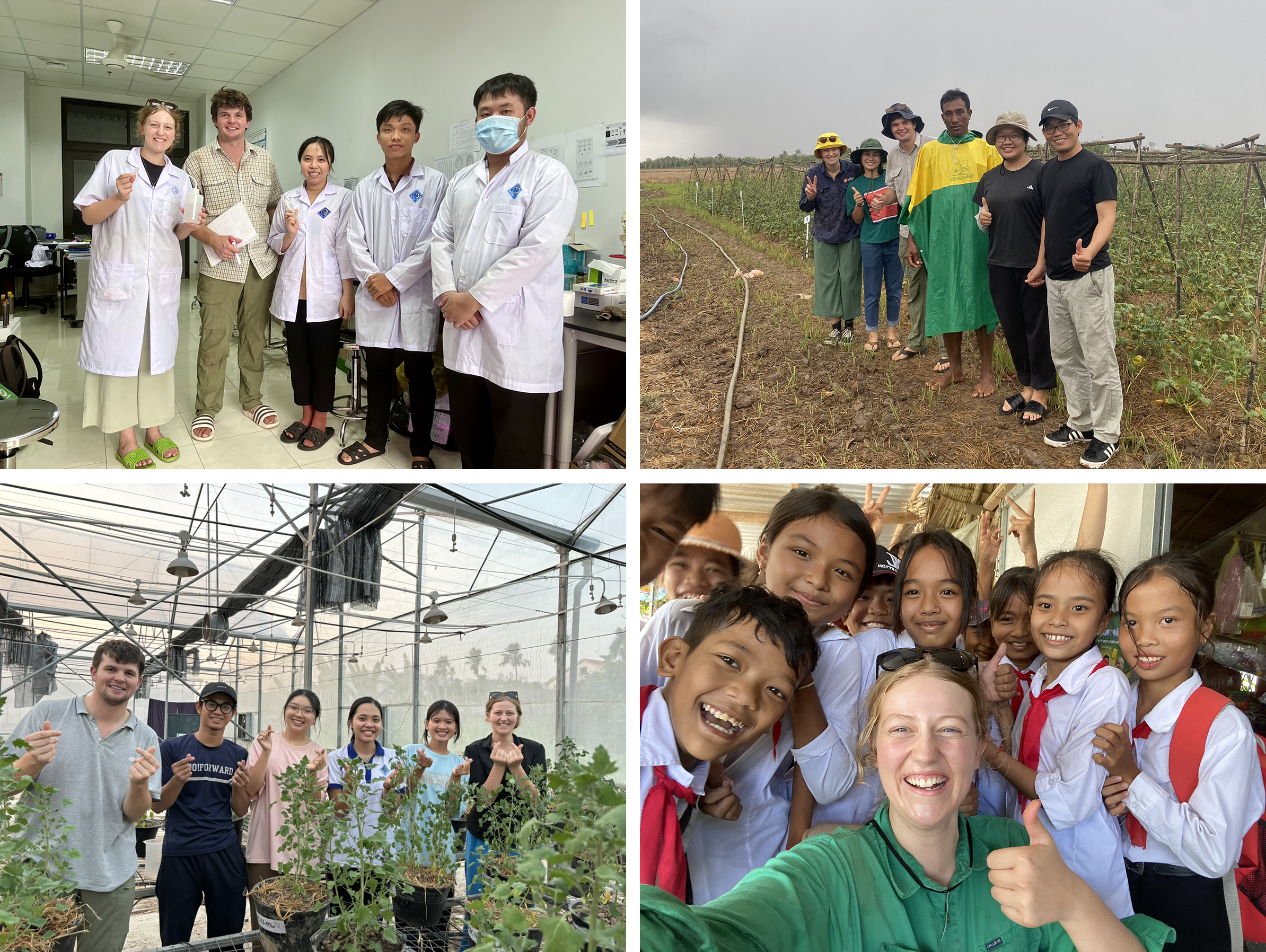
“Vietnam’s Mekong River Delta (MRD) faces significant agricultural challenges due to soil constraints and oceanic saline intrusion, exacerbated by climate change. With impacted areas experiencing rice crop failures, cowpea has been identified as an alternative crop for its high salt tolerance, low water requirements and the possibility of enhancing soil fertility through Biological Nitrogen Fixation (BNF),” explained Sarah.
“Poor soil fertility and water stress can hinder BNF and crop productivity. Effective soil amendments like straw mulching and biochar application can mitigate salinity and improve soil conditions, though their combined effects on cowpeas have been identified for further study,” she said.
“My research, aligned with the ACIAR Farmer Options for Crops Under Saline conditions in the Mekong River Delta (FOCUS) project, investigated biochar and mulching’s impact on cowpea nodulation,” said Sarah.
“The results of the research found that biochar application improved nodulation when no mulching occurred, and that biochar had no significant influence on nodulation at mulching rates of 3.5 t ha-1 and 7 t ha-1 . This may be due to mulching creating anerobic conditions resulting in the death of rhizobia. Alternatively, these results may have been due to immobilisation of plant available nutrients,” said Sarah.
“An important takeaway from the discussions within the wider FOCUS project is the need for infrastructure to support alternative crops within the saline impacted areas of MRD as opposed to the regional cities where salinity is not as severe,” she said.
“The project highlighted the benefits of international collaboration and provided some insight into how addressing similar agricultural issues in Australia, such as soil fertility, drought, and climate variability could be undertaken,” she concluded.