

Thriving Catchments for National Advancement in Timor-Leste
July 23, 2025
With support from the New South Wales Crawford Fund Committee, John Dalton, recently travelled to Timor-Leste with Dr Paul Kristiansen from the University of New England to research a proposed project titled, Basia Idográfika Buras atu Avansa Nasaun (BIBAN), Thriving Catchments for National Advancement.
John, a natural resource management (NRM) consultant, with a long history of working in Timor-Leste, including as part of a past ACIAR’s Seeds of Life project, and in Crawford Fund training initiatives, has developed tremendous networks and momentum working with this small nation.
“The BIBAN project proposal follows previous local projects in Timor-Leste and is based on the bio-physical (water and soil) and socio-economic (individual and institutional capacity) limitations on the country’s subsistence farm families,” said John.
“Despite 25 years of development assistance, Timor-Leste’s 70% rural majority remained ranked at the bottom in food security, malnutrition, child stunting and living standards, and their already meagre natural resource endowments, houses and infrastructures are being further degraded by worsening climate events,” he said.
“Using a participatory action research approach, the multidisciplinary project aims to pilot development of integrated catchment management strategies and build training and governance capacity at micro- and meso-levels,” he said.
John reports that the BIBAN project, prepared with local partners, is strongly supported by Vice Prime Minister Mariano Sabino and by ACIAR’s Country Manager Luis de Almedia because it:
- focuses on farming systems, income generation and diversification
- supports development and upscaling of water management, erosion control, community
- has engagement and wider capacity building to sustain local development, and
- emphasises the local, comes from the people impacted, and has strong local commitment at multiple levels.
The visit to Timor-Leste included:
- meeting to update BIBAN partners on the progress of the project concept and purpose
- discussing the BIBAN concept with ACIAR, DFAT and Timorese government officials, other project leaders and universities
- a workshop with BIBAN partners to discuss and refine the proposed BIBAN SRA design, stakeholder roles and possible catchment sites
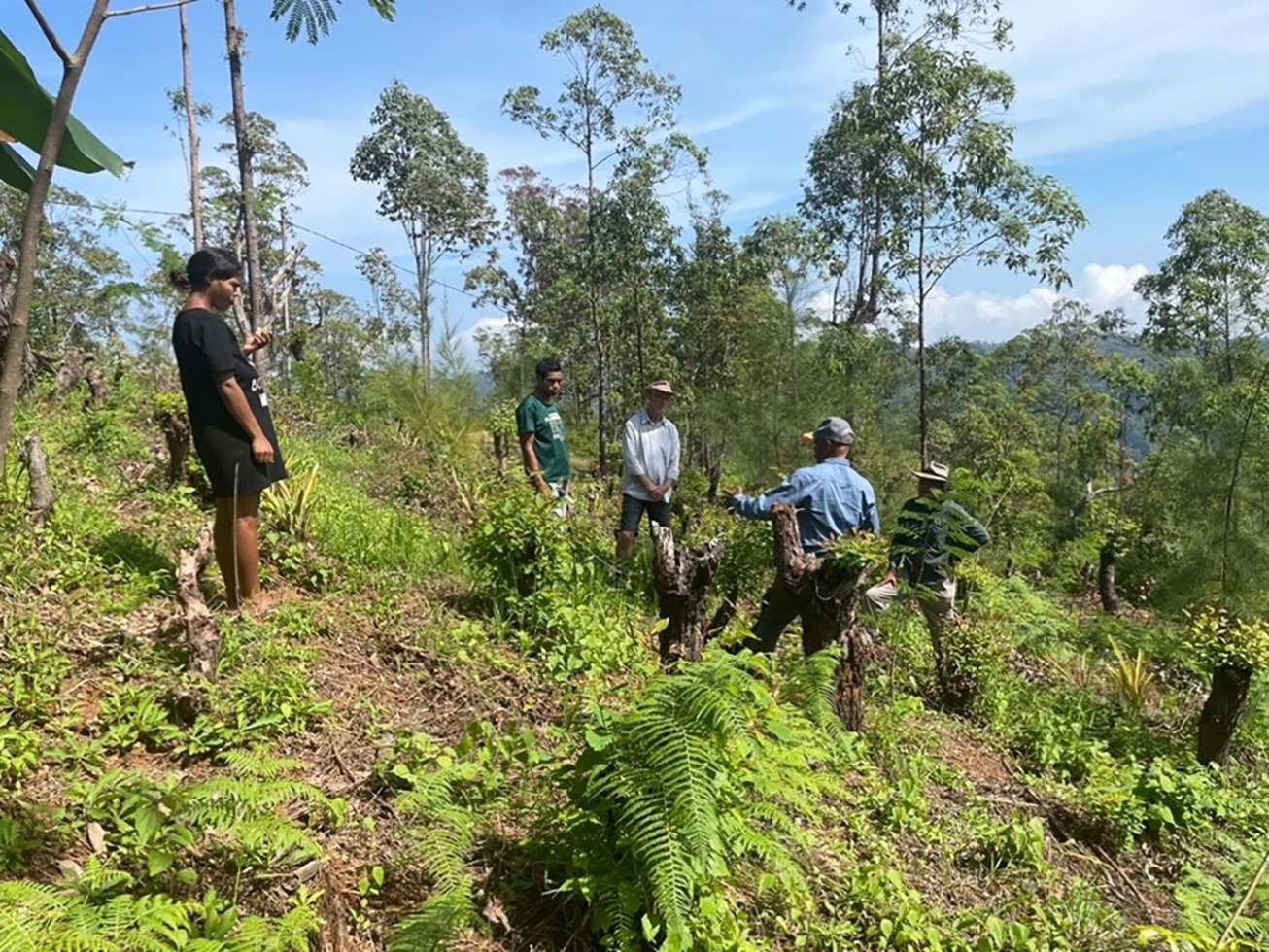
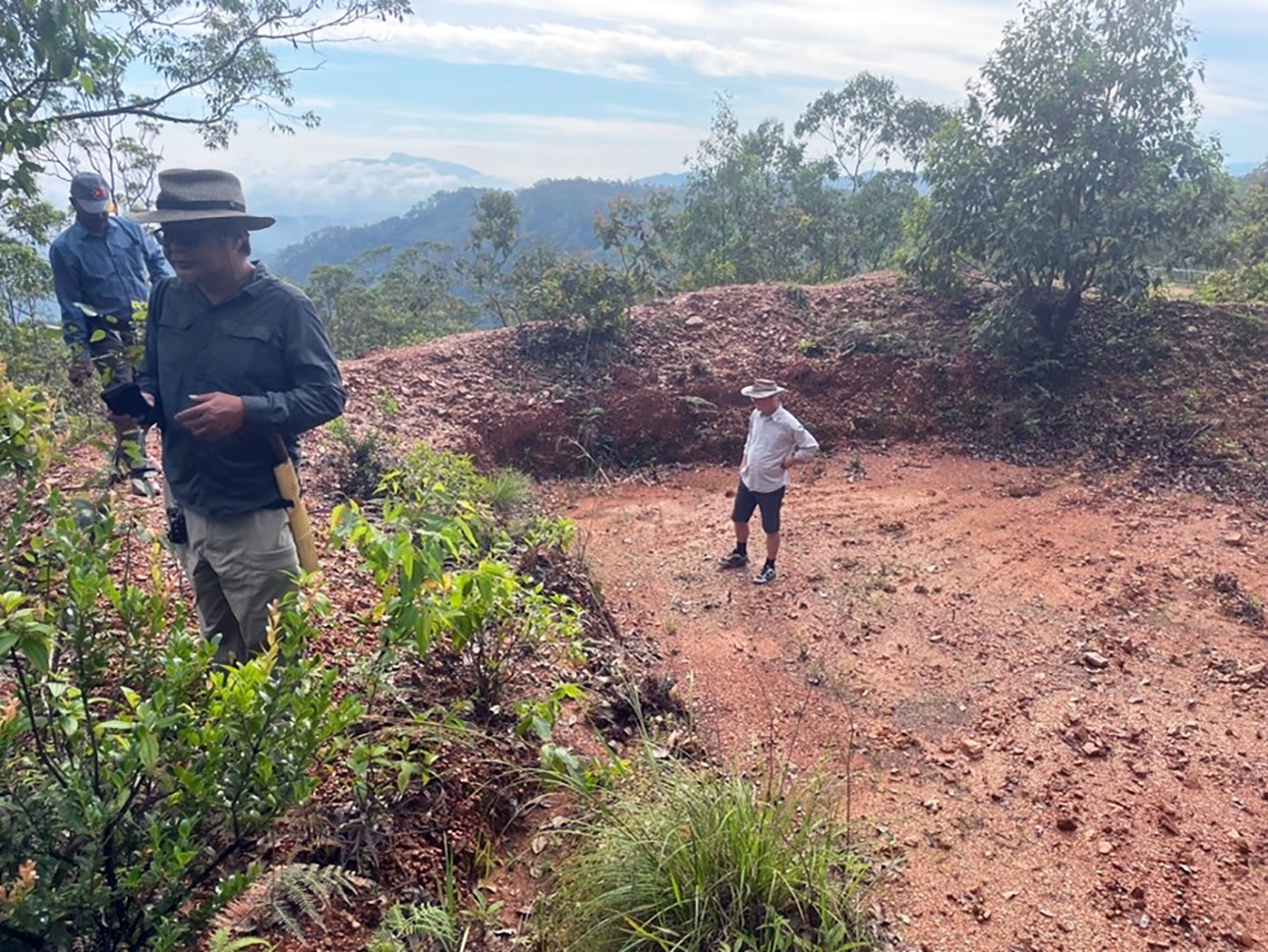
“A field visit enabled us to inspect runoff control structures in a micro-catchment site in Remexio, a sub-district of the upland Municipality of Aileu. We also visited a farming family involved in agroforestry,” said John.
Left, runoff control structure in a micro-catchment site and right, discussing farming and livelihoods with family involved in agroforestry project, both in Remexio sub-district, Aileu Municipality
A planning workshop was held with organisations and individuals with on-ground experience and current activities in rural Timor-Leste. This consultative process was very useful for both Australian and Timorese members of the BIBAN team.
Key conclusions from the workshop were that all participants attending were in strong support of the proposal; suitable sites were identified based on previous and existing land management interventions and community engagement, and the proximity to Dili for market access; and the next steps of the process were agreed upon, with Timorese partners having further input.
“Following the visit, the Australian BIBAN partners have continued to develop the concept project through meetings with key stakeholders to refine and realign with country and ACIAR priorities on catchment management, community-based planning, governance and cross-scale capacities. All stakeholders continue to strive for its implementation,” concluded John.