

Plant biosecurity for food security: a reflection
June 4, 2026
Earlier this year, the Crawford Fund for Food Security NT Committee announced the recipients of three scholarships to support researchers in the field of biosecurity to gain professional development and networking opportunities through conference attendance.
Shreya Patel, a Senior Molecular Scientist, with the NT’s Department of Agriculture and Fisheries was supported to attend the Plant Biosecurity Research Initiative (PBRI) Symposium in Melbourne last month, and this is her reflection.
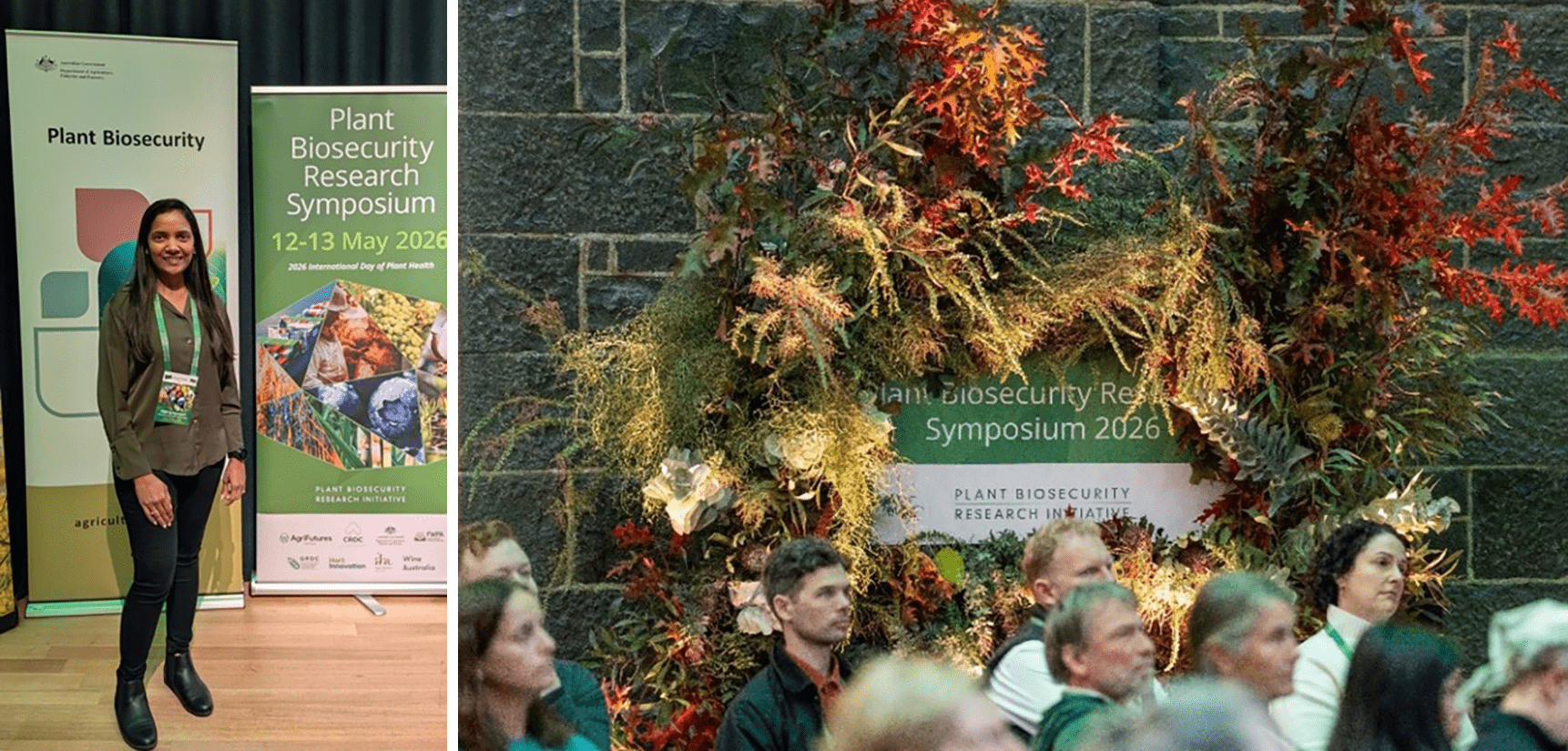
The two-day PBRI Symposium program brought together researchers, industry representatives, and government stakeholders to advance Australia’s plant biosecurity capability. The event also coincided with the United Nations International Day of Plant Health on 12 May, with the theme “Plant Biosecurity for Food Security”, providing a meaningful context for the discussions.
The PBRI is a collaboration between Australia’s seven plant Research and Development Corporations (RDCs) and the Department of Agriculture, Fisheries and Forestry. Its work focuses on four key areas: early warning and risk assessment, diagnostics and surveillance, resilient crop protection systems and readiness and recovery.
“Attending the symposium has significantly contributed to my professional development. It strengthened my professional network, expanded my learning through engagement with leading researchers, and provided insight into current challenges in plant biosecurity,” said Shreya.
“For diagnosticians in remote settings, maintaining strong collaborative ties with external laboratories are vital for staying informed about emerging tools and technologies, accessing essential diagnostic resources and developing new research ideas based on available capabilities,” she said.
According to Shreya, the symposium placed strong emphasis on fostering engagement within the plant biosecurity community, and she identified several highlights from the event, including:
- Insightful presentations and poster sessions on current biosecurity research with clear relevance to real-world biosecurity and agriculture
- The launch of the national Biosecurity Trakka project
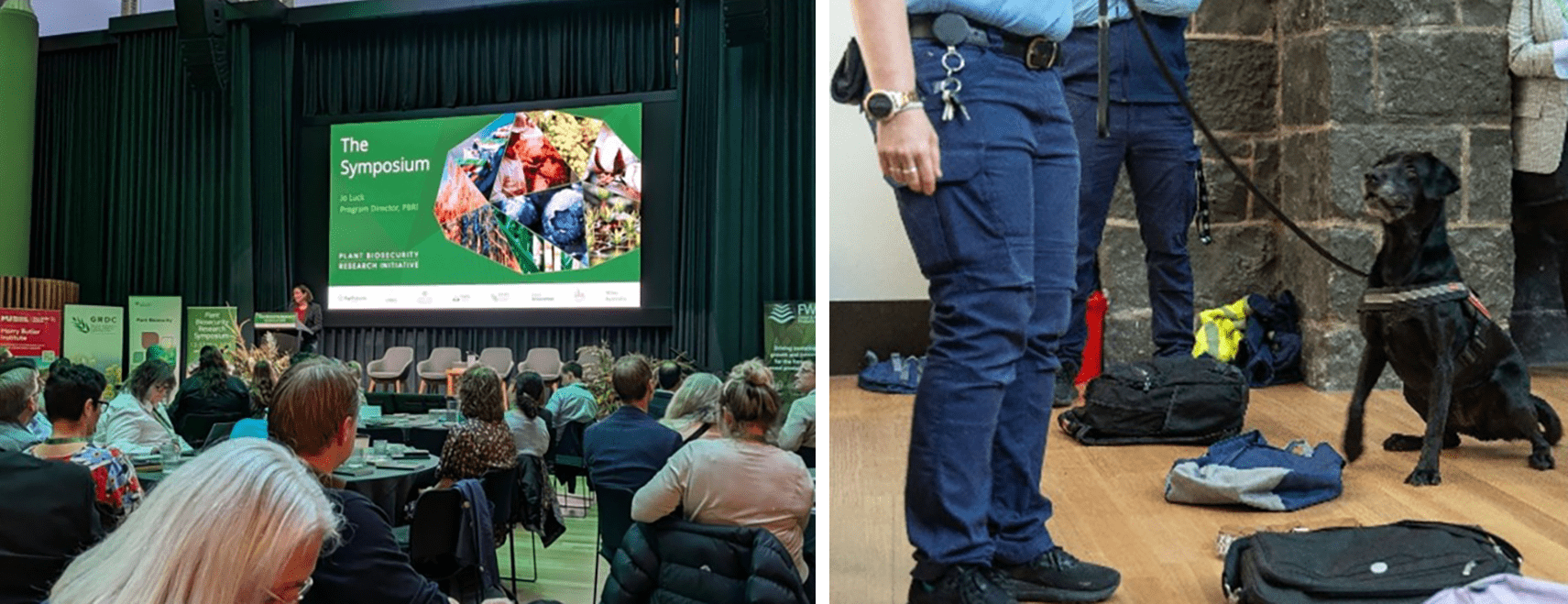
- A detector dog demonstration by DAFF showcasing practical application of biosecurity practise in boarder surveillance
- Valuable opportunities to connect with scientists, policy makers, key stakeholders, and industry leaders
“The key takeaway for me is that Australian plant biosecurity is a shared responsibility involving industry, government, researchers, communities, and individuals. Effective prevention, detection, and management of plant pests and diseases depend on collaboration across all of these groups, supported by innovative research nationwide to strengthen surveillance and diagnostics,” she said.
“I am grateful to the Crawford Fund for supporting my attendance through their scholarship program, which plays an important role in building biosecurity capacity in the Northern Territory. I also acknowledge the symposium organisers for delivering a successful and engaging event,” she concluded.
“Developing the next generation of biosecurity specialists in the NT is a priority for the Crawford Fund NT and the NT Government given the unique position we are in on Australia’s northern coastline – a frontline entry-point for an increasing number of animal and plant pests and diseases,” said Emerita Professor Helen Garnett, Chair of the Crawford Fund’s NT Committee, when she launched these scholarships earlier this year.
“These scholarships will continue to build biosecurity capacity and capability in the NT and help successful applicants in their studies and career pathways in biosecurity,” she said.
These scholarships are generously supported by the Northern Territory Government.