

2026 Conference Keynote Listeners report
August 26, 2026
by RAID Network members: Krishna Alamuru, Bek Ash and Bec Cotton
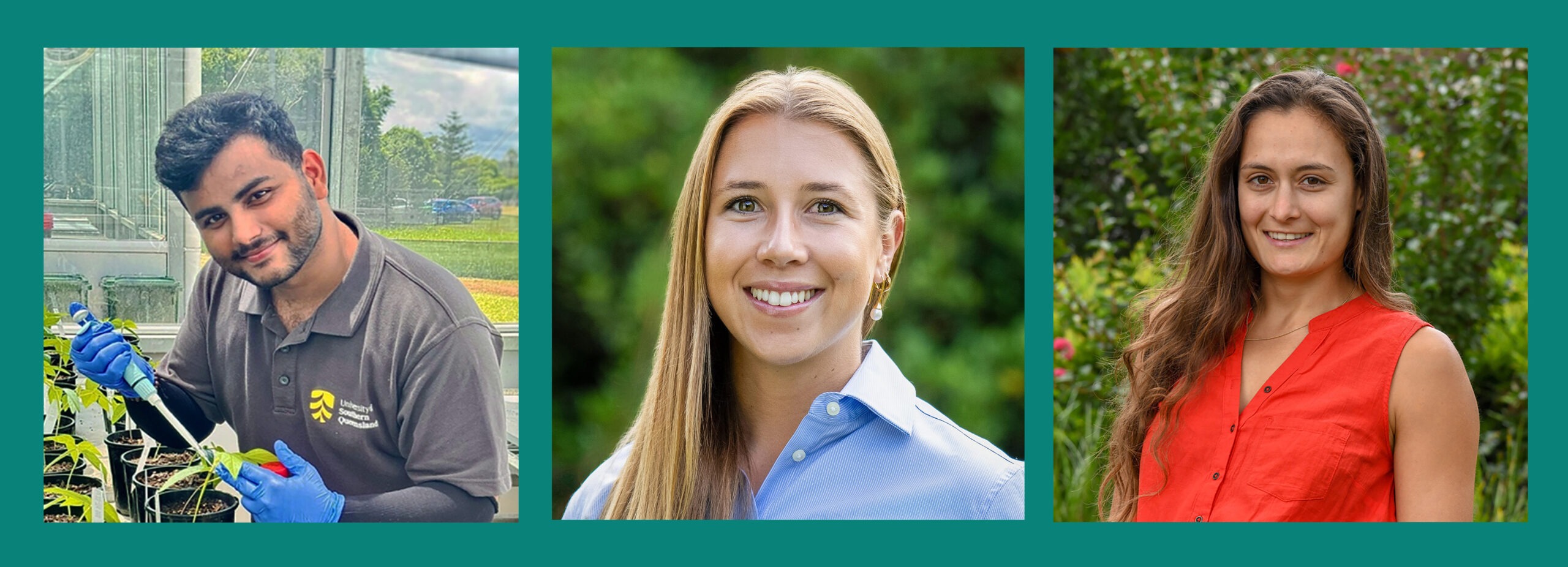
Each year a succinct summary of our annual conference is delivered by our Keynote Listeners who play an integral role in summarising and communicating the key take home messages from the event. We invite the wonderful RAID Network to nominate members to be our Keynote Listeners each year and in 2026 we can thank Krishna Alamuru, Bek Ash and Rebecca Cotton for their report below, which will be particularly useful as we wait for the conference formal proceedings to be compiled.
The Crawford Fund’s 2026 Annual Conference brought together global leaders, policymakers, and early-to-mid-career researchers and specialists to explore the theme, Emerging Voices Shaping Regional Integration for a Food Secure World. The event focused on how regional integration in agricultural research and innovation can strengthen food and nutrition security in a rapidly evolving geopolitical and climate environment.
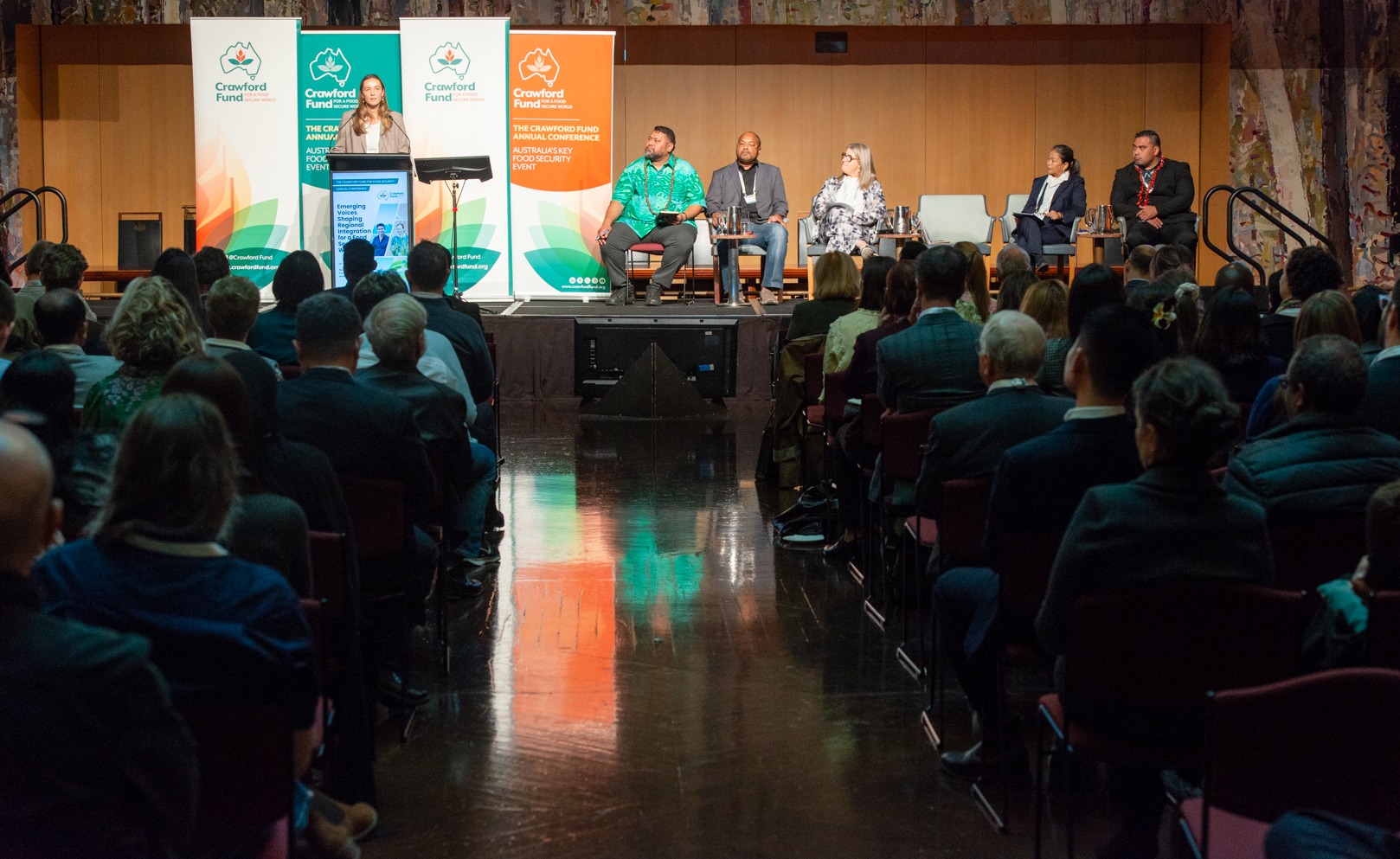
Around 400 people registered this year, with online guests from about twenty countries. Across two days one answer kept returning. Food security is not just about growing more food. It depends on supply chains, seeds, markets, finance and institutions, and on partnerships that outlast the projects that fund them.
Opening session
Ms Su McCluskey, Chair of the Crawford Fund, opened by describing a region that is stable and secure. That depends on regional cooperation, new crop varieties, strong biosecurity and crop biodiversity. She also highlighted the focus of the conference on emerging voices.
Ms Victoria Anderson, Secretary of the Department of Agriculture, Fisheries and Forestry, began with a simple point. A great deal has to happen before food reaches a table. Australia is a strong food producer, but many critical inputs come from or through the Indo-Pacific. Trading arrangements are under pressure, weather events are more severe, and geopolitical tension is rising. This is the background to Feeding Australia, the National Food Security Strategy, which she called one of the Government’s most significant priorities.
Keynote: Dr Sandra Milach, Chief Scientist, CGIAR
Dr Milach left us walking away with a pertinent thought at the forefront of our minds.
“The science that helps farmers adapt is the science that stops treating food, land, water and climate as separate problems, and starts treating them as one connected system.”
Her example came from Odisha in eastern India, where the programme delivered five things together: climate resilient crops, seed systems so farmers could actually obtain those seeds, water harvesting, agronomy for drier conditions, and market access. She reported productivity gains well above target and uptake at about double the goal.
She also spoke about how success should be measured. It is not the number of varieties released or papers published. Did farmers adopt it? Did yields hold through a bad season? Did a government change policy because of the evidence?
On investment, CGIAR’s external assessment found a ten to one return since 1971. In Australia, ABARES found that an extra dollar of agricultural research and development between 2011 and 2021 would generate $7.82 in gross value added. These are among the best returns in public spending, yet investment has fallen in real terms for two decades.
She left three messages. Join the science across food, land, water and climate. Treat agricultural research as long term infrastructure and fund it with stability. And accept that no country adapts on its own.
Session 2: From Talanoa to Action
Chaired by Salā Dr George Carter of the ANU Pacific Institute, this session asked what implementation of agri-climate solutions looks like with the Pacific Pre-COP ahead. He set it in the spirit of Talanoa, which means empathy, respect, cultural learning and listening.
Dr Tekini Nakidakida, Deputy Secretary of Fiji’s Ministry of Agriculture, Waterways and Sugar Industry, showed how a small state builds influence. He began negotiating alone for Fiji in 2016, and from COP23 spoke for Pacific small island states. His lesson was persistence. Keep raising the same messages in every forum, so that when they appear in a national plan people already recognise them. His warning was that access to finance remains the binding constraint.
“The sad reality is that there is still a lack of access to finance.”
Dr Sally Box, Australia’s Head of Delegation to the UNFCCC, explained the year ahead. Türkiye holds the COP31 Presidency and hosts in Antalya, while Australia serves as President of Negotiations. Fiji and Tuvalu will host the Pacific Pre-COP in October, a rare chance to bring the world to the Pacific and show both the impacts and the solutions.
Ms Sally Higgins, COP31 Youth Climate Champion, spoke of how farming has always carried risk. But the nature of that risk is changing. Seasons are less predictable, and assumptions built over generations are being tested. If adaptation is the defining challenge, who is best placed to meet it? Her answer was young people, because they have spent their whole lives adapting.
“If adaptation is the defining challenge facing food systems, our young people may be one of our greatest resources.”
Her three asks were to invest in adaptation capability, move from consultation to genuine partnership, and redesign funding so youth led work can be supported.
Ms Imelda ‘Dada’ Bacudo of FAO explained how global agreements turn into action. Agreements become national commitments, which become the policies, finance and technologies that finally reach farmers. Her example was the ASEAN Negotiating Group for Agriculture, which she co-founded, and which trained agriculture officials to negotiate at the UNFCCC. The regional layer, she said, is what turns global agreement into national action.
Mr Clayton Simamao, Asia Pacific representative on the GAFSP Steering Committee, spoke about smallholder realities. When COVID-19 closed Samoa’s borders the country turned to its local farmers, and he moved from finance into working with smallholders. He was honest about what goes wrong when partners bring in ideas that do not fit. When speaking about the agricultural workforce, Mr Simamao jovially expressed,
“If their morale is low, you might be worried about the quality of food you get out of it.”
Digital platforms are proposed for islands that lack basic infrastructure. His ask of the room was research, because Pacific proposals often lack the evidence needed to show a project will work.
Session 3: Agriculture as a driver of adaptation, economic stability and regional peace
Chaired by Dr Jared Greenville of the Department of Agriculture, Fisheries and Forestry, this session used four case studies to showcase research delivering practical solutions for nutrition, sustainability and community resilience.
Professor Jaquie Mitchell of the University of Queensland shared results from her ACIAR funded project on climate smart premium rice in the Mekong Delta. She spoke about how a market led systems approach created shared value, lifting farmer incomes by 10.5 per cent while cutting production costs.
“By aligning markets, partnerships and people, we can build the resilient food systems needed to feed a growing world sustainably.”
Ms Kylie Porter, Global Head of Sustainability at SunRice, brought a private sector lens. Her key message was that commercial and community interest can converge. For the value chain to serve the company, it must first serve the farmer. She also challenged how research outputs are judged.
“Excellent research isn’t when it reaches publication, but when it reaches the market.”
Dr Mohammed Mainuddin of CSIRO Environment described more than a decade of ACIAR funded work transforming cropping systems in the coastal Ganges Delta. More than 20 million people live there, on land only one to two metres above sea level, where both groundwater and surface water are saline. The project showed that through integrated and transdisciplinary research, this wicked problem “can be cracked”. That came only through research sustained over a long time, and genuine collaboration between Australian, Bangladeshi and Indian scientists.
Dr Dennis Beesigamukama of ICIPE, winner of the 2024 Norman E. Borlaug Award, presented black soldier fly as a way of turning waste into wealth. Did you know that one fly can help deliver 14 of the global sustainability goals? The larvae break down organic waste in about two weeks, producing both animal feed and organic fertiliser. The technology now reaches more than 165,000 farmers across Africa, and with ACIAR support it is being adapted for Fiji, Papua New Guinea and Vanuatu.
Dr Tony Pattison of the Queensland Department of Primary Industries drew on twenty years of work on Panama disease tropical race 4, now in more than twenty countries and in Australia since 2015. He shared five lessons of “what not to do” from South East Asia, where Australia prepared by learning first. ACIAR assessed that approach at a benefit cost ratio of 71 to 1. The project gave growers practical ways to understand their risks, moving “beyond blame, towards collective learning, capacity building and action”. TR4 cannot be beaten with blame, or with one solution.
Session 4: Multi-country platforms, shared strategies and cross-border innovation
Chaired by Larelle McMillan of CSIRO Agriculture and Food, this session moved from the field to the structures that support the work.
Dr Stefan Schmitz, Executive Director of the Crop Trust, gave one of the most striking addresses of the conference. He compared gene banks with a library, where material is kept safe, catalogued and above all made available. His central point was uncomfortable. You cannot breed a trait that does not already exist. Gene editing, he said, is a magnificent pair of scissors, not a source of diversity. Australian chickpeas struggle when cold hits at flowering, and the domesticated crop holds little useful tolerance. Its wild relatives on Turkish hillsides carry far more, and may yet let Australian growers plant further south than ever before.
Securing the world’s valuable crop collections permanently costs about US$34 million a year. Global agricultural support runs at roughly US$1.6 million a minute, so the world spends that entire annual cost in about 21 minutes. His overarching point was about connection. A power station on its own is just a building. It becomes infrastructure the moment it is connected.
“We are not short of collections. We are short of connections.”
He left two asks. First, stop treating crop diversity as a project. Treat it the way you treat a port, a road or a research station. Second, change the time horizon. Funders should put at least a small share of project funding into long term mechanisms. A project buys you five years of results. An endowment buys you a century.
Dr Himanshu Pathak, Director General of ICRISAT, presented the ICRISAT Center of Excellence for South-South Cooperation in Agriculture, launched in June 2025. Countries across the Global South share similar climates, soils, cultures and food habits, and already hold proven technologies. The competencies exist. What is missing is cooperation. He closed by inviting Australia and the Crawford Fund to contribute as a convening partner, in leadership development, knowledge brokerage and co-investment.
Mr Soane Patolo Jr, CEO of MORDI Tonga Trust, brought the conference back to the community. How can investment create lasting change that communities genuinely own? MORDI works with 122 communities across six island groups, using a Community Development Plan. Communities rank their own needs, those priorities are connected with researchers and funding, and the community owns the process. Communities are partners and decision makers, not beneficiaries.
He also spoke plainly about women, who are central to production, nutrition, markets and disaster recovery, yet are rarely the strongest voice in a community meeting. Inclusion is not counting how many women attend. The real measure is whether women have access to resources and take leadership roles. His five recommendations were to start with community plans, fund local institutions, co-design research, connect agriculture with water, climate, health and markets, and measure what lasts.
“Food security is built with communities, not delivered to them.”
Emerging voices: the first poster session
The conference held its first poster session this year, giving nine early career researchers a platform alongside the main program.
- Jowell Darwiche, ANU. Fruit fly biomarkers using mass spectrometry.
- Amalya Harding, University of the Sunshine Coast. Food security and diets among women in peripheral Fijian communities.
- Jessica Kriticos, ANU. Ranking priority plant pests and diseases.
- Benedetta Longoni, James Cook University. Invertebrate fisheries and seasonal food security in Timor-Leste.
- Anshul Phaugat, La Trobe University. Controlled environment agriculture in extreme environments.
- Gayathri Rathnayake, Murdoch University. Aluminium toxicity tolerance in chickpea.
- Abu Bakar Siddique, University of Tasmania. Heat stress tolerance in wheat.
- Thi Mai Huong Tran, University of the Sunshine Coast. Genomics of giant freshwater prawn.
- Chenxiang Zhang, UNSW. Black soldier fly in fish feeding in Papua New Guinea.
Two connected directly to plenary talks on the same day, on chickpea tolerance and black soldier fly. The emerging voices in the room were not an add-on. They were part of the same research effort.
Themes across the conference
- Food security is a system, not a yield. Odisha worked because five things happened together. The Ganges Delta was a wicked problem until integrated research was sustained for a decade. TR4 has no silver bullet.
- Research is infrastructure, and needs infrastructure timeframes. Breeding takes a decade. Gene banks need care forever. Both Dr Milach and Dr Schmitz argued for long term funding rather than short cycles.
- Regional integration works both ways. Wild chickpea from Türkiye may let Australian growers plant further south. Australia’s TR4 preparedness was built in South East Asia before the disease arrived. Kenyan black soldier fly technology is being adapted for the Pacific.
- Emerging voices means influence, not attendance. Ms Higgins asked for genuine partnership instead of consultation. Mr Patolo made the same argument about women, Mr Simamao about smallholders, and Dr Nakidakida about small island states.
- Trust and local context decide whether anything lasts. The Mekong project worked because trust came before contracts. Pacific speakers named access to finance as the binding constraint more often than any technical gap.
Summing up
Ms Rosemary Deininger drew the two days together around the connected and complex nature of food security. Speakers had stressed science and adaptation working across food, land, water and climate together, alongside local factors including the role of women, cultural conditions and infrastructure. Genuine partnership and co-design came through as critical, with trust named as the foundation of lasting partnership.
She noted one clear gap. Much more could be done to show the return on investment from research and development. COP31 was identified as a real opportunity for Australia, and so was the focus on emerging voices. She closed by returning to Dr Gabrielle Persley’s remarks the previous evening, on the power and persistence of good ideas, and on the creativity of science and scientists.
Closing reflection
The 2026 conference set out to ask who shapes regional integration. It answered by filling the room. A Fijian negotiator. A Samoan smallholder advocate. A Tongan community leader. A young Queensland farmer. A gene bank director. And, for the first time, nine early career researchers presenting their own work.
One frustration connected all of them. The work that matters takes decades, but it is funded and judged in a few years. The Crawford Fund turns forty next year. The harvests that will feed the world in 2060 are being decided now, in rooms like this one.