

Plant roots and soil compaction: building capacity to mitigate climate change impacts
September 10, 2026
The Crawford Fund’s highly sought after Student Awards are one way we support and encourage the next generation of Australians into study, careers and volunteering in international agricultural research.
The awards are funded by our State and Territory Committees and made possible by organisations including ACIAR, international centres, Australian and overseas universities and NGOs who host our awardees.
Our 2027 Student Awards will open in November.
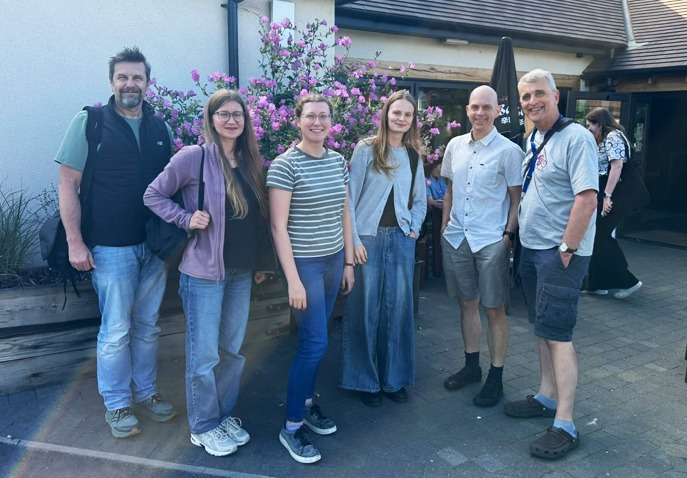
We would like to share the experience of Niamh Ritman from La Trobe University, a 2025 Student Awardee, who travelled to the University of Nottingham in the United Kingdom to undertake research into Computer Tomography (CT) scanning to uncover the soil compaction response of Themeda triandra, a perennial tussock grass endemic to Africa, Australia and Asia.
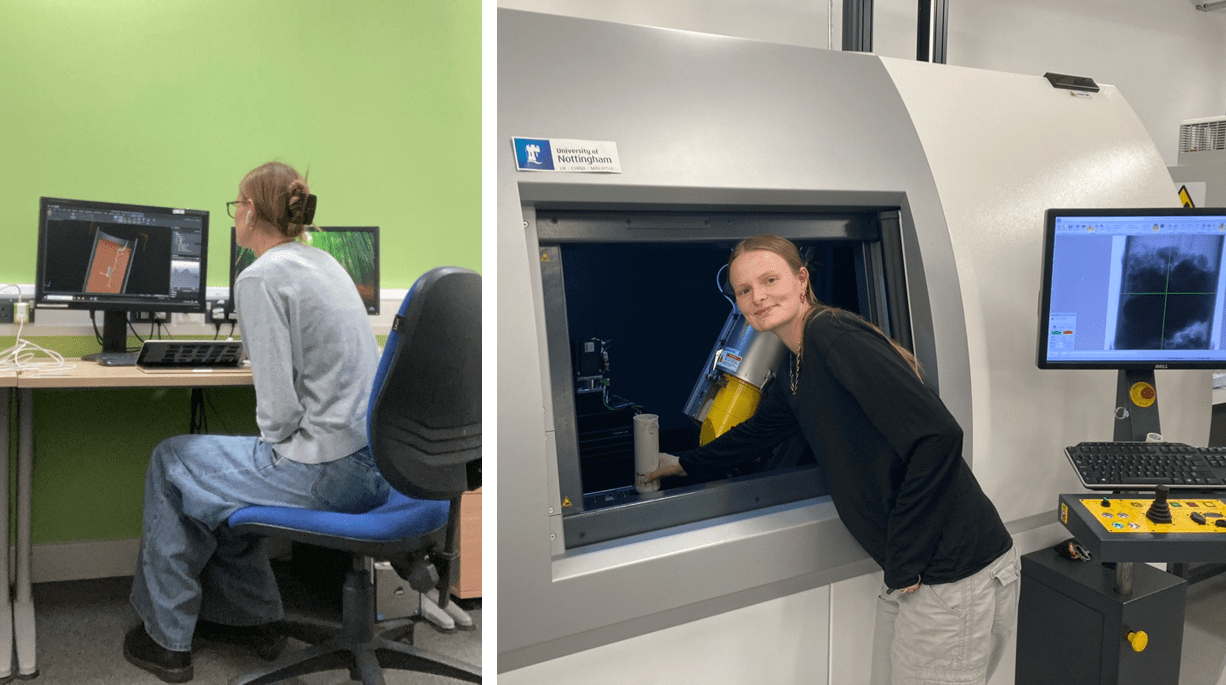
The 2025 Crawford Fund Student Award supported Niamh to travel to The University of Nottingham (UoN) where she received training in specialised CT scanning for plant and soil science, and in particular, she learned additional techniques for investigating plant root responses to soil compaction.
“The collaboration with UoN provided me with expert training on CT imaging equipment, I learnt scanning procedures, data processing and image reconstruction using specialised software volume graphics (VGSTUDIO MAX). A workshop on CT imaging run by UoN in Adelaide prior to my visit to the UK provided me with foundational knowledge and the UK visit enabled me to gain hands on experience and extensive training in the techniques from the experts,” she said.
According to Niamh’s research, soil compaction reduces crop productivity, impacts plant establishment and increases drought vulnerability in Australia. The effects of soil compaction are known to be exacerbated in combination with drought stress, and the frequency and severity of hotter, drier conditions expected with climate change in Australia are likely to increase the effects of soil compaction.
Plant roots are the most vulnerable tissues to soil compaction and current approaches to study their responses involve laborious removal of roots from compacted soil and loses critical information about root growth and architecture. Niamh’s study used CT imaging to view roots and provides insight into the effects of soil compaction on a common dominant plant species in Australia, the tussock grass T. triandra.
“The key findings from this work are that a reduction in root length and diameter in seen between roots grown under non-compacted and compacted conditions. New data showing the increase in root length between 4 and 7 days was able to be recorded from the CT scans. In addition to the scans, learning new microscopy techniques gave me insight into the cellular changes occurring in T. triandra roots when under compaction stress that relate to water use,” she said.
“This project is part of a bigger research program looking at the potential of Australian native grasses to contribute to the regeneration of agricultural and cleared landscapes that have compacted soil; aiming to increase native plants in the landscape, improve soil quality and diversify agriculture systems,” said Niamh.
“For Victoria specifically, new information on the capacity for T. triandra to grow in compacted soils could help regenerative agriculture groups such as Tiverton Agricultural Impact Fund and grassland restoration programs with catchment management authorities, Parks Victoria, Landcare groups and Department of Transport,” she said.
“Contributing to building this expertise in Australia is something I now feel well placed to do. Learning how to image the columns in the CT scanner was only one part of the process and a significant amount of time goes into the reconstruction of the scans. Being trained to reconstruct full images and videos from the scans through volume graphics is a valuable new skill gained,” said Niamh.
“Techniques I learnt while at the UoN are of interest to other research at La Trobe University and are being set up to be use in projects looking at root responses to water and salinity stress.”
During her visit, Niamh attended Groundswell, a regenerative agriculture festival with the UoN team. This festival brings together farmers, growers, researchers, food businesses and policymakers from around the world. According to Niamh, this event provided an incredible forum, with over 500 speakers and 375 exhibitors, for sharing knowledge and practical applications of sustainable agriculture practices, encouraging collaboration across the farming and food sectors.
Later this year, Niamh will attend the annual soil conference and soil judging competition in Perth, where she is planning to create a documentary or short form content of her Student Award experience to promote scientific communication and community connection to these conference spaces.
“Overall, the visit enabled me to develop new technical skills, obtain valuable preliminary results and establish experimental approaches that I am now applying and further developing in Melbourne,” she said.
“On a personal level, this opportunity has given me experience as a visiting researcher, developing the professional skills needed to work effectively in a new team. I have gained skills in planning, budgeting, and risk evaluation. The experience has helped build my confidence, connections and adaptability. These are invaluable skills that will help me in my scientific career,” she said.
“This experience has enriched me with hope, and the inspiration and determination to work collaboratively to find solutions for a sustainable future. I am now continuing my research career at La Trobe University, as a second year Master of Science by Research student, building on the findings from my Honours project (2025-2026) looking at the shoot and root morphology of T. triandra in response to soil compaction and the experience and skill development gained at the UoN,” she concluded.