

“The conference reminded me that food security cannot be understood by looking at individual sectors in isolation. It requires us to keep looking for the connections…” – scholar reflections from QLD
September 9, 2026
The Crawford Fund for Food Security held its Annual Conference last month at Parliament House in Canberra. The event brought together leading experts in agricultural science, research, policy, development and industry to explore the theme Emerging Voices Shaping Regional Integration for a Food Secure World, with a particular focus this year on the theme’s Emerging Voices element.
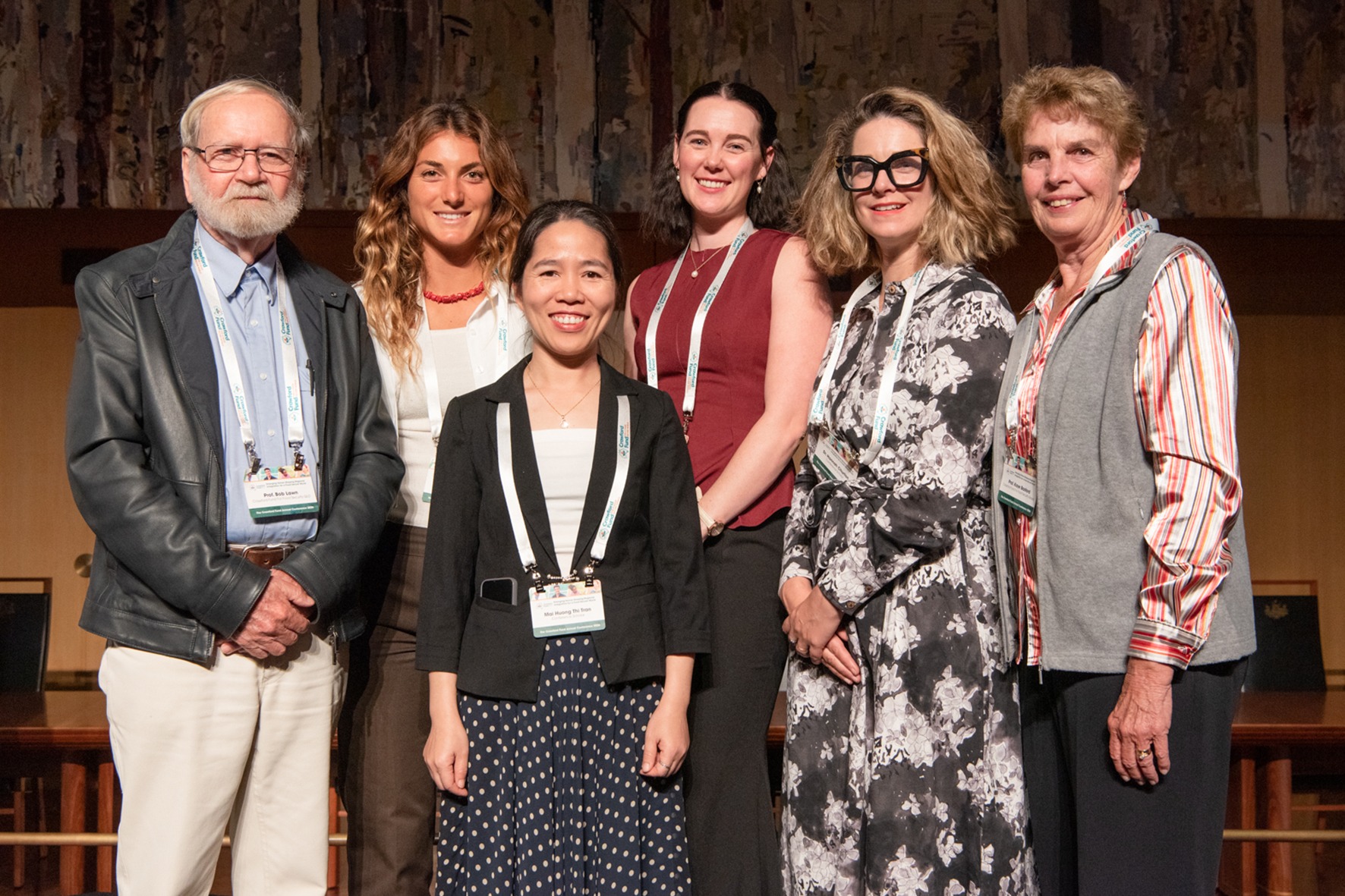
The Crawford Fund is committed to encouraging the next generation working in international agriculture for development through conference scholarships awarded by our State and Territory committees and scholar supporters. This year, we introduced a poster session showcasing the work of nine young researchers and created more opportunities for scholars and early career researchers to take part in conference Q&A sessions, helping to raise their profiles and expand their networks.
Our conference scholarship program started in 2010 in the hope that by experiencing the Crawford Fund for Food Security conference and network, our special program of activities around the conference and being mentored by inspirational experienced researchers, young researchers would be inspired and energised to be more involved. The results have been fantastic, with a great mix of youth and experience at our flagship event each August and a growing and enthusiastic conference scholar alumni approaching 525.
Our competitive conference scholarships are offered to young people with a genuine interest in international agricultural research and development to attend the conference and a special set of activities that we have developed and shaped over the past 16 years.
One of the requirements of the scholarship is that each scholar provides us with a reflection on their experience. We will be providing these reflections over the coming weeks, grouped by State/Territory.
Once again, we would like to thank our wonderful mentors, mentioned alongside the scholar they supported, who volunteer their time and offer valuable guidance, support and insights to the scholars throughout the conference.
Highlights of the experiences of our QLD-based scholars have been captured below:
The experience strengthened my understanding of the scale and interconnectedness of the challenges facing agrifood systems, while also reinforcing my interest in contributing to practical, collaborative approaches to climate resilience and food security. – Hannah Churton
“The conference itself was invigorating…in Parliament House’s Great Hall, surrounded by so many intelligent, inspiring and hardworking innovators, I felt a sense of camaraderie and shared commitment.” – Amalya Harding
“Most importantly, the conference reminded me that food security cannot be understood by looking at individual sectors in isolation. It requires us to keep looking for the connections between ecosystems, people, knowledge, livelihoods and food, and to make space for the food systems that are often less visible.”– Benedetta Longoni
“The conference also provided valuable exposure to leaders in food security, agricultural research, and international development.” – Thi Mai Huong Tran
Read on for the full reflections:
Hannah Churton, Queensland University of Technology
Mentor: Madaline Healey
Attending the Crawford Fund Conference and Scholar Program provided a valuable opportunity to reflect on the relationship between agricultural research, climate resilience and implementation across the Indo-Pacific. A theme that resonated particularly strongly with me was that the challenge facing climate-resilient agriculture is not simply generating new knowledge or technical solutions, but creating the policy, institutional and collaborative conditions that allow those solutions to be implemented at scale.
This was particularly evident in the conference discussion about moving “from Talanoa to action”. The session brought together perspectives from Pacific governments, climate negotiations, international organisations and regional stakeholders to consider what implementation of agri-climate solutions actually requires. I was struck by the importance placed on connecting international climate commitments with the realities of agricultural systems and communities. Nationally Determined Contributions and international negotiations provide an important framework for action, but ultimately their value depends on whether they translate into practical support, investment and improved resilience at local level.
The case studies presented during the conference reinforced this point from a different perspective. Research addressing climate-smart rice production in the Mekong Delta, salinity and cropping systems in the Ganges Delta, Black Soldier Fly technologies and the threat of TR4 to bananas demonstrated the breadth of scientific innovation already being applied to food-system challenges. What I took from these examples was that technical innovation and implementation cannot be separated. Successful adaptation depends not only on whether a solution works scientifically, but also on the surrounding value chains, institutions, capabilities and partnerships that enable its adoption.
The regional focus of the conference was equally valuable. Discussions of multi-country research platforms, shared adaptation strategies and cross-border partnerships highlighted that many food-security and climate challenges do not fit neatly within national boundaries. Strengthening food-system resilience therefore requires collaboration between researchers, governments, regional institutions, industry and communities, while ensuring that responses remain grounded in local priorities and knowledge.
These themes strongly complemented my own research into the governance and implementation of sustainability transitions and my recent work examining climate-resilient agriculture in Fiji. The conference reinforced my interest in the intersection between agricultural resilience, food security and climate transition, particularly the question of how strong research and technical evidence can be translated into effective policy and implementation.
The Scholar experience was also an important part of the week. It provided an opportunity to meet researchers and practitioners at different stages of their careers, build connections across disciplines and institutions, and think more broadly about the different pathways through which research can contribute to development outcomes. I particularly valued being part of a cohort with a shared interest in agricultural development and the Indo-Pacific.
I am very grateful to the Crawford Fund for the scholarship and the opportunity to participate. The experience strengthened my understanding of the scale and interconnectedness of the challenges facing agrifood systems, while also reinforcing my interest in contributing to practical, collaborative approaches to climate resilience and food security.
Amalya Harding, University of the Sunshine Coast
Mentor: Leonie Pearson
I had the honour of attending the Crawford Funds 2026 conference ‘Emerging Voices Shaping Regional Integration for a Food Secure World’ as a conference scholar. Before I discuss the conference itself, I would like to discuss my experience in the lead-up to the event.
I received a Crawford fund student award towards the end of 2024, planned to travel to Samoa for my research in April of 2025 and then attend the 2025 conference. But just before Christmas of 2025, I found out I was pregnant with my second child. Unfortunately, pregnancy complications meant that it was no longer possible for me to travel for research or to the 2025 conference. I contacted Bob Lawn (Crawford Fund’s QLD Coordinator) to explore my options and was met with kindness, compassion, grace and a clear pathway ahead. He suggested options I had not considered and assured me that a change of plans due to pregnancy complications was not a burden. One part of this, was the deferral of my conference attendance to 2026. This experience, highlighted to me just how committed the Crawford Fund and its committee members are to their support of the next generation of researchers. Support of this nature is essential to ensure that women in STEM are not left behind if they choose to enter motherhood alongside their careers. My pregnancy complications meant that maintaining professional connections and continued career progression was difficult in 2025. Thanks to the support of the Crawford Fund and my attendance at the 2026 conference, my pathway has been reignited with an array of opportunities from a strong network.
The Crawford Fund’s mission to support the next generation of researchers was also a clear theme in the development and delivery of both the scholars’ activities and the conference itself. The jam-packed three-day schedule was full of opportunities to learn and network. Beyond this, the mentorship program and discussions with other researchers, practitioners, specialists and lifelong learners provided me with a sense of clarity and direction. Several of the panel sessions during the scholars’ activities provided valuable insights into the various pathways for a career in agriculture for international development and food security, as well as opportunities to further develop my research and expand my impact, that I had not previously explored.
The conference itself was invigorating. As food security researchers and practitioners, the scale of our shared mission (for a food secure world) makes it easy to feel disheartened or overwhelmed when we are faced with some of the world’s largest problems. But in Parliament House’s Great Hall, surrounded by so many intelligent, inspiring and hardworking innovators, I felt a sense of camaraderie and shared commitment. It was wonderful, to be faced with so many incredible people, working towards a shared mission, who are developing and delivering effective initiatives for improving food security across the globe. Hearing personal and professional experiences and the impact of the work already done, left me with an optimistic perspective of our global future. The conference and scholar’s activities provided me with exactly what I needed to move forward with clarity and optimism, post-PhD.
Benedetta Longoni, James Cook University
Mentor: Rebecca Cotton
Being selected as a Crawford Fund Scholar and attending the 2026 Crawford Fund for Food Security Annual Conference was an incredibly valuable experience. It gave me the opportunity to step outside the more specific academic context of my research and think about where my work fits within the much broader challenge of food security.
One of the highlights for me was presenting my research on gleaning fisheries in Timor-Leste. I shared how gleaning is an often-overlooked but important component of coastal food systems, providing diverse and nutritious aquatic foods while allowing households to adapt to seasonal and environmental changes. This felt particularly relevant in the context of a conference where much of the discussion centred on agriculture and land-based food systems. It highlighted for me the importance of bringing wild and aquatic food systems into broader food-security conversations, and of recognising the connections between different sources of food, nutrition and livelihoods.
This idea of interconnected food systems was also one of the messages that stayed with me most strongly from Sandra Milach, CGIAR Chief Scientist, in her opening presentation. I found her framing of food systems as interconnected networks particularly inspiring: connecting land and water, soil and ecosystems, the people who work within these systems—from farmers and producers to scientists and researchers—and ultimately the consumers on the other side. Some of these connections may be straightforward, while others are much more complex and difficult to see. Her emphasis on remaining curious and continuing to look for these broader patterns of connection encouraged me to think beyond the boundaries of my own research and to consider how different parts of food systems interact.
The Scholars’ Days were another major highlight. Meeting other scholars working across different disciplines, countries and food-security challenges was both inspiring and reassuring. I particularly enjoyed the informal conversations and hearing about the different ways people approach similar challenges from very different perspectives.
I also felt extremely supported by my mentor, Rebecca Cotton, throughout the conference. From the beginning, I felt very comfortable and supported. She regularly checked in with me, introduced me to people who could potentially be valuable connections for my future career, and helped me feel more at ease in what could otherwise have been an intimidating conference environment. Her support made a real difference and helped me overcome some of the intimidation that can come with entering such a large professional space for the first time.
I came away from the conference with a strong sense of excitement about continuing to build within this broader food-systems framework. It has encouraged me to think about my research not only academically, but also in relation to the wider communities and networks I want to contribute to. Most importantly, the conference reminded me that food security cannot be understood by looking at individual sectors in isolation. It requires us to keep looking for the connections between ecosystems, people, knowledge, livelihoods and food, and to make space for the food systems that are often less visible.
Thi Mai Huong Tran, University of the Sunshine Coast
Mentor: Bob Lawn
I attended the 2026 Crawford Fund Conference after receiving a Queensland Student Award in 2025. The conference was an incredibly valuable experience, both professionally and personally. As a PhD student and developing researcher, it provided an excellent opportunity to broaden my understanding of global agricultural challenges, engage with leading scientists and policymakers, and connect with fellow scholars from across Australia.
One of the greatest strengths of the conference was the opportunity to meet motivated professionals with diverse interests in agriculture and food security. Conversations with other scholars helped me appreciate the wide range of career pathways within the agricultural sector, including policy, economics, on-farm research, and international development. The mentoring program was also particularly valuable. Speaking with experienced professionals from different areas of the sector helped me reflect on the skills I need to develop and the career pathways I may pursue in the future. The smaller group discussions created a supportive environment for meaningful and practical conversations about professional development.
The conference also provided valuable exposure to leaders in food security, agricultural research, and international development. A consistent message across many sessions was the importance of climate-resilient agriculture in addressing food insecurity and adapting to environmental change. This reinforced the critical role of research, innovation, and collaboration in shaping the future of agriculture.
One session that particularly stood out to me was “Agriculture as a Driver of Climate Adaptation, Economic Stability and Regional Peace.” I was impressed by the range of innovative approaches presented, from improving tolerance to salinity and other environmental stresses to transforming agricultural waste into valuable resources. These examples demonstrated how innovation can not only protect agricultural production from the impacts of climate change but also strengthen the capacity of farming systems and communities to recover and adapt.
The conference also highlighted two important areas for future progress. The first is the role of government policy in supporting conservation and long-term agricultural sustainability. The second is the need to strengthen opportunities and support for women in agriculture. Hearing directly from speakers about the barriers that women continue to face reinforced the importance of creating a more inclusive and equitable agricultural sector.
Overall, attending the 2026 Crawford Fund Conference and Scholar Program was an outstanding opportunity that I would strongly recommend to other emerging researchers. It broadened my perspective on agricultural research, strengthened my professional network, and gave me a greater appreciation of how different disciplines, sectors, and communities can work together to achieve sustainable and meaningful outcomes for agriculture and food security.