

“The conference gave me a front row seat to the conversations shaping food security policy and research across our region…” – scholar reflections from Tasmania
September 15, 2026
The Crawford Fund for Food Security held its Annual Conference last month at Parliament House in Canberra. The event brought together leading experts in agricultural science, research, policy, development and industry to explore the theme Emerging Voices Shaping Regional Integration for a Food Secure World, with a particular focus this year on the theme’s Emerging Voices element.
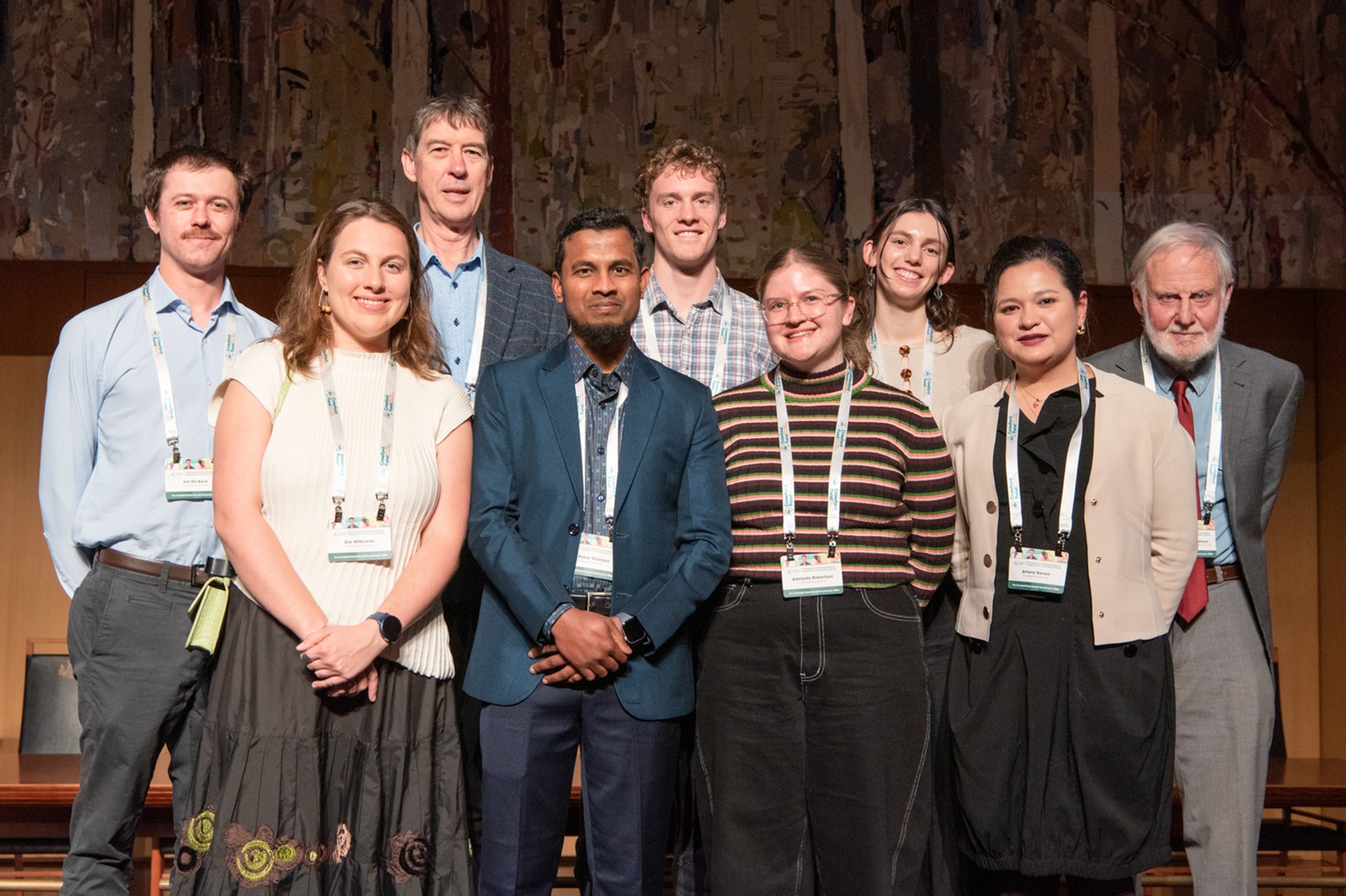
The Crawford Fund is committed to encouraging the next generation working in international agriculture for development through conference scholarships awarded by our State and Territory committees and scholar supporters. This year, we introduced a poster session showcasing the work of nine young researchers and created more opportunities for scholars and early career researchers to take part in conference Q&A sessions, helping to raise their profiles and expand their networks.
Our conference scholarship program started in 2010 in the hope that by experiencing the Crawford Fund for Food Security conference and network, our special program of activities around the conference and being mentored by inspirational experienced researchers, young researchers would be inspired and energised to be more involved. The results have been fantastic, with a great mix of youth and experience at our flagship event each August and a growing and enthusiastic conference scholar alumni approaching 525.
Our competitive conference scholarships are offered to young people with a genuine interest in international agricultural research and development to attend the conference and a special set of activities that we have developed and shaped over the past 16 years.
One of the requirements of the scholarship is that each scholar provides us with a reflection on their experience. We will be providing these reflections over the coming weeks, grouped by State/Territory.
Once again, we would like to thank our wonderful mentors, mentioned alongside the scholar they supported, who volunteer their time and offer valuable guidance, support and insights to the scholars throughout the conference.
Highlights of the experiences of our Tasmanian-based scholars have been captured below:
“It was inspiring to be part of the community that drive for the improvement of food and nutrition security as well as building stronger agricultural systems worldwide.” – Jan de Kock
“The conference gave me a front row seat to the conversations shaping food security policy and research across our region.” – Edward Golding
“The exposure to different careers and pathways was instrumental in helping me to be more decisive about what the future may hold as I complete my undergraduate degree.”– Ellen O’Brien
“The mentor-mentee element of this conference was another positive… The conversations I had with my mentor were invaluable, and made the task of networking feel a lot less daunting.” – Adelaide Robertson
“Presenting my research at Parliament House, in such a significant venue and to such an engaged audience, is something I will carry with me for a long time.” – Abu Bakar Siddique
“I left Canberra with a quiet reassurance that even in politically fragile times, when the global stage can feel like its curtain has closed, there are still people working behind the scenes, quietly sustaining the work of international collaboration and food security.” – Amara Steven
“The conferences focus on “Emerging Voices” was not abstract, but met right in the room. All scholars were encouraged to be bold and confident in asking questions and networking with the eminent speakers and guests at the conference… The empowerment of early career researchers in speaking up in these spaces was a genuine highlight.” – Zoe Witkowski
Read on for the full reflections:
Jan de Kock, University of Tasmania
Mentor: Clayton Simamao
Having the prospect to attend the Crawford Fund 2026 Annual Conference as a scholar was a highly transformative experience, widening my future scope of opportunity in a field I am highly passionate in. As a recent graduate in the Bachelors of Agricultural Science at the University of Tasmania, the conference provided me with the opportunity to connect with students, researchers, practitioners and experts who have devoted a large portion of their lives to international agricultural development. It was inspiring to be part of the community that drive for the improvement of food and nutrition security as well as building stronger agricultural systems worldwide.
This was one of the major highlights of the conference for me, being inspired by those who work in a field that will endure in making people’s lives better. Having the opportunity to engage with professionals working in international agricultural development was highly motivating for me as I was exposed to both a linear and non-linear career progression path.
The three-day conference highlighted the importance of climate resilient agriculture in order to address the growing pressures of food insecurity and adapting to climate change. There were insights from global perspectives including Indonesia, Samoa, Fiji, Nigeria, India and Bangladesh. Moreover, the conference provided a wide scope of agricultural systems with a strong reoccurring theme of smallholder systems. I found these sessions highly engaging as someone who has previously worked with CSIRO on smallholder systems in the Pacific. Hearing about the projects from the perspective of developing countries and the impact on their food systems enabled me to see a tangible connection between my work done in Australia and its potential effect on smallholders in the regions I am most interested in.
Through the Crawford Fund’s mentor program, I was able to directly engage with a significant figure in the Samoan and the Pacific community, Clayton Simamao. Through our conversations I was able to grasp a better understanding of the challenges faced in the smallholder systems of Samoa and the Pacific from the perspective of a community figure who is at the heart of solving many multidimensional challenges. The mentorship provided by Mr Simamao provided me with key insights into the region in which I am very passionate in, highlighting the regions need for collaborative cooperation with external research and the pathways to engage with this need.
Overall, I am very grateful for the opportunity provided to me by the Crawford Fund to participate over the three-day event, allowing me to engage with the people who inspire me to pursue a career in international agricultural development. This experience has inspired me to continue onward through linear and non-linear means with my passion to enhance autonomy through a food secure world.
Edward Golding, University of Tasmania
Mentor: Neville Mendham
The Crawford Fund Conference for 2026 was an engaging and insightful experience, along with the scholar day activities it was a highly valuable experience that I am grateful to have attended. As an undergraduate student, the conference gave me a front row seat to the conversations shaping food security policy and research across our region.
As a student who has not been directly involved in international agricultural development, being in a room of researchers, policymakers, and international experts was eye opening. It reframed food security for me not just as a technical or scientific challenge, but as a political, economic, and collaborative one, requiring coordination across disciplines and people. The variety of backgrounds of attendees and speakers highlighted to me how opportunities in the space are not limited to one pathway, and that different experiences and perspectives is key to overall success. This was especially encouraging being an undergrad, knowing that various avenues exist.
While many of the speakers were memorable, I found Dr Stefan Schmitz from Crop Trust especially interesting. He spoke about the importance of safeguarding crop genetic diversity for future food security. Dr Sandra Milach from CGIAR presented a compelling look into how international agricultural research is being applied on the ground in developing countries, connecting research investment and real improvements in livelihoods and nutrition.
Another component of this year’s conference was the poster presentations by researchers. It was especially interesting hearing from early career researchers from universities across Australia present their work, showcasing the broad range of research in the field. The scholar days offered further insights into the industry and how to get involved, with panels of speakers who offered motivation and genuine advice to us scholars interested in getting involved in international development in agriculture.
Beyond the content, the conference gave me the chance to talk with mentors and peers who have similar interests, and diverse backgrounds, something I would not have had the same access to without the scholar program. I left with an encouraging sense of opportunity and open-mindedness about what lies ahead. I would like to thank the Crawford Fund for the opportunity to attend the conference, and to my mentor Neville Mendham for his vast knowledge and generous insights.
Ellen O’Brien, University of Tasmania
Mentor: Stephen Ives
The 2026 Crawford Fund Conference provided a remarkable opportunity to be immersed and inspired by a diverse community of people committed to making a difference in global food security. I am grateful for the support and opportunity to travel to Canberra. Attending the conference at Parliament House reinforced the significance of the work that the Crawford Fund supports.
The annual conference provides a vital opportunity that brings together expertise across agriculture, research, policy and international development. The theme, ‘Emerging Voices Shaping Regional Integration for a Food Secure World,’ was embodied throughout the program. Hearing scholars and PhD candidates discuss their research was a great addition.
Amid the overwhelming nature of climate change, the conference provided a welcome sense of optimism. Dr Dennis Beesigamukama’s presentation, ‘From waste to wealth – the journey from Africa to the Pacific of the Black Soldier Fly,’ stands out, demonstrating how innovative research can translate a challenge into a practical opportunity with benefits for food systems and communities. Having presentations on real-world, actionable developments felt particularly relevant ahead of COP31.
The conference reiterated the importance of collaboration and community-led approaches. Sustainable agricultural development cannot be achieved by imposing solutions; it requires researchers, farmers, policymakers and communities to work together, with local knowledge and priorities shaping outcomes. This emphasis on capacity building and two-way learning is reflected strongly in the Crawford Fund’s mission.
A constant theme throughout the Scholars’ Day was that no career is linear. The ways in which people have ‘stumbled’ into international agriculture were numerous. The exposure to different careers and pathways was instrumental in helping me to be more decisive about what the future may hold as I complete my undergraduate degree.
I am grateful to my mentor, Dr Stephen Ives, for the generosity of his time, passion and support in providing opportunities for myself and other young people to find their place in international agriculture.
Adelaide Robertson, Pathway Nutrition
Mentor: Greta Stark
The 2026 Crawford Fund for Food Security Conference was a fantastic opportunity to expand my understanding on agriculture and international development. The speakers, who presented at the conference and on the scholar days, provided insight into their own career journeys, including the highlights and challenges they have experienced, and the importance of saying yes to opportunities as they arise.
The concept of a ‘non-linear’ pathway was a theme that continued to emerge throughout the conference from several of the speakers. It was reassuring to hear that regardless of one’s university degree or previous employment, there is a way to contribute to the agriculture and food security space. Having studied Nutrition and Dietetics at university, my exposure has largely been limited to the food security aspects of agriculture, often explored on a national level rather than globally. These conversations highlighted that the skills and knowledge gained through previous engagements are assets and often make a meaningful contribution to transdisciplinary teams.
I really valued the emphasis on partnership and collaboration between organisations and local communities. There is much to be learned from local communities, whose knowledge and lived experience can strengthen and complement research currently being undertaken. A message that really stuck with me was along the line of ‘you have two ears and one mouth, use accordingly’. This served as a reminder of the importance of entering conversations with the intention of listening.
One of my favourite components of the conference was the poster presentations by my fellow scholars; an inclusion that really embodied this year’s conference theme of ‘Emerging Voices’. It provided the opportunity to learn about the research currently being conducted by early and mid-career researchers. The poster on gleaning fisheries was particularly interesting to me. I learnt gleaning is a fishing method used in many coastal communities, and is predominantly performed by women. This was a practice that I was not previously familiar with, and emphasised the vital role that cultural practices play in helping to meet nutritional requirements.
The mentor-mentee element of this conference was another positive. It was a great opportunity to get one on one support from someone working in the agriculture sector. The conversations I had with my mentor were invaluable, and made the task of networking feel a lot less daunting.
I’m grateful to everyone at the Crawford Fund, the conference presenters and other scholars for making the conference such a memorable experience. It was a well-planned and engaging conference that left me with a wealth of new knowledge. This has encouraged me to reflect on how I can contribute more to the food security and agriculture space.
Abu Bakar Siddique, University of Tasmania
Mentor: Tony Fischer
It was a great privilege to attend the Crawford Fund for Food Security Annual Conference 2026 in Canberra. This is truly one of the most rewarding conferences I have ever attended. It was special to me because I joined it as both a scholar and a presenter during the ‘Emerging Voices’ session. I am very grateful to the organising committee for giving me the stage to meet policymakers, scientists, fellow early-career researchers, and mentors throughout the conference.
I still recall the very first day, meeting and being paired with my individual mentor at the Scholar Day event. My mentor, Professor Tony Fischer, was generous with his time and insight, and our conversations helped me think more clearly about where my research fits and where my career might go. Discussing and sharing my work with such an eminent scientist was truly inspiring. I received a great deal of advice, feedback, and guidance regarding both my research and my future career, which will undoubtedly help me a great deal.
The Scholar Days were well organised, offering guidance and real-world examples from leading international research institutes and scientists. Sessions such as “Why International Agricultural Research?” and “How to Break into International Agricultural Research” were especially informative. They gave me a clear sense of how I can contribute to agriculture both at home and in Australia at the same time. Several speakers from ACIAR and ICRISAT explained the career pathways and strategies for entering the international agricultural sector. One suggestion that stayed with me was to think and work at the regional level, and to use that work to help solve global challenges. Later in the Scholar Days, we also had valuable sessions on media and science communication, which gave me a foundation for thinking about better ways to share my work with a wider audience. Another highlight was the opportunity to discuss different aspects of research and career pathways one-on-one with leading scientists during the table meetings. One of the most important lessons I took from this was a genuine sense of value, a realisation that I can contribute through my research in many directions by working across disciplines.
The one-day conference in the Great Hall of Australian Parliament House was truly inspiring. Listening to policymakers, scientists, and leaders opened up many new avenues of learning and was consistently thought-provoking. The keynote set an ambitious tone, framing the role of science and innovation in building resilient regional food systems, a vision that resonated strongly with my own hope of seeing fundamental crop research translated into real breeding outcomes. I also gained a basic understanding of the aims and working methods for the upcoming COP event, a powerful reminder that agricultural climate adaptation is as much about regional diplomacy, youth voices, and negotiation as it is about laboratory science.
One of the most engaging sessions was the case-study session, where I learned about the fascinating work being done by scientists who are making significant contributions to climate-resilient farming systems, from the application of available germplasm and the development of technologies to address climate-change-induced challenges such as disease, to climate-smart rice cropping systems and turning waste into wealth.
Presenting my research at Parliament House, in such a significant venue and to such an engaged audience, is something I will carry with me for a long time. It strengthened not only my confidence as a communicator, but also my conviction that work on climate-resilient wheat has a genuine contribution to make to global food security. The conference reframed my research for me: not as an isolated technical exercise, but as one small part of a much larger, interconnected effort spanning science, policy, and community across our region.
I am sincerely grateful to the Crawford Fund, the TAS Committee, my mentor Professor Tony Fischer, and the RAID Network for this opportunity. I am also thankful to my PhD supervisors, Dr Chenchen Zhao, Professor Meixue Zhou, and Professor Sergey Shabala, for their inspiration, and to the Grains Research and Development Corporation for funding my PhD project. I return home inspired, better connected, and more committed than ever to contributing to a food-secure future, and I look forward to staying engaged with the Crawford Fund community in the years ahead. Thank you, Crawford Fund and RAID Network.
Amara Steven, University of Tasmania
Mentor: Duong Nam Ha
Coming back to Canberra to attend the Crawford Fund Conference as a scholar seemed fitting, given this is where it all began. I studied environmental and resource economics at the Crawford School of Public Policy at Australian National University (ANU), and it was there I was first introduced to questions of food security and international development; themes that shaped how I came to think about economics as a tool for tackling real-world resource challenges.
What I did not know until recently was that the school and the conference are named after the same person: Sir John Grenfell Crawford, an Australian economist and ANU leader who spent his career convinced that economics, applied internationally, could meaningfully address food insecurity and poverty. Discovering this only now, after first encountering these ideas in his namesake’s classrooms, reframed my return to Canberra. The themes I had studied were not incidental to the building I sat in but a direct inheritance from the man it honoured, and fittingly, those same themes anchored this year’s conference: Emerging Voices Shaping Regional Integration for a Food Secure World.
My motivation for applying was straightforward. I was interested in how industries and systems can be integrated, and I wanted to learn more about sectors beyond my own to inform my research, which can often feel siloed within its own disciplinary walls. What I left the conference and RAID scholar events with, however, was far richer than that initial goal.
The Researchers in Agriculture for International Development (RAID) Network’s scholar activities, together with the Crawford Fund Conference itself, gave me the chance to reconnect with former colleagues and build new connections I had not anticipated. Chief among these was my mentor, Dr. Ha, someone based in my own school at TSBE with whom, surprisingly, I had had very little contact before this. Yet from him I learned an enormous amount, simply by listening and asking questions. He also generously opened his contact list to me, connecting me with people whose work closely aligns with my own, people I would otherwise never have had the chance to meet. Then there were the unplanned connections: conversations that happened while queuing coffee, where I found myself hearing about someone else’s research that echoed my own questions but sat in a field I barely understood. These exchanges turned out to be just as valuable as the formal sessions, offering a wealth of information I would not have sought out on my own.
The key message I left with was not explicit, but rather a quiet realisation: that we are still doing a great deal of international research, building meaningful partnerships and sharing knowledge, and that realisation, in itself, felt reassuring. I left Canberra with a quiet reassurance that even in politically fragile times, when the global stage can feel like its curtain has closed, there are still people working behind the scenes, quietly sustaining the work of international collaboration and food security.
Zoe Witkowski, University of Tasmania / TAS Department for Education, Children and Young People
Mentor: Rosemary Deininger
It was a fantastic opportunity to be able to attend the Crawford Fund for Food Security 2026 Annual Conference, “Emerging Voices Shaping Regional Integration for a Food Secure World.” To learn more about the diverse work of the Crawford Fund was particularly interesting, and the global scale of partnerships. As a 2025 Crawford Fund Student Awardee, I was aware of some of the areas they engage with, but the conference was a real eye-opener.
Through my attendance, I was able to benefit from the international networks, innovative ideas, and broad scope of work. I left feeling both excited by the possibility of working in international agriculture for development and eagerly searching up opportunities. The chance to have a mentor in Rosemary Deininger, was an informative and friendly experience. I note this is very unique in these conference spaces and commend Crawford Fund on making this available for early career researchers, who are often desperately trying to get their foot in the door.
Learning of the diverse opportunities in international agriculture for development was beneficial, and something I was hoping for going into the conference. With a background in marine and environmental science, and current policy work in Tasmania’s state government, I find opportunities to utilise my scientific skills are often limited to academia. It was exciting to learn of the practical ways to incorporate my science, policy and cross-cultural capability in the agricultural space (e.g. ACIAR projects, Australian Volunteers).
The conferences focus on “Emerging Voices” was not abstract, but met right in the room. All scholars were encouraged to be bold and confident in asking questions and networking with the eminent speakers and guests at the conference, as well as some scholars even presenting in the Great Hall of Parliament House for the first time. The empowerment of early career researchers in speaking up in these spaces was a genuine highlight. Another highlight was learning of the longstanding global partnerships that are present amongst the Crawford Fund and other organisations, demonstrating trust and reciprocity. Moving away from projectisation is critical for long-term change, and I was glad to see that reflected in the room.
Hearing from the Youth Climate Champion, Sally Higgins was another highlight that left some key messages with me. She spoke about how the current population of young people are the largest generation in history, and that we young people, are one of the greatest resources in adapting our food systems to continued challenges. “Young people are not simply those who will inherit the future of our food systems. They are one of the greatest resources we have for helping shape it,” – Sally Higgins.
Community-driven projects was another key message that was communicated by many speakers from different fields, linked to the success of projects. Though I am sceptical of the use of this ‘buzz word’ , and raised my hand and questioned a speaker once on exactly what mechanisms are you used to actively centre community in projects, not as afterthoughts, to which she shared examples from the Philippines.