

“The conference demonstrated how food security is not just a ‘national’ security problem, but also an international imperative…” – scholar reflections from Western Australia
September 18, 2026
The Crawford Fund for Food Security held its Annual Conference last month at Parliament House in Canberra. The event brought together leading experts in agricultural science, research, policy, development and industry to explore the theme Emerging Voices Shaping Regional Integration for a Food Secure World, with a particular focus this year on the theme’s Emerging Voices element.
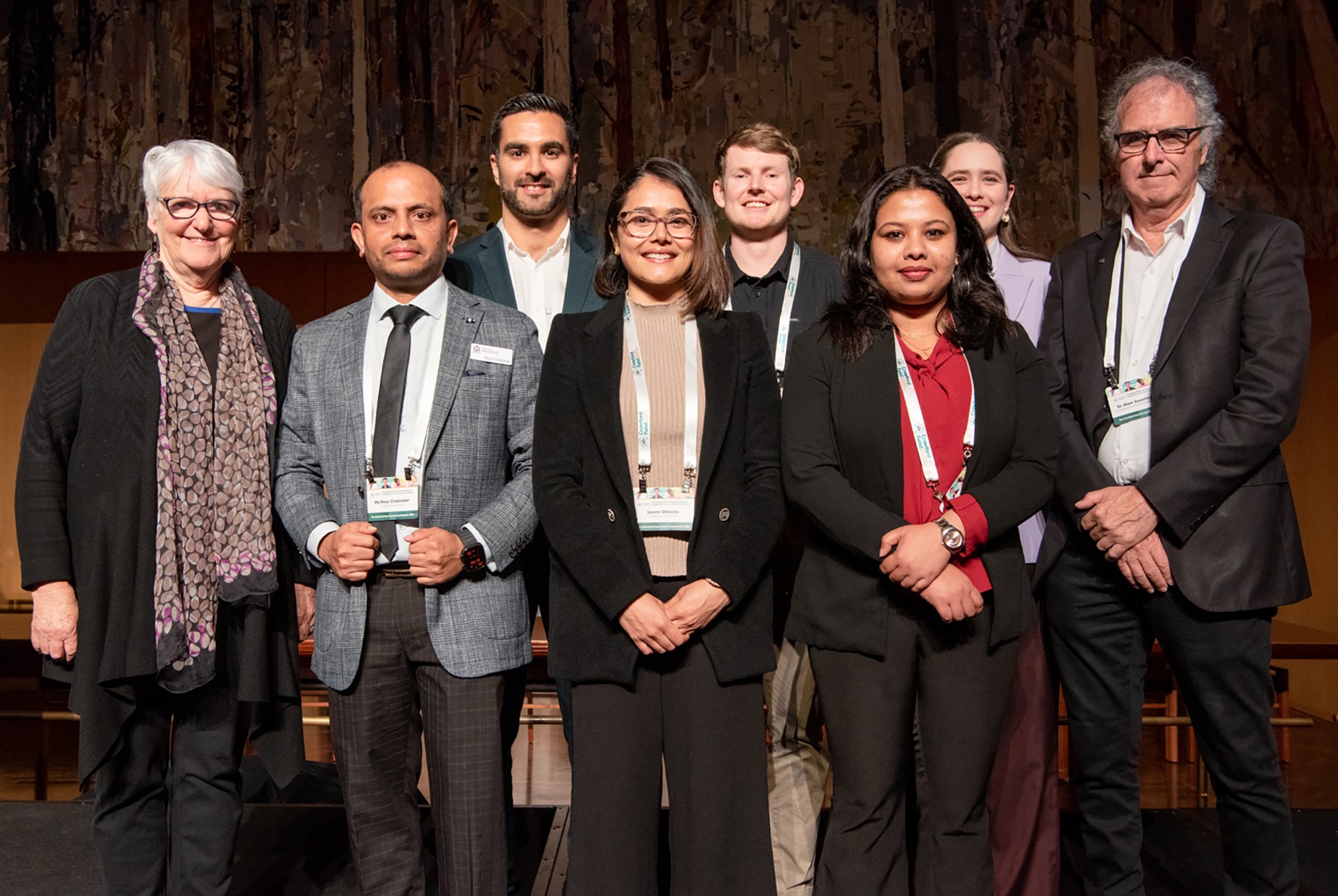
The Crawford Fund is committed to encouraging the next generation working in international agriculture for development through conference scholarships awarded by our State and Territory committees and scholar supporters. This year, we introduced a poster session showcasing the work of nine young researchers and created more opportunities for scholars and early career researchers to take part in conference Q&A sessions, helping to raise their profiles and expand their networks.
Our conference scholarship program started in 2010 in the hope that by experiencing the Crawford Fund for Food Security conference and network, our special program of activities around the conference and being mentored by inspirational experienced researchers, young researchers would be inspired and energised to be more involved. The results have been fantastic, with a great mix of youth and experience at our flagship event each August and a growing and enthusiastic conference scholar alumni approaching 525.
Our competitive conference scholarships are offered to young people with a genuine interest in international agricultural research and development to attend the conference and a special set of activities that we have developed and shaped over the past 16 years.
One of the requirements of the scholarship is that each scholar provides us with a reflection on their experience. We will be providing these reflections over the coming weeks, grouped by State/Territory.
Once again, we would like to thank our wonderful mentors, mentioned alongside the scholar they supported, who volunteer their time and offer valuable guidance, support and insights to the scholars throughout the conference.
Highlights of the experiences of our WA-based scholars have been captured below:
“My strongest takeaway was the importance of integration. Scientific innovation is essential, but research alone does not create impact. Sustainable and resilient food systems require strong connections between science, industry, policy, communities and regional partnerships.” – Md Reaz Chaklader
“One of the strongest messages I took away was that there is no single or linear pathway to a meaningful career. The speakers’ inspiring stories demonstrated that careers could develop through unexpected experiences, changing interests and a willingness to say “yes” to new opportunities.” – Laxmi Ghimire
“Another key takeaway from the program was the importance of applied research and grower-led projects and that opportunities for growers and researchers to build trust and understanding are essential for being able to deliver meaningful and lasting change on-ground.”– Cassie Howell
“The experience has strengthened my interest in applying my research to international agricultural development.” – James O’Connor
“A significant highlight was the opportunity to present my PhD research at the Great Hall of Parliament House…This experience strengthened my confidence in communicating complex research clearly and reinforced the importance of making scientific knowledge accessible to audiences beyond a specific research discipline.” – Gayathri Rathnayake
“The conference demonstrated how food security is not just a ‘national’ security problem, but also an international imperative to guarantee the health, well-being and dignity of individuals and communities worldwide.” – Bayan Yazdani
Read on for the full reflections:
Md Reaz Chaklader, WA Department of Primary Industries and Regional Development
Mentor: Jenny Hanks
Participating as a Crawford Fund Scholar at the 2026 conference, “Emerging Voices Shaping Regional Integration for a Food Secure World,” was a valuable professional and personal development experience. As a Research Scientist working in marine finfish aquaculture R&D at the Department of Primary Industries and Regional Development (DPIRD), Western Australia, the program encouraged me to look beyond my immediate research discipline and consider how science can contribute more broadly to regional food security.
One of the valuable aspects of the Scholar Program was learning more about ACIAR and CGIAR and their roles in international agricultural research and development. Understanding the opportunities available through these organisations broadened my perspective on how researchers can contribute to sustainable agricultural development and food security across the Indo-Pacific, Southeast and South Asia, and Africa.
A major highlight was the main conference held in the Great Hall at Parliament House, Canberra. Hearing from researchers, policymakers, industry representatives and development professionals provided diverse perspectives on the challenges facing food systems. Meeting fellow Crawford Fund Scholars from different agricultural disciplines and backgrounds was equally valuable and demonstrated the importance of multidisciplinary approaches to addressing food security, sustainability and climate resilience.
My strongest takeaway was the importance of integration. Scientific innovation is essential, but research alone does not create impact. Sustainable and resilient food systems require strong connections between science, industry, policy, communities and regional partnerships. This is particularly relevant to my work in sustainable aquaculture, where innovations such as alternative feed ingredients need to be scientifically robust, commercially practical and responsive to industry needs.
The mentoring program provided another valuable dimension. Discussions with my mentor, Jenny Hanks, around career development, leadership, collaboration and international agricultural research encouraged me to think more strategically about my future development as a research leader.
Overall, the experience broadened my perspectives, strengthened my professional networks and reinforced my aspiration to build multidisciplinary and international collaborations. I am grateful to the Crawford Fund, my mentor, fellow scholars and DPIRD for this opportunity and look forward to applying these insights to my research in sustainable aquaculture and regional food security.
Laxmi Ghimire, Curtin University
Mentor: Rajendra Ahikari
Attending the Crawford Fund conference 2026 was a deeply meaningful and inspiring experience that strengthened my commitment to contributing to global food security. Coming from a food science background, I have always been passionate about improving food systems. However, this experience broadened my understanding of how research can create a meaningful impact when it is connected with policy, international development and the practical needs of local farmers.
One of the strongest messages I took away was that there is no single or linear pathway to a meaningful career. The speakers’ inspiring stories demonstrated that careers could develop through unexpected experiences, changing interests and a willingness to say “yes” to new opportunities. This was reassuring and motivating, as it encouraged me to remain open-minded about where my knowledge and skills might lead. The multidisciplinary and interdisciplinary nature of the work presented also showed me that complex global challenges cannot be solved by a single discipline. Food scientists, agricultural researchers, policymakers, development practitioners and farming communities must work together.
I was particularly inspired by the connection between policy, research and development, and local farmers. Effective solutions must begin by listening carefully to farmers and understanding the problems they experience in their own environments. Researchers can then work with policymakers and development organisations to translate this knowledge into practical, locally appropriate and sustainable solutions. This approach reminded me that research should not remain confined to laboratories or publications; it should ultimately improve people’s livelihoods, strengthen food systems and contribute to addressing global challenges such as hunger, malnutrition and climate change.
Learning about grain gene banks was especially fascinating. The conservation of genetic diversity is essential for protecting valuable agricultural resources and developing crops that are more resilient to pests, diseases and changing climatic conditions. This highlighted the importance of long-term thinking and international collaboration in safeguarding the future of food and agriculture.
The conference also helped me recognise the enormous value of professional networks. Collaboration creates opportunities to exchange knowledge, connect different areas of expertise and develop solutions that would not be possible through isolated efforts. Meeting people with shared interests in agriculture, food security and international development made me feel part of a wider community working toward a common purpose.
The support provided by RAID Network is incredible. Having access to a personal mentor who offered encouragement, guidance, and genuine support made the experience particularly valuable. This mentorship gave me greater confidence to consider interdisciplinary and international opportunities and to think more broadly about how I can contribute beyond my immediate field of research.
Overall, attending the Crawford Fund conference was both personally and professionally transformative. It reinforced my passion for food security and reminded me to remain curious, collaborative and willing to embrace new opportunities. Most importantly, it encouraged me to pursue research that listens to communities, connects science with policy and development, and produces meaningful outcomes for farmers and society.
Cassie Howell, Grower Group Alliance
Mentor: John Dalton
Participating in the 2026 Crawford Fund Conference Scholarship program was an invaluable experience that I am incredibly grateful for. It was an opportunity to explore interesting and highly relevant topics from a variety of different agri-food related areas, and to connect and learn from a wide range of really cool people. It strongly reinforced to me the importance of collaborating between disciplines and across borders to work together towards a food secure future.
The conference covered a wide range of interesting topics, from community led agricultural projects in the Pacific through to the inter-governmental negotiations on climate change at COP. A highlight was the keynote by Dr Stefan Schmitz (Crop Trust), about the role of seed banks and the surprisingly simple reality of what it would take to ensure these essential programs can continue to provide security for crop genetics into the future. While I knew they were important, his insights (and compelling turns of phrase) put the systems and institutions behind this concept into a new light. It also highlighted the importance of telling the stories behind the research and science that we do. Another key takeaway from the program was the importance of applied research and grower-led projects and that opportunities for growers and researchers to build trust and understanding are essential for being able to deliver meaningful and lasting change on-ground.
The poster presentations, a first-time initiative at this year’s edition of the conference, provided an invaluable platform for some of my fellow early career researchers to share their work. The presentations they delivered were fantastic and provided a meaningful link between the often high-level concepts being discussed in the keynotes and panels, and the reality of the in-depth research work that goes into supporting food security in the real world. They very strongly reflected the theme of this year’s conference, Emerging Voices Shaping Regional Integration for a Food Secure World, and demonstrated that those of us who are still early in our careers are not just the future of our fields, but already contributing to this vital work here and now.
It was good to see representation from a fairly diverse range of organisations, including government, research and NFPs. The presence and contributions of multiple people from CG Agricultural Research Centres was really interesting, providing insights into institutions that I was familiar with but had not previously engaged with in much detail. Some good suggestions were also provided on possible pathways for getting involved with these centres and their programs, which enhanced the value of the overall Scholars program. Many of the other conference attendees, including keynote speakers and guests, were very generous with their time and insights, answering questions and providing guidance on a range of topics from technical explanations to career advice.
The Scholar’s activities were hugely invaluable, with a chance to meet a range of people (both early-career and otherwise), to share interesting conversations and build connections that may hopefully lead to collaboration in future projects. It highlighted that there is no one pathway for a career in international agricultural research and development, and that many different opportunities are available.
I greatly appreciated the chance to be connected with my mentor, John Dalton, who was able to share insights from his time working in a range of countries in the Asia-Pacific. As I hope to work in these places in my future career, it was valuable to be able to have these conversations with someone with his level of experience. The generosity and commitment of all involved in organising and delivering the entire program was also greatly appreciated. Many past scholars were present in varying roles throughout the Conference and Scholarship program, and I hope that my time as a scholar is also only the beginning of my ongoing involvement with this fantastic initiative.
James O’Connor, University of Western Australia
Mentor: Lyn Abbott
Attending the 2026 Crawford Fund for Food Security Conference and Scholar Program in Canberra was an extremely valuable opportunity to broaden my understanding of international agricultural research and its role in strengthening food security. I am grateful to the Crawford Fund and its Western Australian Committee for supporting my participation. The conference theme, “Emerging Voices Shaping Regional Integration for a Food Secure World,” was particularly relevant to my research on soil fertility, nutrient cycling and sustainable fertiliser technologies.
One of my main take-home messages was that food security cannot be addressed as an isolated production problem. The opening keynote highlighted the need to treat food, land, water and climate as one connected system. Agricultural research must therefore integrate improved crops, soil and water management, markets, seed systems and decision-support tools. I was also struck by the emphasis that the true measure of successful research is not simply the number of publications or technologies produced, but whether innovations are adopted by farmers, strengthen communities and influence policy.
The case studies demonstrated what this looks like in practice. Examples included climate-smart rice value chains in the Mekong Delta, cropping-system adaptation to salinity in the Ganges Delta, transforming organic waste through black soldier fly production, and international efforts to protect bananas from Fusarium wilt TR4. Although the challenges and locations differed, each case showed the importance of combining sound science with local knowledge, partnerships and practical pathways to adoption.
The Pacific pre-COP discussion was another highlight. It reinforced that food security and regional stability are closely connected, particularly for Pacific communities already experiencing significant climate impacts. A key message was that solutions should be developed with communities rather than for them, with farmers, local organisations and emerging leaders given meaningful roles in decision-making.
The Scholar Program added considerable value to the conference. Meeting researchers and scholars from across Australia exposed me to disciplines and perspectives beyond my immediate area of soil science. The mentoring, networking and practical discussions about working in partner countries helped me think more carefully about respectful collaboration, capacity building and creating research partnerships that continue beyond a single project. I also valued the opportunity to connect with my mentor, Professor Lyn Abbott, whose guidance and insights will help me build on the experience and identify future opportunities to contribute to food security and sustainable agriculture.
The experience has strengthened my interest in applying my research to international agricultural development. My work focuses on improving nutrient-use efficiency, recycling organic resources and developing soil-management practices that increase crop productivity while reducing nutrient losses. The conference encouraged me to place this work within the broader food-system context and to pursue stronger partnerships across globe. This is particularly relevant to my work involving highly weathered and nutrient-poor tropical soils, including research connected with Timor-Leste. I returned to UWA with new contacts, practical ideas and a clearer understanding that lasting impact comes from integrated science, trusted partnerships and sustained local engagement.
Gayathri Rathnayake, Murdoch University
Mentor: Alison Bentley
Participating in the Crawford Fund Conference as a Crawford Scholar representing Western Australia was a highly valuable professional and academic experience. The conference provided a unique opportunity to engage with researchers, policymakers, industry professionals and development practitioners, while encouraging me to consider my PhD research within the broader context of agricultural development, food security and the translation of research into meaningful impact.
A significant highlight was the opportunity to present my PhD research at the Great Hall of Parliament House. My research is highly specialised and communicating it to an audience with diverse scientific and professional backgrounds required me to move beyond technical detail and articulate its broader significance. This experience strengthened my confidence in communicating complex research clearly and reinforced the importance of making scientific knowledge accessible to audiences beyond a specific research discipline.
The conference program and its speakers further expanded my perspective on the role of agricultural research. The presentations demonstrated how scientific innovation intersects with policy, international agricultural development, industry priorities and the needs of farming communities. A particularly important message I took from these discussions was that successful research should not be considered solely in terms of publications or scientific outputs. Its longer-term value also depends on whether knowledge can be translated, communicated and ultimately used to address practical challenges.
The Crawford Scholar mentoring program was another particularly valuable component of the conference. I was fortunate to be paired with a mentor from CSIRO whose research area closely aligns with my own. Our informal discussion provided an opportunity to exchange perspectives on our respective research areas and discuss career development within agricultural science. Speaking with an established researcher outside my immediate supervisory environment was valuable, as it provided a different perspective on both my research and the broader opportunities available within the sector. It also reinforced the importance of professional networks and mentorship during the early stages of a research career.
Engaging with fellow Crawford Scholars was equally rewarding. Meeting early-career researchers from different disciplines and regions of Australia highlighted the diversity of expertise contributing to contemporary agricultural challenges. These interactions reinforced the importance of interdisciplinary collaboration and the value of building professional relationships beyond one’s immediate research area.
Most importantly, the conference has influenced how I approach my role as an early-career researcher. My PhD naturally requires considerable attention to experimental design, data generation and scientific interpretation. However, the Crawford experience encouraged me to think more deliberately about the pathway from scientific discovery to impact. I now consider more consciously how my research can be communicated effectively, how it connects with broader agricultural priorities, and how research outcomes may ultimately contribute to practical solutions.
I am sincerely grateful to the Crawford Fund, the Western Australian Committee, conference organisers, speakers and mentors for providing this opportunity. The Crawford Scholar experience has strengthened my scientific communication skills, broadened my professional network and provided a wider perspective on the responsibilities and opportunities associated with a career in agricultural research. I expect these lessons to remain valuable throughout the remainder of my PhD and as I progress into the next stage of my research career.
Bayan Yazdani, Department of Agriculture, Fisheries and Forestry
Mentor: Joseph Vile
Attending the 2026 Crawford Fund Annual Conference was a very rewarding experience, equipping me with new insights from agricultural research, avenues for global collaboration, and strengthened networks. Seeing the theme of ‘Emerging Voices Shaping Regional Integration for a Food Secure World’ coming to life through the scholars’ activities, including engaging short poster presentations (a new feature in 2026), was inspiring.
The conference’s – and scholars’ program’s – focus on sustainability and climate resilience, relating directly to my work in the Department of Agriculture, Fisheries and Forestry’s International Climate team, resonated well with scholars – particularly in this challenging year characterised by an unusually warm winter in the lead up to a ‘super El-Nino’, which is smashing records across our nation, continent, and world.
Now, more than ever, international collaboration and discourse engagement are critical in finding solutions to our plentiful challenges. The conference demonstrated how food security is not just a ‘national’ security problem, but also an international imperative to guarantee the health, well-being and dignity of individuals and communities worldwide. Having such multicultural and international speakers, fellow scholars, and other attendees instilled the conference and scholars’ program with fresh perspectives, interesting opinions, and rewarding cross-cultural conversations.
While my academic background is not specifically in agriculture, but more focused on international relations and trade, I still found the scholars’ activities highly relevant – helping me see how diplomacy and trade link what’s discovered in labs and on farms to fora like the WTO, UN FAO, or UNFCCC. Speaking with the other scholars working and studying primarily at universities, I realised gaps sometimes persist between the world-class scientific expertise developed across Australian universities and the decisions of government. As a policy advisor and analyst, I realised that greater partnerships – and even just talking and networking – between academics, students, civil society and government can only strengthen collaboration and improve decision-making, particularly in this pivotal year as COP31 President of Negotiations (for which there was a highly engaging and informative panel session).
I particularly appreciated the opportunity to hear from Dr. Sally Box, Australia’s COP31 Head of Delegation, and Sally Higgins, COP31 Presidency Youth Climate Champion – alongside Pacific agricultural leaders like Dr Tekini Nakidakida and Clayton Simamao – on how COP31 can deliver real outcomes for sustainability, food security and climate action in primary industries. Australia’s partnership with the Pacific is a pivotal aspect of our COP31 Presidency, and through the conference I saw this partnership in action. Hearing from mentors and speakers from ACIAR, CGIAR, CSIRO, DAFF, DFAT, ICRISAT, RAID and the Crawford Fund about real partnership examples in contexts as diverse as Vietnam and Eastern Africa demonstrated what’s possible when we work together to empower grassroots communities and farmers through research support, public service, and advocacy.
Overall, I feel grateful to have had the opportunity to travel to Canberra and visit Parliament House – the heart of our democracy – for this program. The additional networking and learning opportunities provided by the scholars’ program enhanced my experience, insofar that I have made new friends – and potential research partners or future colleagues – that I will keep in touch with, and continue learning from, as I continue to progress my career in agricultural sustainability and climate policy.
Thank you to the WA Crawford Fund Committee for your sponsorship.