

2025 Conference Keynote Listeners Report
August 20, 2025
By RAID Network members: Somia Afzal and John Yaxley
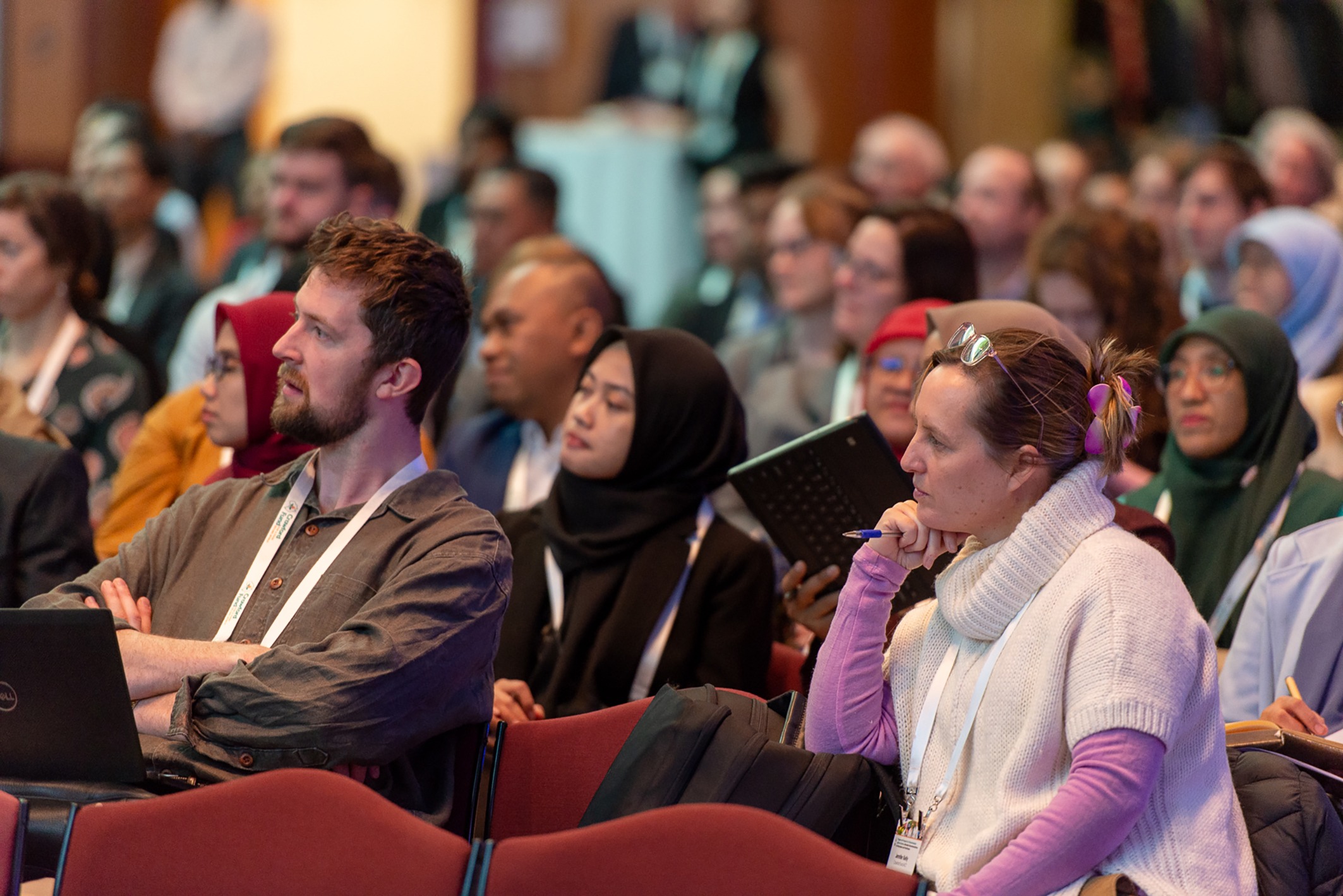
Each year a succinct summary of our annual conference is delivered by our Keynote Listeners who play an integral role in summarising and communicating the key take home messages from the event. We invite the wonderful RAID Network to nominate members to be our Keynote Listeners each year and in 2025 we can thank Somia Afzal and John Yaxley for their report below, which will be particularly useful as we wait for the conference formal proceedings, yet to come!
The Crawford Fund’s 2025 Annual Conference brought together global leaders, policymakers, and early-to-mid-career researchers and specialists to address one of the most serious challenges of our time: ensuring universal food security in a changing climate.
Held at Parliament House in Canberra, the conference explored the theme “Progress and Prospects for Climate-Resilient Agricultural Systems”, providing a platform for innovative ideas, evidence-based solutions, and cross-sector collaboration.
SIR JOHN CRAWFORD MEMORIAL ADDRESS
The conference began on 11th August with the Sir John Crawford Memorial Address, delivered by The Hon Joel Fitzgibbon, former Minister for Agriculture, Fisheries and Forestry. Fitzgibbon paid tribute to Sir John Crawford’s enduring influence, describing him as “a great Australian whose intellectual vision, advocacy, and determination left a lasting legacy in agricultural productivity, education, and policy capacity around the world.”
In his address, Fitzgibbon highlighted that food security is closely linked with climate, economic, and national security. He emphasised that leadership plays a critical role, as the policy decisions made today will shape resilience in the future. While science and innovation are essential for addressing these challenges, he said that political will is equally important to translate knowledge into action. Drawing on his experience as a farmer and policymaker, Fitzgibbon highlighted risks posed by unstable global conditions, from supply chain disruptions to shortages of diesel, fertiliser, and agricultural chemicals. He recommended that policymakers treat food security with the same seriousness as other national priorities. He called for realistic and integrated land use approaches, greater investment in climate-smart practices already proven in Australian agriculture, and a balanced focus on productivity, profitability, and sustainability. Fitzgibbon concluded with a call to action: to showcase Australia’s global leadership in soil health, carbon sequestration, biofuels, forestry, and methane reduction, not only to meet climate goals but also to strengthen both national and international food security.
CONFERENCE OPENNING SESSION
The Hon John Anderson (now former Chair, Crawford Fund), opened the session for the day, delivering an address that emphasises the fact that while the world produces enough food for everyone, millions still go hungry due to political instability and food waste. He urged continued investment in agricultural research, innovation, and next-generation leadership.
The Hon Kate Thwaites (Special Envoy for Climate Change and Resilience) welcomed conference participants and highlighted the importance of integrating climate resilience into agricultural and food systems. She commended the work of the Australian Centre for International Agricultural Research (ACIAR) and international partners that demonstrate scalable solutions.
The 2025 Crawford Fund Medal was presented to Professor Kadambot Siddique (University of Western Australia) for over 35 years of leadership in crop physiology, production, and capacity building. In his acceptance speech, Siddique dedicated the award to his late parents and emphasised Australia’s reputation for agricultural training and mentoring future scientists around the world.
The Food Security Journalism Award was awarded to Carl Smith for “One Atoll’s Fight,” a story about collaboration between Micronesian communities and scientists to protect their environment and food systems.
SESSION 1: KEYNOTE – Achieving Universal Food Security in an Adversely Changing Climate
The keynote address by Professor Glenn Denning (Columbia University) focused on Australia’s potential leadership in food security, emphasising the need to increase the Official Development Assistance budget for agriculture from 8% to a more significant share. Key recommendations included advancing Australia as a regional leader, supporting the G20 Global Alliance, expanding university-to-university cooperation, and enhancing partnerships with multilateral development banks. From his 40 years of experience, Denning identified five key investment areas: sustainable intensification, reducing post-harvest losses, connecting farmers to markets, shifting diets towards healthier, sustainable options, and social protection systems for those unable to secure nutritious food, all supported by good governance and women’s empowerment.
SESSION 2: Can We Feed the World with Net Zero Emissions?
Chaired by Ms Jennifer Kelly (CSIRO), the session on agricultural emissions and productivity explored strategies for enhancing agricultural output while reducing emissions, highlighting innovations within the agricultural sector and supporting policy frameworks. Professor Richard Eckard (University of Melbourne) outlined the challenges of achieving net zero emissions in agriculture, emphasising that biological processes and system limitations make absolute zero unattainable. He noted that emerging mitigation technologies, carbon in setting, and shared business models offer practical pathways, but cost, incentives, and food security must be carefully balanced. Dr Ando Radanielson (National Research Institute, Indonesia) focused on low-emission rice production, including alternate wetting and drying, direct-seeded rice, integrated straw management, and high-yielding varieties, highlighting the need for incentives, machinery, and behavioural changes. Ms Caitlin McConnell (farmer and agribusiness leader) emphasised balancing environmental and economic goals, highlighting the importance of infrastructure, research, and cost-effective technologies for agribusinesses. Dr Leanne Webb (CSIRO) presented climate services like MyClimateView, providing location-specific data to support crop planning under changing conditions. Dr Tyron Venn (University of Queensland) discussed silvopastoral systems, showing how integrating trees, pasture, and livestock can reduce emissions, sequester carbon, and provide financial returns, while emphasising secure land rights and carbon credit systems. Collectively, the five speakers of this session concluded that mitigating agriculture’s climate impact requires coordinated action across technology, policy, and practical farm-level adaptation, alongside attention to food security, human rights, and innovative solutions across the sector.
SESSION 3: Achieving a Pathway to Climate Resilience: Lessons from Asia, Africa & Pacific Regions
In this session Dr Aditi Mukherji (International Livestock Research Institute) focused on the impact of climate change on global agriculture and pathways to resilience. Evidence showed a direct link between rising temperatures and declining crop yields, with every region experiencing increased heatwaves and droughts. The IPCC data confirmed the vulnerability of food systems to climate change, stressing the need for enhanced global R&D and support. Five resilience pathways were outlined: reducing unsustainable consumption, increasing production of healthy foods (especially in developing nations), protecting natural resources, reducing emissions, and prioritising smallholder interests. Professor Graham Sem (University of Papua New Guinea) presented case studies from the Pacific that illustrated local adaptation strategies, as well as the vital role of knowledge exchange and stakeholder engagement. The session highlighted the importance of co-designing solutions, acknowledging traditional knowledge, and customising adaptation strategies to regional and community needs for effective climate resilience.
SESSION 4: Resilience through Equity, Inclusion and Community Participation
Chaired by Mr Nigel Hart (GDRC) and led by Dr Purnima Menon (IFPRI), this session addressed the intersection of gender equality and food systems resilience. Dr Menon presented findings that women in South Asia play a dominant role in agricultural and domestic work yet have comparatively lower agency over farm planning and decision-making. When women are empowered to make decisions, the climatic resilience and nutritional provision of the farming enterprise is increased. Still, women face persistent barriers in access to information, financial services, and a voice in governance.
Case studies from Cambodia, presented by Dr Sonia Akter (Australian National University) revealed that as men migrate to cities, women assume greater agricultural responsibilities. Households with higher female decision-making were more resilient to climate shocks, supported by diversified strategies like crop and income diversification, small-scale home-based ventures, and a stronger community solidarity. Next, Mr Acacio Sarmento da Silva (WorldFish) presented a project from Timor Leste promoting the inclusion of women in fisheries governance through co-management committees, with evidence that this not only improved climate adaptation but also enhanced nutritional provision, especially for mothers and children.
Ms Selane Tairea (University of the South Pacific) presented her research from the Cook Islands showing how farmers primarily adapt their methods rather than their crops, with a move towards organic practices. A survey among farmers identified that a lack of information, resources and institutional support was a common challenge for the region. Ms Vyta Hanifah (University of Adelaide) used a case study from the Indonesian dairy sector to show that although women appeared empowered in metrics, they often lacked influence in decision-making.
The moderated Q&A emphasised the importance of grassroots engagement, recognising trade-offs in women’s time, and cultural shifts in gender roles. The overarching recommendations included promoting gender-responsive policies, supporting women in climate adaptation, and ensuring female voices are heard in governance and decision-making.
SESSION 5: Conversation on Recommendations for Policymakers and Practitioners
Moderated by Professor Wendy Umberger (ACIAR), a panel of consisting of previous speakers Professor Glen Denning, Ms Caitlin McConnel, Dr Purnima Menon, Dr Aditi Mukherji and Seeseei Molimau Samasoni (Plant and Food Research NZ) brought together diverse voices to reflect on practical next steps for advancing food security and climate resilience. Panellists stressed the need to elevate agricultural and food security issues within mainstream policy, emphasising the importance of partnerships across research institutions, private sector, governments, and vulnerable communities. They called for a stepwise, strategic approach to balancing food production with environmental goals, recognising that not every challenge must be tackled simultaneously. The debate highlighted the necessity of holding large corporations accountable while empowering local leaders and preserving traditional knowledge through genuine communication and land-based engagement. Public engagement and youth involvement in agriculture were underscored as future priorities, with attention to policy barriers and generational transitions.
CLOSING REMARKS
Mr Shaun Coffey (Crawford Fund) made closing remarks for the Conference, calling for informed advocacy, continued collaboration, and recognition of agriculture’s central role in addressing climate, environmental, and political challenges. Ms Cathy Reade (Crawford Fund) was brought to the stage and thanked for her years of service to the Crawford Fund. Lastly, Coffey paid his respects to the Crawford Scholars in attendance and wished everyone a safe trip home.
Overall, Crawford Conference 2025 was not just an exchange of ideas; it was a reminder that Australia’s expertise, resources, and values position the nation to make a significant global impact on feeding the world sustainably.