

“It was valuable to gain exposure to different perspectives and approaches to livestock production.” – 2026 Henzell Awardee Emilia Kerr
November 30, 2026
Last year, the Crawford Fund for Food Security expanded its offerings encouraging the next generation of Australians into food security and agriculture for development – welcoming a much-appreciated new component, the Henzell Awards.
With the support of Ted and Frances Henzell and family, these national awards fund brief visits by Australian undergraduate students to international agricultural research projects in targeted tropical developing countries.
Applications for our 2027 Henzell Awards are now open!
The ultimate aim is to promote interest in further study and grow the number of Australians seeking careers in food production and food and nutrition security – benefitting Australia and the world.
Four talented university students from the University of Tasmania, The University of Sydney, The University of Melbourne and the University of Queensland were awarded our 2026 Henzell Awards. They were selected from a competitive pool of applicants from around the country, all keen to get on the ground experience in agriculture for development early in their studies.
As part of this cohort, we would like to share the experience of Emilia Kerr from the University of Tasmania who travelled to Vietnam as part of an ACIAR project focused on integrating smallholder households and farm production systems into commercial beef supply chains.
Blog (and images) by Emilia Kerr
The Crawford Fund Henzell Award provided me with an incredible opportunity to travel to Vietnam focusing on integrating smallholder households and farm production systems into commercial beef supply chains.
As an undergraduate Bachelor of Agricultural Science student at the University of Tasmania, this experience provided me with the opportunity to step outside the classroom, gain international exposure and develop a broader understanding of agricultural research.
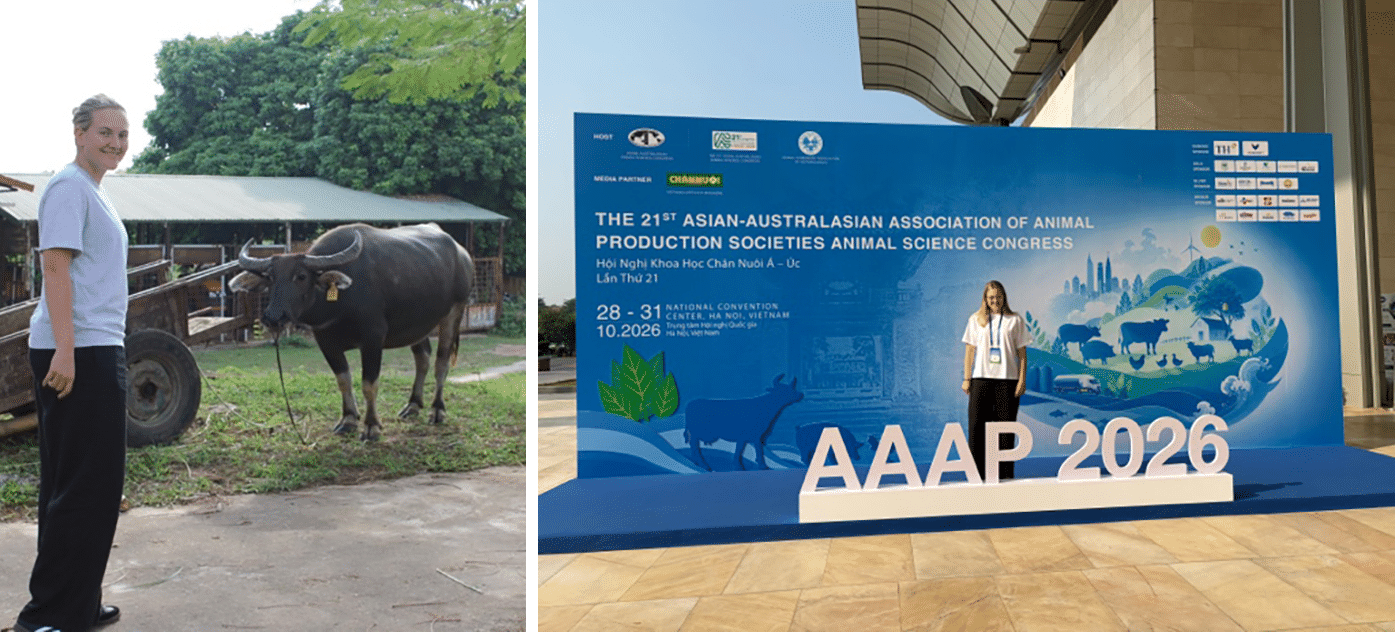
The first major highlight was attending the Asian-Australasian Association of Animal Production Societies (AAAP) Conference in Hanoi. I attended three days of presentations and discussions, providing an opportunity to hear from researchers, academics and industry professionals working across the livestock sector. The opening ceremony was a particular highlight, bringing together people from across the world who share a common interest in improving animal production and agricultural systems. It was valuable to see the range of research being undertaken internationally and to gain exposure to different perspectives and approaches to livestock production.
Following the conference, I had the opportunity to travel to Ninh Binh, where I experienced more of Vietnam’s culture, landscapes and way of life. This was a wonderful opportunity to explore beyond Hanoi and gain a greater appreciation for the country and its people.
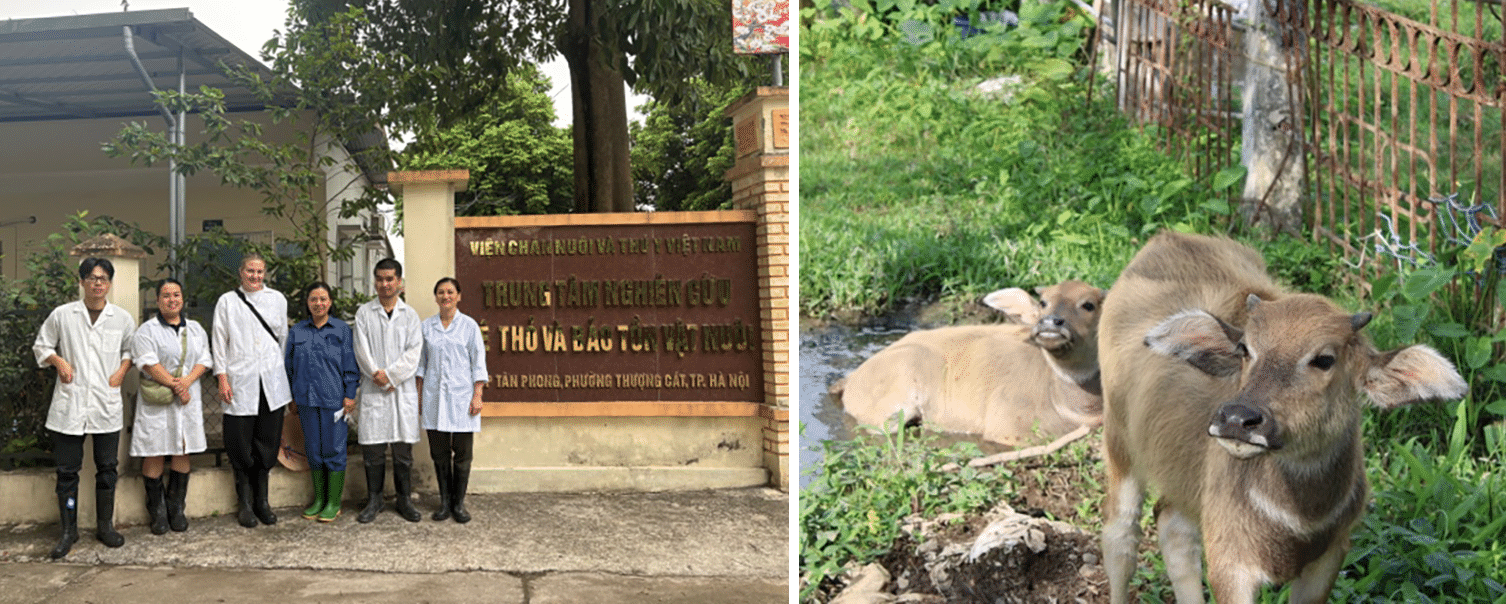
The second week of my visit was spent at the Vietnam Institute of Animal Sciences (VIAVS), where I worked alongside the research team and gained exposure to a range of agricultural experiments, research activities and farming systems. This provided a valuable opportunity to see how agricultural research is undertaken in Vietnam and how it connects with practical farming challenges. Being able to observe the work firsthand and interact with the team gave me a much greater appreciation for the importance of collaboration, knowledge sharing and understanding local agricultural conditions.
Coming from a farming background in Australia, one of the most eye-opening aspects of the trip was seeing just how different agricultural systems and farming practices can be between countries. Growing up around broadacre farming, livestock and large-scale agricultural operations, this was my first opportunity to visit farms outside of the broadacre systems I was familiar with in Australia. In particular, the animal welfare component was something that surprised me and gave me a different perspective on livestock production.
Seeing these differences firsthand challenged some of the assumptions I had developed through my own experiences and highlighted how farming practices are influenced by local conditions, resources, knowledge and production systems.
It was a valuable experience to take home with me, encouraging me to look at agriculture from a broader perspective and consider how different approaches can influence the way we think about and manage agricultural systems.
Ultimately, this experience has strengthened my enthusiasm for understanding how agricultural research and scientific knowledge can be applied to address critical global challenges. It has shown me how important international collaboration is in improving rural livelihoods, strengthening food security, increasing access to resources and supporting more sustainable agricultural production.