

“One of the most unique and enriching experiences in my professional and academic journey” – scholar reflections from the Top End
September 8, 2026
The Crawford Fund for Food Security held its Annual Conference last month at Parliament House in Canberra. The event brought together leading experts in agricultural science, research, policy, development and industry to explore the theme Emerging Voices Shaping Regional Integration for a Food Secure World, with a particular focus this year on the theme’s Emerging Voices element.
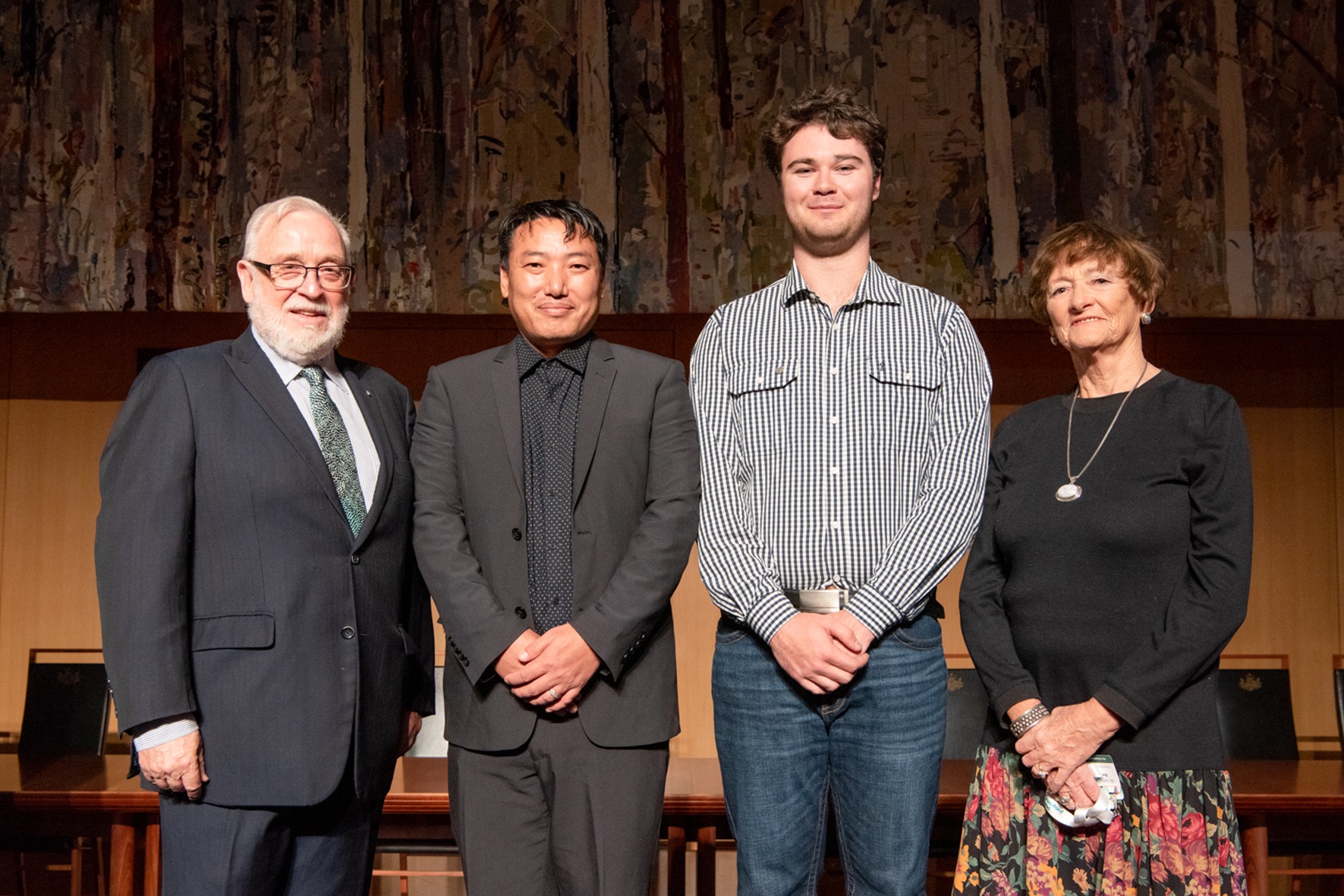
The Crawford Fund is committed to encouraging the next generation working in international agriculture for development through conference scholarships awarded by our State and Territory committees and scholar supporters. This year, we introduced a poster session showcasing the work of nine young researchers and created more opportunities for scholars and early career researchers to take part in conference Q&A sessions, helping to raise their profiles and expand their networks.
Our conference scholarship program started in 2010 in the hope that by experiencing the Crawford Fund for Food Security conference and network, our special program of activities around the conference and being mentored by inspirational experienced researchers, young researchers would be inspired and energised to be more involved. The results have been fantastic, with a great mix of youth and experience at our flagship event each August and a growing and enthusiastic conference scholar alumni approaching 525.
Our competitive conference scholarships are offered to young people with a genuine interest in international agricultural research and development to attend the conference and a special set of activities that we have developed and shaped over the past 16 years.
One of the requirements of the scholarship is that each scholar provides us with a reflection on their experience. We will be providing these reflections over the coming weeks, grouped by State/Territory.
Once again, we would like to thank our wonderful mentors, mentioned alongside the scholar they supported, who volunteer their time and offer valuable guidance, support and insights to the scholars throughout the conference.
Highlights of their experiences from our NT-based scholars have been captured below:
“Attending the 2026 Annual Crawford Fund Conference was one of the most unique and enriching experiences in my professional and academic journey.” – Sangay Dendup
“I left the conference with a stronger understanding of where my research fits within the broader food security landscape, a wider professional network, and a renewed appreciation of the role that early-career researchers can play in addressing future agricultural challenges.” – Adam Moloney
Read on for the full reflections:
Sangay Dendup, Charles Darwin University
Mentor: Helen Garnett
The opportunity to attend the 2026 Annual Crawford Fund Conference, was one of the most unique and enriching experiences in my professional and academic journey.
Centred on the theme “Emerging Voices Shaping Regional Integration for a Food Secure World,” it was a transformative experience helping me bridge gap between my academic theory and practical agricultural development. The Crawford Fund plays an important role in promoting impactful research for development and extension for global food security. I am very privileged to be part of Crawford Fund’s profound global initiative. This year’s conference highlighted the urgent need for cross border integration and collaboration of polices, markets and innovations for a resilient and sustainable food system. It not only provided me the opportunity to listen to several keynote speakers and presentations but also provided me an invaluable platform to interact with industry leaders, scientists, researchers, academicians, and innovators.
The most insightful and eye-opening aspects of the conference was presentations and panel discussions on contemporary agri-food challenges. Highlighting the power of regional and global integration, the speakers demonstrated an urgent need for cross border collaboration, integrated trade policies and shared agricultural technologies and innovation which are critical for achieving food security for building a climate resilient agri-food system. A recurring theme of the conference was on amplifying the emerging voices through placing early-career researchers, indigenous farmers and the youths on the centre of agricultural policy design. The conference also called for a systems-thinking in practice considering the intersection of food security across different disciplines including water, land, energy and regional diplomacy.
Another most impactful elements of the Crawford Fund Scholar Program was its mentoring initiative. I was fortunate to be mentored by Dr Helen, a highly respected and experienced professional. She has not only offered me personal career guidance but also helped me navigate the busy conference program and introduced me to key figures in my field. I will continue to seek her support my professional development and aspiration to pursue a career with international organisations.
Furthermore, the networking sessions and interactive scholar activities, provided me the opportunity to establish connection with the scholars, leaders and scientists. The RAID network program is another important and exciting platform for the scholars to build professional and academic networking for future collaboration and partnerships in agriculture.
For all these wonderful learning experiences, and for profoundly shaping my academic and professional journey, I would like to offer my sincere gratitude to the Crawford Fund and NT Committee for selecting me as one of the 2026 scholars. This is an opportunity that I will always value and remember. My special thanks to Dr Helen for being a wonderful mentor. I have gained great confidence and encouragement from her guidance. And to everyone who were involved, thank you all very much for their generous assistance throughout this journey. I would recommend that early-mid career researchers attend future Crawford Fund Conferences; it will open up doors to academic and professional opportunities.
Adam Moloney, Charles Darwin University
Mentor: David McGill
Attending the 2026 Crawford Fund Conference in Canberra in 2026 was an incredibly valuable experience, both professionally and personally. As an early-career researcher and PhD student, being selected as a Crawford Fund Scholar provided me with an opportunity to engage with researchers, industry leaders, government representatives and numerous other scholars working towards improving food security in both Australia and internationally.
A particularly valuable aspect of the conference was the Scholar Program, which allowed me to meet fellow scholars from across all the states and territories within Australia and learn about the diverse research and work being undertaken to address food security. Although there were various research areas present, there was a common focus on developing solutions to challenges affecting production, sustainability and food resilience. Hearing about the experiences and career pathways of other early-career researchers and industry individuals broadened my understanding of how different disciplines contribute to food security and highlighted the importance of collaboration across science, industry and government.
The Scholar Program also provided an important opportunity to develop professional connections. Throughout the conference, I was able to discuss my own research and the potential it has to improve productivity and economic resilience within Australia and these conversations helped me recognise that the challenges my work addresses are connected to much broader issues of climate resilience, food production and international food security. I was particularly grateful to be paired with Dr David McGill, who spent considerable time introducing me to people whose expertise aligned with my research interests. His guidance encouraged me to actively engage with the conference and helped me develop connections that may continue beyond the conference.
The broader conference sessions further reinforced the importance of these connections. The session ‘From Talanoa to action: with Pacific Pre-COP ahead what does implementation of agri-climate solutions look like?’ highlighted the need to understand how climate change is affecting agricultural production and to develop practical climate solutions. The midday session (‘Agriculture as a driver of climate adaptation, economic stability, and regional peace. Case studies showcasing research that delivers practical solutions for nutrition, sustainability, and community resilience’) explored agriculture’s role in climate adaptation, economic stability and community resilience, including research addressing challenges such as banana disease and sustainable agricultural production. The afternoon session (‘Exploring multi-country research platforms, shared adaptation strategies, trilateral partnerships, and cross-border innovation that strengthen food-system resilience’) demonstrated the value of international collaboration through the introduction to the preservation of plant genetic resources through gene banks and the sharing of knowledge across countries using these gene banks.
All the sessions demonstrated that food security is a complex challenge that cannot be addressed by a single discipline or organisation. Progress requires researchers, producers, industry, government and communities to contribute different forms of knowledge and expertise to succeed.
Reflecting on my experience as a Crawford Fund Scholar, the greatest lesson I took from the conference was the importance of people and collaboration. The Scholar Program gave me a network of peers who are passionate about improving food security, while the broader conference provided opportunities to learn from established leaders in the field. I left the conference with a stronger understanding of where my research fits within the broader food security landscape, a wider professional network, and a renewed appreciation of the role that early-career researchers can play in addressing future agricultural challenges.