

“The network I’ve now got across the country is arguably as useful to my career as anything said from the podium” – scholar reflections from NSW
September 4, 2026
The Crawford Fund for Food Security held its Annual Conference last month at Parliament House in Canberra. The event brought together leading experts in agricultural science, research, policy, development and industry to explore the theme Emerging Voices Shaping Regional Integration for a Food Secure World, with a particular focus this year on the theme’s Emerging Voices element.
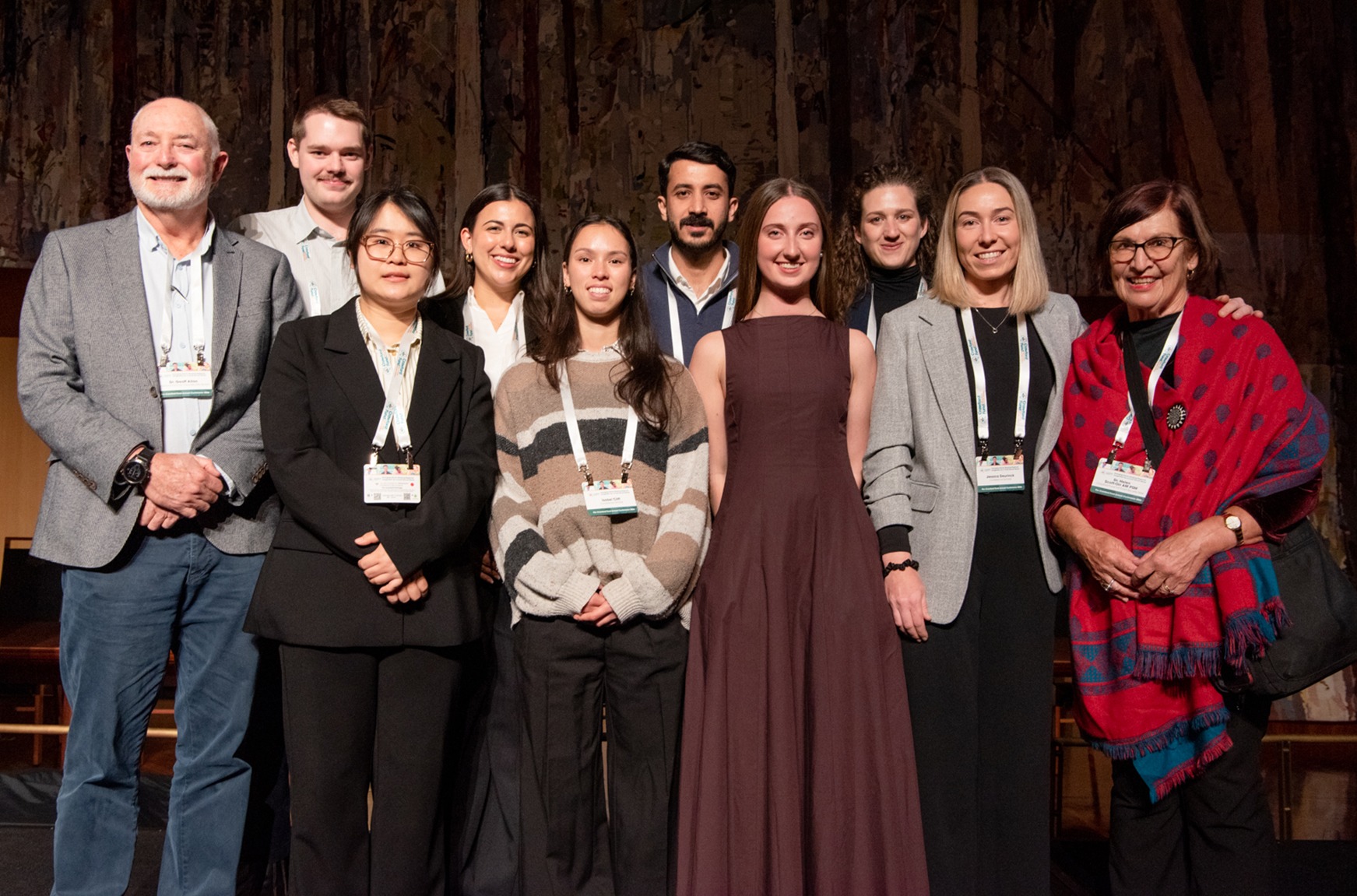
The Crawford Fund is committed to encouraging the next generation working in international agriculture for development through conference scholarships awarded by our State and Territory committees and scholar supporters. This year, we introduced a poster session showcasing the work of nine young researchers and created more opportunities for scholars and early career researchers to take part in conference Q&A sessions, helping to raise their profiles and expand their networks.
Our conference scholarship program started in 2010 in the hope that by experiencing the Crawford Fund for Food Security conference and network, our special program of activities around the conference and being mentored by inspirational experienced researchers, young researchers would be inspired and energised to be more involved. The results have been fantastic, with a great mix of youth and experience at our flagship event each August and a growing and enthusiastic conference scholar alumni approaching 525.
Our competitive conference scholarships are offered to young people with a genuine interest in international agricultural research and development to attend the conference and a special set of activities that we have developed and shaped over the past 16 years.
One of the requirements of the scholarship is that each scholar provides us with a reflection on their experience. We will be providing these reflections over the coming weeks, grouped by State/Territory.
Once again, we would like to thank our wonderful mentors, mentioned alongside the scholar they supported, who volunteer their time and offer valuable guidance, support and insights to the scholars throughout the conference.
Highlights of the experiences of our NSW-based scholars have been captured below:
“This experience was valuable for broadening my understanding of global challenges in agricultural systems and food security, both domestically and internationally.” – Tahnee Chandler
“The networking opportunities during both the conference itself and the two half scholars’ days was a standout aspect.” – Isobel Clift
“One of the highlights of the conference was hearing Dr Gabrielle Persley AM speak about perseverance, collaboration, and the power of science to improve lives, which was deeply inspiring.”– Elisa Dalla Rosa
“I particularly appreciated the international perspectives represented at the conference. This diversity highlighted the importance of partnerships in addressing global challenges such as food security.” – Jessica Deurinck
“Hearing about the scale of the work being done abroad, including the long-term partnerships, fieldwork, capacity building and research, was eye-opening, and showed how many opportunities and areas there are to pursue.” – Arthur Doyle
“Just as valuable was the scholar cohort itself…and that the network I’ve now got across the country is arguably as useful to my career as anything said from the podium. I left Canberra with a genuinely different view of where economics fits in food security work, and a mentor relationship I look forward to building upon.” – Madison Isemonger
“I’m leaving with a genuine plan to follow up with a few of the people I met, and a clearer sense that even specific research only matters if it eventually connects to that bigger picture.”- (Seyyed) Hamid Sadati
“I was also honoured to be selected for the poster session, where I shared my PhD research with the wider agricultural development community. The positive feedback and constructive suggestions I received gave me fresh perspectives on my research and how to communicate its significance to a wider audience.” – Chenxiang Zhang
Read on for the full reflections:
Tahnee Chandler, University of New South Wales
Mentor: Mohammed Mainuddin
The 2026 Crawford Fund Conference provided an enriching opportunity for knowledge sharing and networking by uniting experts, leaders, and scholars from diverse backgrounds and countries all with the shared interest of agricultural research and food security. I had the privilege to attend as a NSW scholar and this experience was valuable for broadening my understanding of global challenges in agricultural systems and food security, both domestically and internationally. I am incredibly grateful to the Crawford Fund, RAID network and the NSW Committee, specifically Geoff Allan and Helen Scott-Orr, for selecting and supporting me as a scholar throughout the conference and scholar program activities.
The conference’s theme, “Emerging Voices Shaping Regional Integration for a Food Secure World”, highlighted the importance of community-led research, inclusive partnerships, and local knowledge systems in international agricultural development for long-term impact. Key takeaways reiterated by speakers throughout the conference were the importance of co-production, scaling and capacity building in agricultural development to ensure relevant application and outcomes. To develop sustainable research solutions, speakers emphasised the importance of knowledge sharing and approaches that are inclusive of all stakeholders: farmers, researchers, policy-makers and the broader community.
A highlight, for me, was listening to the rich insights provided by the selected speakers. My research interests align with the conference theme closely as my PhD project focuses on knowledge sharing and scaling aquaculture interventions in small-scale farming communities.
The interdisciplinary nature of the presentations and the diversity in professional backgrounds was beneficial and gave me greater insight into this sector. I thoroughly enjoyed listening to presenters, such as Mr Clayton Simamao who emphasised the need for local solutions and feasible action plans in agricultural development that are inclusive of traditional farming knowledges. Another speaker, Himanshu Pathak, echoed these sentiments by detailing how scaling technologies and interventions developed through knowledge exchange are a collective vision for a shared future and strong partnerships. I also enjoyed Mr Soane Patolo Jr.’s talk that emphasised the importance of community-led development and co-designed development to ensure decisions are scaled and reflective of community prioritises as “sustainable food security is built with communities, not delivered to them.”
Many speakers, like those I mentioned above, were united with the shared perspective that adaptive solutions need to be scaled for the local communities: advocating for a shift away from western-centric research models and promoting for more inclusive approaches.
Apart from the conference, the scholar activities organised provided a beneficial opportunity for learning and networking alongside like-minded early-career scholars. The connections made through these activities were so valuable, whether it was with experts or with other young scholars. Through this program, I was fortunate to be paired with Dr Mohammed Mainuddin as my mentor. I am grateful for Mohammed’s investment in my mentorship and for the insightful advice and experiences he shared with me as a highly accomplished academic. The scholar sessions provided guidance in navigating agricultural development and food security research as an early-researcher, imparting valuable insight on career pathways and practical advice.
Sharing this opportunity with other early-career researchers was my favourite highlight and I thank the Crawford Fund for investing in young people and for providing a platform for us to bond, share experiences, and uplift one another. The Crawford Fund scholars’ program and conference were an invaluable and highly rewarding experiences and has reinforced my motivation to contribute to this sector for an inclusive and food-secure future. The knowledge I gained from this opportunity fuelled my passion for research and I look forward to incorporating the principles learned at this conference into my research into the future.
Isobel Clift, University of Sydney
Mentor: Peter Wynn
I had the absolute privilege of attending the 2026 Crawford for Food Security Conference as a Conference Scholar within the NSW committee. As a recently graduated Honours student in Animal and Veterinary Bioscience, this experience was both inspiring and insightful as I consider post-graduate opportunities.
A key theme that reverberated throughout the conference was the importance of approaching food security as one interconnected system that considers culture, science, policy and real-world impact. Dr Sandra Milach’s keynote address epitomised this notion from a scientific perspective. Further, speakers highlighted the significance in finding community-based and culturally considered and adapted interventions to tangibly inform and impact agrifood productivity and resilience to climate and economic challenges. I particularly enjoyed the presentation of case studies by Dr Dennis Beesigamukama, Dr Tony Patterson, Dr Mohammad Mainuddin and Professor Jaquie Mitchell, demonstrating these sentiments through ral-world, scientific practice.
I also really valued hearing from government perspectives, particularly The Hon Julie Collins MP and Victoria Anderson. Their addresses highlighted the broader policy context of food security and the importance of collaboration across government, industry, research and communities. I found this particularly interesting in considering how the scientific research discussed throughout the conference can ultimately connect with policy and broader food security objectives against current challenges facing the industry.
The networking opportunities during both the conference itself and the two half scholars’ days was a standout aspect. I’m really grateful and appreciative of my mentor Dr Peter Wynn. How awesome it was to establish this connection, listen and learn. It was also incredibly valuable to listen to and chat with established research professionals and those with alternate professional backgrounds to my own, yet similarly support international agricultural development. I really enjoyed exchanging stories and insights with fellow scholars and mentors about the challenges we observed working in-country. In the scholar’s days, it was really interesting to hear of the varied career paths into international agriculture or development, with the key, similar anecdote by speakers of a non-linear career pipeline, being open to all opportunities as they arise.
Ultimately, this experience has reinforced my passion for working in international development, particularly in smallholder-led agriculture. COP31 Youth Climate Champion, Sally Higgins, articulated the importance of building solutions alongside young people in the context of agricultural climate challenges. This key insight solidified my excitement to pursue opportunities in this industry. This message, underpinned by ongoing reference to the conference theme of ‘Emerging Voices Shaping Regional Integration for a Food Secure World”, helped inspire some confidence in where I, and my research potential could fit within the international agricultural industry and contribute towards national and global climate, food security and community-led objectives.
I am so grateful to all for this incredible experience at a turning point in my early agri-research journey, and would like to thank the Crawford Fund team including Larissa and Lucy, and NSW coordinator Dr Helen Scott-Orr for their support both in the lead up and during the event. Many thanks to my mentor, Dr Peter Wynn, and my fellow scholars; the opportunity to learn about such diverse educational or professional backgrounds, experiences and motivations working within the food, agriculture and international development sectors was wonderful and broadened my understanding of this industry.
Elisa Dalla Rosa, Southern Cross University
Mentor: Daniel Tan
Looking back on the Crawford Fund Conference and Scholars’ Program, the idea that stayed with me most strongly was the importance of connections. Many speakers highlighted that meaningful agricultural outcomes are achieved not through individual expertise alone, but through researchers, farmers, governments, generations, industry and communities working together towards shared goals.
This theme emerged from the very beginning of the Scholars’ Program. Dr Himanshu Pathak introduced the idea of a “T-shaped” professional profile: developing deep expertise in one area while maintaining enough breadth to engage with other disciplines and perspectives. It reinforced the importance of building strong technical skills while remaining open to collaboration and learning from others.
The conference expanded on this idea of interconnection. One quote from Stefan Schmitz stayed with me: “We are not short of collections; we are short of connections.” I found myself reflecting on the broader connections needed to address agricultural challenges: networks between researchers and farmers, countries and institutions, generations of knowledge, and disciplines. Dr Sandra Milach’s presentation encouraged researchers to step back from narrow scientific questions and focus on broader outcomes. Research outputs matter, but their real value lies in whether farmers adopt solutions, communities become more resilient and lasting change occurs as a result.
One of the highlights of the conference was hearing Dr Gabrielle Persley AM speak about perseverance, collaboration, and the power of science to improve lives, which was deeply inspiring. Her career has inspired me, but above all, I treasure the way she honoured the many colleagues, partners and collaborators who crossed her path.
Another message that captured the spirit of the conference was a quote shared by Dr Larelle McMillan, attributed to Dr Lilla Watson: “If you have come here to help me, you are wasting your time. But if you have come because your liberation is bound up with mine, then let us work together.” For me, this reflected the idea that agricultural development is not about one group providing solutions to another. Across cultures, professions and regions, there is knowledge to be shared and lessons to be learned. The challenges facing agriculture increasingly cross borders, and meaningful progress depends on recognising our shared interests as a species.
I appreciated speakers such as Sam Coggins, Mr Clayton Simamao and Dr Sandra Milach discussing failures. Rather than viewing these as setbacks, they framed them as valuable learning experiences that shaped their careers. Their reflections highlighted the importance of resilience, adaptability, and openness to new opportunities.
Last but not least, conversations with fellow scholars and researchers across the world challenged me to think more broadly about the role of Ag4D and the many pathways through which emerging voices can be heard and influence positive change. I am also grateful to my mentor, Dr Daniel Tan, who shared his knowledge, experience and professional network, reflecting one of the conference’s strongest messages: progress is built through people who support, encourage and learn from one another.
Thanks to the Crawford Fund, which gave me this opportunity, I left Canberra with a stronger belief that lasting impact comes from cooperation, a willingness to share, and the recognition that none of us can address the greatest challenges in food security alone.
Jessica Deurinck, Southern Cross University
Mentor: Helen Scott-Orr
Having worked as a beekeeper before beginning my PhD with the Bee Lab at SCU, the transition from industry to academia felt daunting. I had assumed that research and industry were somewhat disconnected. However, during the first semester of my PhD, I have not only maintained existing industry connections but also strengthened and expanded them.
Attending the 2026 Crawford Fund Conference reinforced the importance of these relationships and demonstrated that successful research should be judged by its impact in the field. As Ms Kylie Porter from SunRice noted, “Research is not completed once it is published, it is completed once it reaches a market”.
As a 2026 scholar, I found the scholars’ program created valuable opportunities to learn directly from experienced mentors. I was very fortunate to be paired with Helen Scott-Orr, whose extensive career in the veterinary and, specifically, the biosecurity sector provided relevant insights to my field. What stood out most was her passion for international work, particularly her experience living and working in Indonesia. She could not overstate the value of immersing oneself in the communities where research is conducted. Despite Helen’s impressive career, she remained humble, encouraging me to follow my passions, which will guide me in making strong relationships throughout my career.
Originally from Belgium, I particularly appreciated the international perspectives represented at the conference. This diversity highlighted the importance of partnerships in addressing global challenges such as food security. Beyond discussing agricultural research across Southeast Asia, the Pacific, and Africa, speakers also shared pearls of wisdom drawn from their personal experiences, some of which resonated strongly with me. Dr McMillan demonstrated how heart and passion are key to achieving meaningful impact, while both she and Ms Su McCluskey illustrated that careers in international agricultural research are rarely linear. Mr Clayton Simamao encouraged viewing mistakes as ‘lessons learned’ rather than failures. Dr Stefan Schmitz offered a compelling perspective on infrastructure, explaining that systems such as gene banks are often overlooked until they fail. This resonated with my own research on honey bee breeding programs, which require long-term investment despite often being funded only in the short term. Sally Higgins was also inspiring in highlighting the importance of youth in shaping the future of farming systems.
The conference was equally inspiring through the fellow scholars I met, such as Amalya Harding, soon to graduate from her PhD, who shared similar research methods, and whose experience juggling academic and family life was truly humbling. Valuable advice on navigating work-life balance was also shared with me by experienced ACIAR project leaders.
The word I will most remember from the 2026 Crawford Fund Conference is connectedness. Not only through the relationships formed, but through the clear message that research is most effective when people and ideas are connected. As Dr Sandra Milach from CGIAR and Imelda “Dada” Bacudo from ASEAN observed, the future lies not in reinventing the wheel but in connecting the dots across borders and disciplines.
Finally, I would like to thank the conference organisers, the RAID Network team, and especially Larissa Mullot and Lucy Broad for creating such a rewarding and customised experience for the scholars.
Arthur Doyle, Griffith University
Mentor: Tekini Nakidakida
I was incredibly honoured to be selected as a NSW Crawford Scholar and to attend the 2026 Crawford Fund Conference. As an early career researcher from a social science background, what struck me first was the sheer range of people in the room. The scholars, mentors and experts I met throughout the conference came from an enormous spread of backgrounds. From economics, nutrition, GEDSI, supply chains, health, and many others, attendees truly covered every corner of the food system. Any concerns about the conference being mainly focused on agriscience were quickly put to rest, and the participants themselves showed the complexity of food systems and the breadth of knowledge and skills needed across the sector to make meaningful change.
The representatives I spoke with, from both Australia and abroad, also had a wide range of experiences from working in government, academia, the private sector or leading international organisations. All attendees were remarkably generous with their time, and just as interested in hearing about the scholars’ backgrounds as they were in sharing their own. Hearing how each of them found their passion and their niche, and where they see themselves making a difference, has been inspiring and further motivation to pursue a career in the field. The Crawford Fund staff were also fantastic throughout, actively drawing us into conversations, linking us with other experts and helping us get the most out of the entire conference.
The sessions I valued most were those on international research and projects across Asia and the Pacific. Hearing about the scale of the work being done abroad, including the long-term partnerships, fieldwork, capacity building and research, was eye-opening, and showed how many opportunities and areas there are to pursue. I was also excited to learn how investment overseas links directly back into Australia through food security, biosecurity and knowledge sharing, showing that these initiatives are mutually beneficial and there is a lot more to do.
The additional pre-conference day and the RAID Network activities were another highlight. They gave a clear picture of the opportunities and roles available within RAID, and of the support on offer to take those opportunities up and build skills for a career in international agricultural development. I was also paired with a mentor whose work aligned directly with my interests, and our discussions were consistently insightful and useful. I look forward to staying in touch with them, and hopefully to meeting them in their home country in the future.
Altogether, the 2026 Crawford Fund Conference was an incredible opportunity, not just to meet like-minded peers, but to come away genuinely inspired and informed about how and why to pursue a career in this field. I left with a much clearer sense of where my own background, skills and interests fit, and feeling part of a wider network of people working on problems I care deeply about.
Madison Isemonger, University of Sydney/BioScout
Mentor: Kym Anderson
Attending the 2026 Crawford Fund Conference, Emerging Voices Shaping Regional Integration for a Food Secure World, at Parliament House was the best way to connect my Agricultural Economics background to real-world applications. The theme itself spoke directly to what drew me to this degree in the first place: the idea that food security isn’t just a production problem, it’s a systems problem, tangled up in trade, diplomacy and regional cooperation.
Being paired with Kym Anderson as my mentor, an agricultural economist by trade, was honestly the standout. As someone whose academic reputation rests on trade and agricultural economics, he pushed me to think about the sessions less as a series of case studies and more as an economic argument for regional integration. When Session 4 turned to multi-country research platforms and trilateral partnerships, with speakers from ICRISAT, the Crop Trust and MORDI Tonga Trust, Kym’s framing helped me see the discussion for what it really was: an argument that shared infrastructure and pooled research investment produce better returns than any one country going it alone.
The conference program built a strong case for that argument through the day. Dr Sandra Milach’s keynote on CGIAR’s role set a genuinely global frame before the sessions narrowed into specifics, and Session 3 was where I found myself taking the most notes: the contrast between the Mekong Delta rice work and the salinity research in the Ganges Delta made it clear how differently “climate adaptation” plays out depending on a region’s economic base, not just its climate. I’ll admit I went in more sceptical of the Black Soldier Fly presentation than I probably should have been, expecting it to be a novelty case study, and came out thinking it’s one of the more commercially sound ideas in the entire program.
What I hadn’t expected going in was how much I’d get out of simply meeting people from the Department of Agriculture, Fisheries and Forestry. Between Victoria Anderson opening the day, Jared Greenville chairing Session 3, and Rosemary Deininger closing out with the summing-up, DAFF wasn’t just present, it was structurally woven through the whole conference. Talking to their staff over morning tea gave me a far clearer picture of what a policy career in this space actually looks like day to day.
Just as valuable was the scholar cohort itself. Comparing experiences with students from Tasmania, Western Australia and the Northern Territory reminded me that “agriculture” means something different depending on where you’re standing, and that the network I’ve now got across the country is arguably as useful to my career as anything said from the podium. I left Canberra with a genuinely different view of where economics fits in food security work, and a mentor relationship I look forward to building upon.
(Seyyed) Hamid Sadati, Southern Cross University
Mentor: Deirdre Lemerle
Three days at the 2026 Crawford Fund Conference and Scholars’ Program left me more energised than I expected from a first conference. I came away with new people, new ideas, and a much greater sense of where my own small piece of research fits.
Ms Su McCluskey opened the first day with a line that stuck with me all week: we have two ears and one mouth for a reason. It was the right note for a room full of early-career researchers more used to presenting than listening. Dr Larelle McMillan’s talk about her own path into science from an Arts background was another good reminder that this career rarely runs in a straight line. That evening at Parliament House, the Minister for Agriculture spoke about food security as a matter of national resilience, connecting recent global instability, including the conflict in the Middle East, to pressure on international supply chains and the importance of Australia’s own research capability. Combined with the Crawford Fund Medal presentation, it gave the day a real sense of scale.
Day two, the main conference, was the core of the three days and where I stepped well outside my own field. Two things sat side by side all day. The first was how concrete the stakes are: the case studies made clear how directly smallholder farmers and growers across the region stand to gain or lose from this research, and Dr Stefan Schmitz’s line, that seeds need care forever and “forever” has never once appeared as an option in a funding round, captured the gap between what the work actually needs and how it tends to get funded. The second was who carries that work forward. Sally Higgins spoke on the role young people already play in climate-resilient agriculture, and the day’s broader message, that regional integration and international cooperation are the real mechanism for food system resilience, made the same point at a larger scale: none of this holds together without people staying connected across borders and generations.
The final half-day tied things together. ABC reporter Kath Sullivan gave practical advice on talking to media about our work. Two pieces of advice came up again and again across all three days: say yes to opportunities before you’ve fully thought them through, and don’t be afraid of failure, since it’s often the fastest way to learn what works.
Dr Lemerle was a fantastic mentor throughout, introducing me to people well outside my usual circle and pushing me to think about my own research at a bigger scale than I had before. I’m leaving with a genuine plan to follow up with a few of the people I met, and a clearer sense that even specific research only matters if it eventually connects to that bigger picture. I’m grateful to her, the Crawford Fund, the NSW Committee and the RAID Network for three days that left me far more connected, and far more ambitious, than when I arrived.
Chenxiang Zhang, University of New South Wales
Mentor: Geoff Allan
Attending the 2026 Crawford Fund Annual Conference as a Scholar was an inspiring and rewarding experience. I am grateful to the Crawford Fund and the RAID Network for the opportunity to learn from researchers, practitioners and policymakers working in international agricultural research and development. The three days in Canberra broadened my understanding of food security and regional collaboration, while prompting me to think more deeply about what I want my research to achieve.
The Scholars’ Days were a particular highlight. Meeting scholars from different disciplines and institutions showed me the diverse pathways into international agricultural research. I was especially fortunate to have Geoff Allan as my mentor. Geoff has also been an external mentor for my research and has generously provided advice on my PhD project. His continued encouragement and support have meant a great deal to me.
The conference theme, Emerging Voices Shaping Regional Integration for a Food Secure World, was particularly relevant to my work. I was grateful to all the speakers for sharing their insights and experiences through such engaging presentations. Their contributions offered valuable opportunities to learn from work across different countries, disciplines and sectors. I was also honoured to be selected for the poster session, where I shared my PhD research with the wider agricultural development community. The positive feedback and constructive suggestions I received gave me fresh perspectives on my research and how to communicate its significance to a wider audience.
One of my main takeaways was that food security cannot be addressed through isolated technical solutions. Food, water, land and climate are interconnected, and changes in one area can have consequences across the wider system. This perspective encouraged me to look beyond whether a technology simply “works” and consider how it fits within the broader food system and what happens after a research project ends.
The conference also changed how I think about success in agricultural research. Technical performance matters, but so do adoption, resilience and the potential to inform policy. One question in particular stayed with me: when a project ends and external funding and technical support are no longer available, will farmers and communities still be willing and able to continue using the innovation? Answering this requires us to consider affordability, local priorities, knowledge and skills, markets, cultural context, access to resources, etc.
Another message that resonated with me was that research becomes valuable when communities can use, adopt and sustain its outcomes. Sustainable food security is built with communities, not just delivered to them. The experiences shared at the conference highlighted the importance of local knowledge, community priorities and partnerships built on mutual learning.
Overall, the conference helped me place my research in a broader context. For my work in Papua New Guinea, this means looking beyond a technically effective solution and asking what would make it useful, accessible and sustainable in practice. It has also encouraged me to think more carefully about how farmers and other stakeholders can be involved not simply as end users, but as partners in shaping the research and its outcomes.