

Building the foundations for stronger livestock and aquaculture industries in Solomon Islands
September 30, 2026
The QLD Committee for the Crawford Fund for Food Security supports targeted training and mentoring of overseas scientists and extension officers in QLD’s near region, by experienced QLD counterparts working on similar agricultural research challenges through their International Engagement Awards.
This year, one of the four International Engagement Awards was given to Dr Dianne Mayberry, Principal Research Scientist with CSIRO Food in Brisbane for her training and mentoring initiative which aims to strengthen the analytical capacity of Solomon Islands National University (SINU) livestock and aquaculture research groups to assess the nutritional value of local feed resources being used in pig, poultry and aquaculture production.
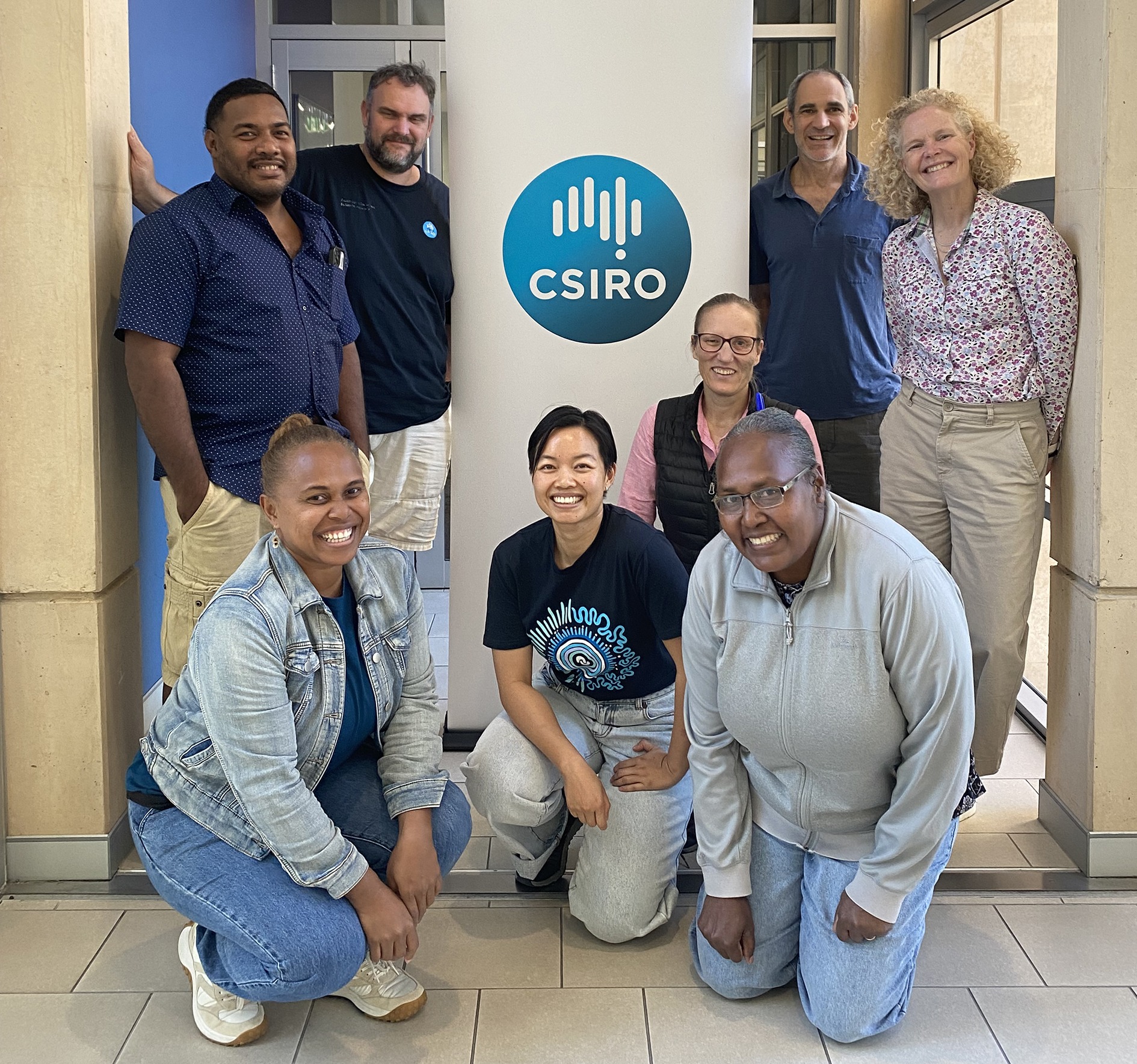
Three scientists from the Solomon Islands National University (SINU) recently completed a two-week training program hosted by CSIRO at its Bribie Island and St Lucia facilities in Queensland.
“The training aimed to strengthen nutrition laboratory capacity in Solomon Islands and support future livestock and aquaculture research, teaching and industry development,” said Dr Mayberry.
“The training builds on a collaboration between SINU and CSIRO that has been analysing locally available feed ingredients for small livestock and aquaculture production in Solomon Islands. The aim is to boost production, improve resilience and nutrition security through reducing the high cost of feed, a priority issue for Solomon Islands and the Pacific region,” she said.
“Nutrition laboratories play a critical role in understanding the value of feed ingredients and developing cost-effective, locally relevant feeds for livestock and aquaculture production. However, limited laboratory infrastructure and analytical capacity have constrained these activities in Solomon Islands,” Di said.
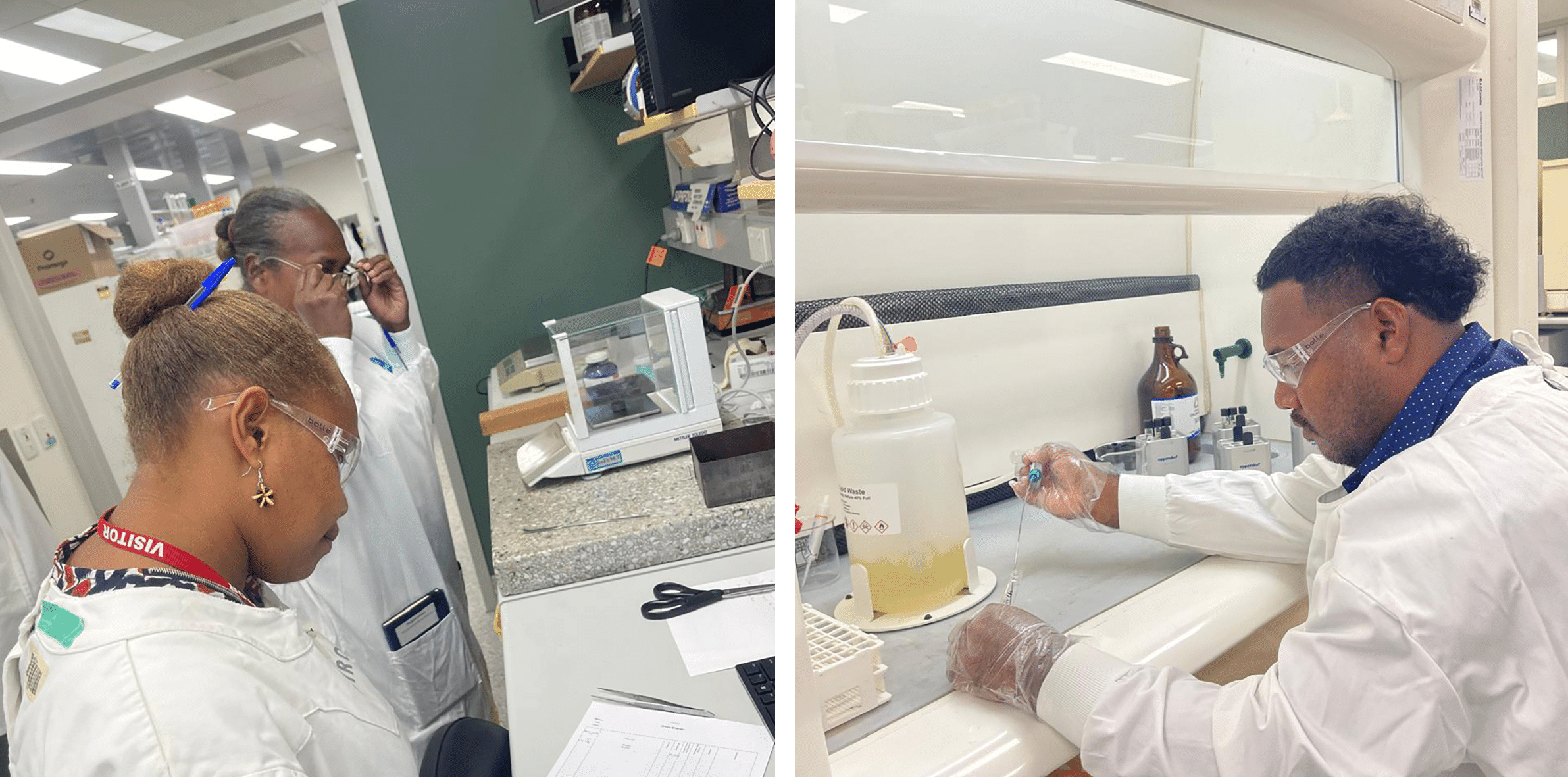
To address this gap, the SINU team undertook hands-on training in laboratory safety, sample storage and preparation, feed manufacturing, animal system design, nutritional analysis techniques, data recording and interpretation of laboratory results.
Exposure to the animal rearing and feed manufacturing facilities at the Bribie Island Research Centre gave the team a practical understanding of the operational and design requirements involved in implementing a laboratory aquarium system. They were also able to observe the formulation and batching of experimental diets, including the bakery equipment commonly repurposed for animal feed manufacture, and to appreciate the full workflow required to produce a finished feed.
Working alongside CSIRO staff, the participants rotated through a range of laboratory activities, gaining practical experience with wet chemistry methods and analytical instruments used for feed evaluation. The training also provided an opportunity to observe feed manufacturing facilities and aquatic animal research systems, while learning how laboratory workflows, safety procedures and quality management systems operate in practice.
According to Di, the training delivers significant benefits to Australia, particularly Queensland, by strengthening technical and institutional partnerships with Solomon Islands and reinforcing Queensland’s reputation as a trusted research and development partner in the Pacific.
“The relationships established and expanded through the training create opportunities for future collaborative research, capacity-building initiatives and externally funded projects, supporting Australia’s broader strategic engagement in the region. The SINU team plan to highlight benefits of the training and collaborative engagement at the Pacific Week of Agriculture in May next year,” she said.
In the longer term, improved livestock and aquaculture productivity in Solomon Islands is expected to contribute to greater food security, economic resilience and sustainable livelihoods across the Pacific.
“Participant feedback highlighted the practical value of the training. The scientists reported increased confidence in feed ingredient analysis, laboratory procedures, data management and the application of nutrition research to livestock and aquaculture systems. They expect to apply these skills directly in teaching, student supervision, research projects and the interpretation of feed analysis data,” said Di.
“Knowledge gained through the program will also be shared with colleagues and students through lectures, practical classes and collaborative activities, extending the benefits across the university and beyond,” she concluded.