

More good news stories on transforming ASEAN and global agriculture
November 18, 2025
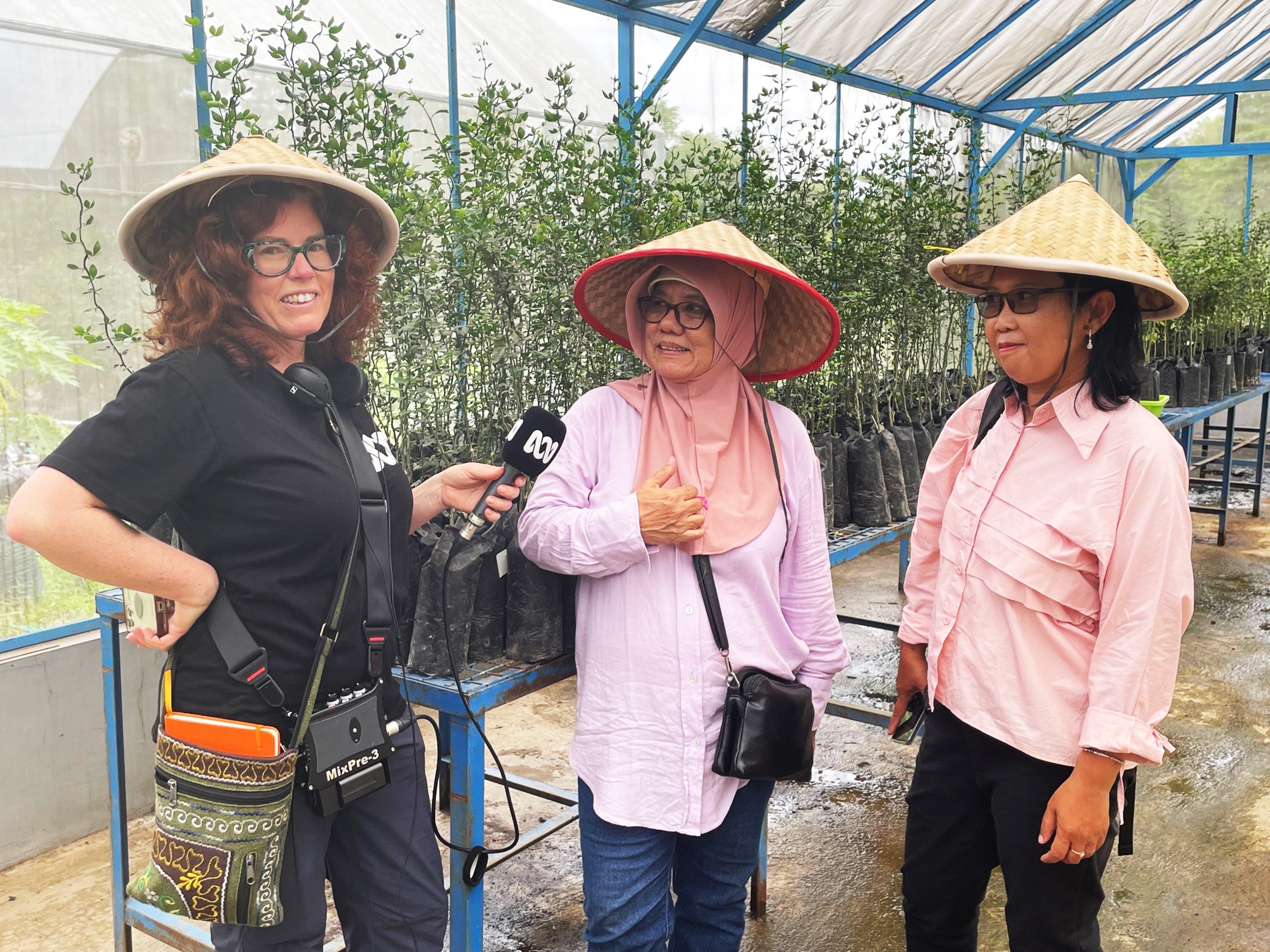
For over 30 years, the Crawford Fund has been arranging visits by Australian journalists to experience and report on agricultural research for development projects, as part of efforts to spread good news stories about the impact and mutual benefit of work to improve food and nutrition security.
The Crawford Fund welcomed the financial support of the DFAT Australia-ASEAN Council to arrange for three visits in 2024-25 focused on ‘Transforming ASEAN and Global Agriculture’ and the final visit was recently completed.
The winner of the Crawford Fund Food Security Journalism Award, Emma Field, a journalist with ABC Victoria, travelled to Indonesia with our Director of Communication and Outreach, Lucy Broad earlier this month to visit projects where Australia is partnering with Indonesia to build the productivity and profitability of smallholder family farmers. The work is increasing regional resilience and reinforcing Australia’s reputation as a leader in sustainable agriculture and international development.
Lucy and Emma visited three projects funded by the Australian Centre for International Agricultural Research (ACIAR). The first, Citrus Greening Disease (Huanglongbing or HLB) is one of the most serious threats to citrus production globally and has already halved production in Indonesia. Australia is one of the few countries HLB has not yet reached.
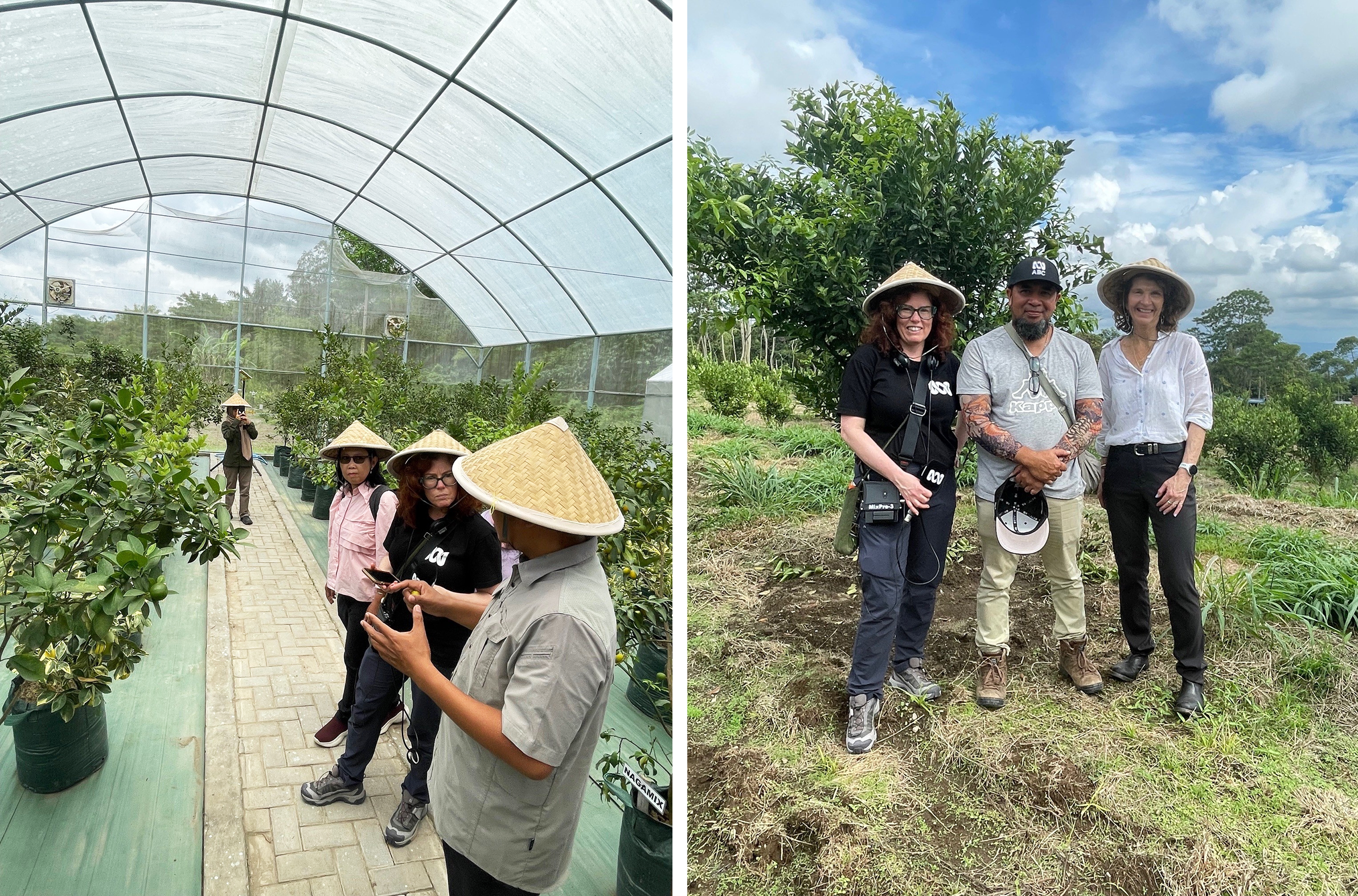
Project partners UGM Indonesia, BRIN Indonesia, Citrus Australia and the Citrus Research Institute of China have commissioned NSW DPIRD to help build industry resilience in Indonesia. In the process Australian rootstock used for grafting trees in Indonesia, is being tested for resistance and together with improved disease management strategies this work is helping to strengthen Australian biosecurity preparedness. It’s an important partnership bringing benefits to both Australia and Indonesia.
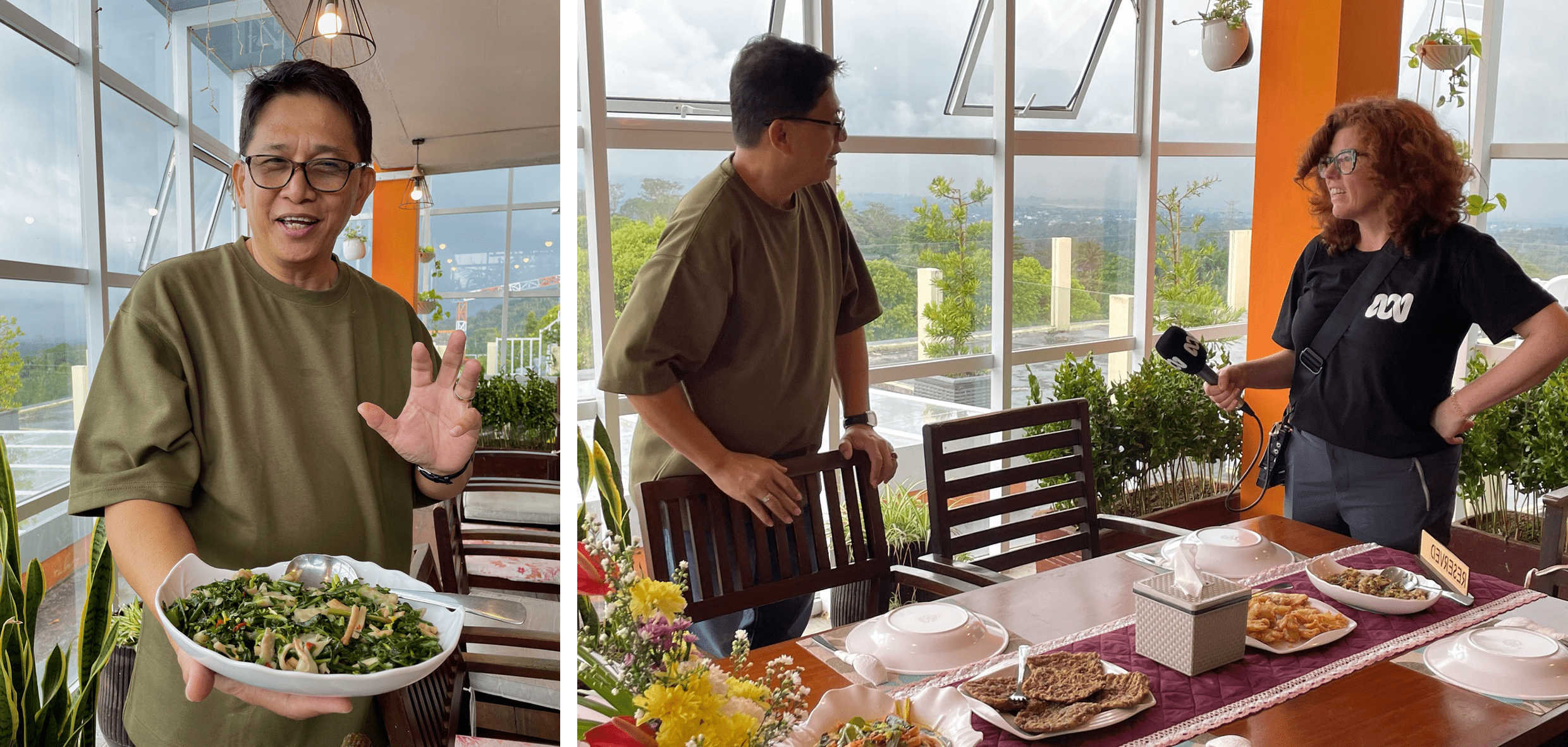
Mushrooms are proving to be a great model crop to demonstrate how farmers can capitalise on the growth of tourism in some of Indonesia’s most beautiful destinations. Emma and Lucy visited northern Sulawesi, one of the locations for an ACIAR funded research project which is bringing smallholder farmers together with local restaurants and hotels in order to find ways to showcase more locally grown, fresh produce from the area. The aim is to develop value chains that can satisfy delivery and quality expectations as well as provide beneficial outcomes for local farmers and their communities.
Led by the University of Adelaide, partners include Australia’s UQ and Indonesia’s National Research and Innovation Agency (BRIN) as well as Sam Ratulangi, Udayana and Mataram Universities.
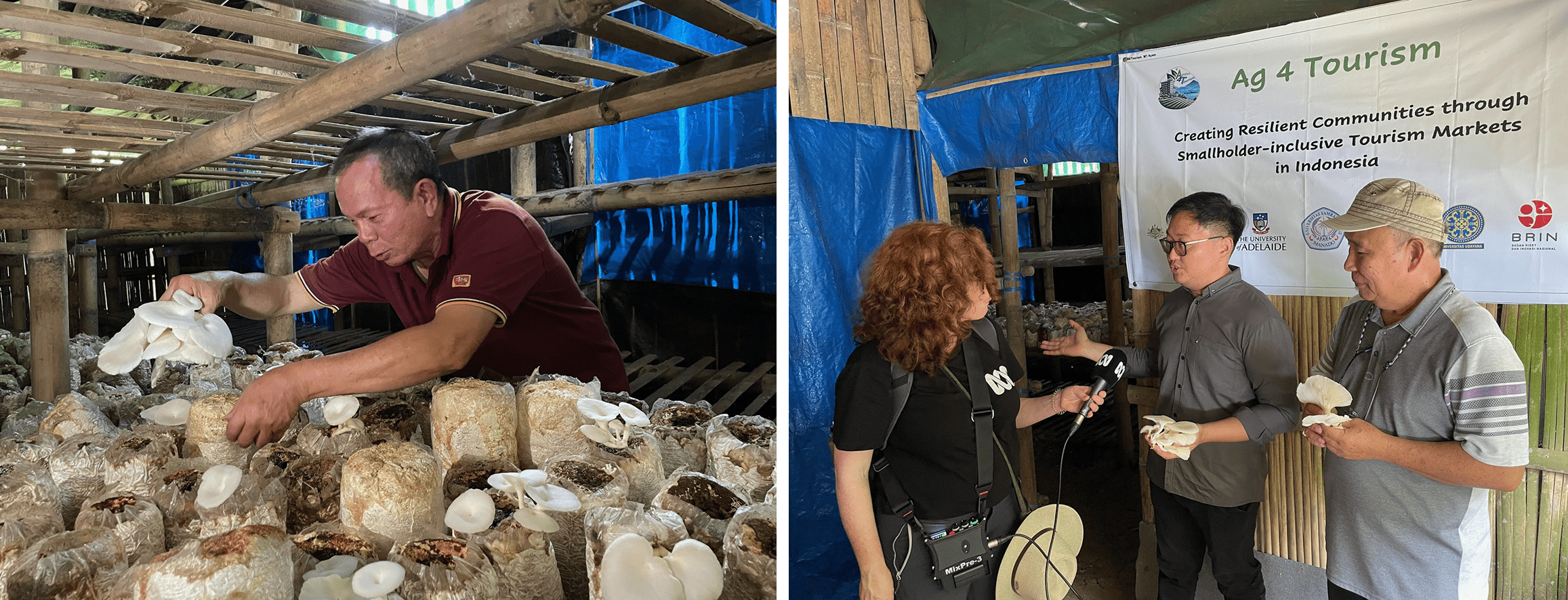
“It was so lovely to see such passion and enthusiasm from researchers and tourism businesses to ensure local small farmers can also benefit from the growth in visitors to Indonesia. As well as north Sulawesi, the project is working with farmers in Bali and West Nusa Tenggara, on crops such as lettuce and potato, water spinach, pineapples and village chickens,” said Lucy.
The final project visited was near Bogor in West Java, working with smallholder dairy farms. The region supplies 60-70 per cent of the country’s milk and the Indo Dairy 2 partnership is building on previous ACIAR supported research that worked with dairy farmers, cooperatives and processors to increase milk quantity and quality.
“The average per capita consumption of fresh milk in Indonesia is about 16 litres a year, compared to Australia’s 90 litres! We saw first-hand how through improvements in animal health, feed, genetics as well as supply chains, production is increasing and the profitability and resilience of local farms and communities is improving as a result of this work.”
The project is being delivered by Central Queensland University and is a partnership with Bogor Agricultural University, Diponegoro University, the Indonesian Centre for Agricultural Socio Economic and Policy Studies (ICASEPS), and the Universities of Adelaide and Melbourne.
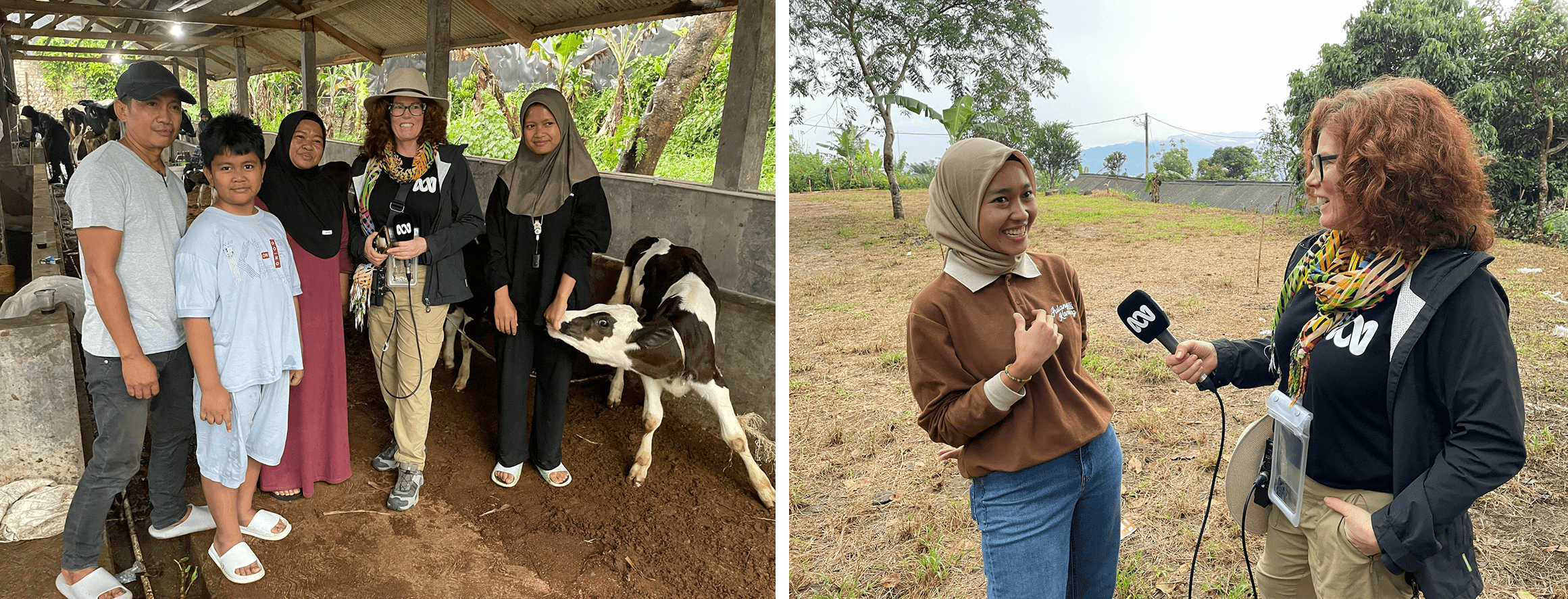
“The trip wouldn’t have been possible without the help from Australian and in-country research partners and ACIAR in-country staff. There is such commitment to the partnerships underway and it is very impressive to witness the results being achieved,” she said
The visit also featured across our social media platforms throughout the time in-country so check them out – Instagram, Facebook and X.
“All in all, another very busy, interesting and satisfying journalist visit. We are so looking forward to the many stories Emma will produce for ABC Radio and Online.”
Emma’s travel was made possible with support from the DFAT ASEAN-Australia Centre. They also supported journalist visits to the Philippines and Vietnam as part of this project aiming to bring national attention to projects transforming agriculture through cooperation, collaboration and innovation, supported by Australia and partners in these ASEAN countries.