

Regional Shellfish Quality Assurance Training for the Pacific
November 13, 2026
With support from the Crawford Fund for Food Security NSW Committee and the Pacific Community (SPC), and in collaboration with ACIAR, a five-day Shellfish Quality Assurance Program (SQAP) training course was recently delivered in Suva, Fiji. The course brought together 14 researchers and managers from six Pacific Island countries to strengthen regional capacity in shellfish food safety and support the development of sustainable tropical oyster industries.
The training was delivered by Mr Anthony Zammit, Mr Phil Baker and Professor Wayne O’Connor, from the NSW Department of Primary Industries and Regional Development, drawing on their extensive experience in shellfish quality assurance, environmental monitoring and aquaculture industry development.
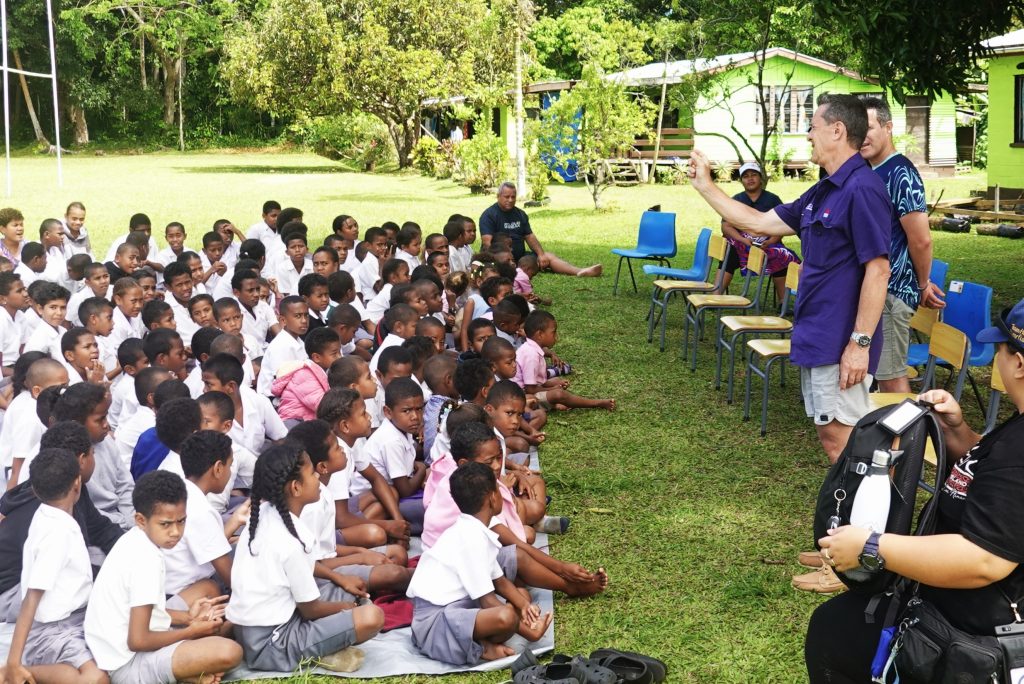
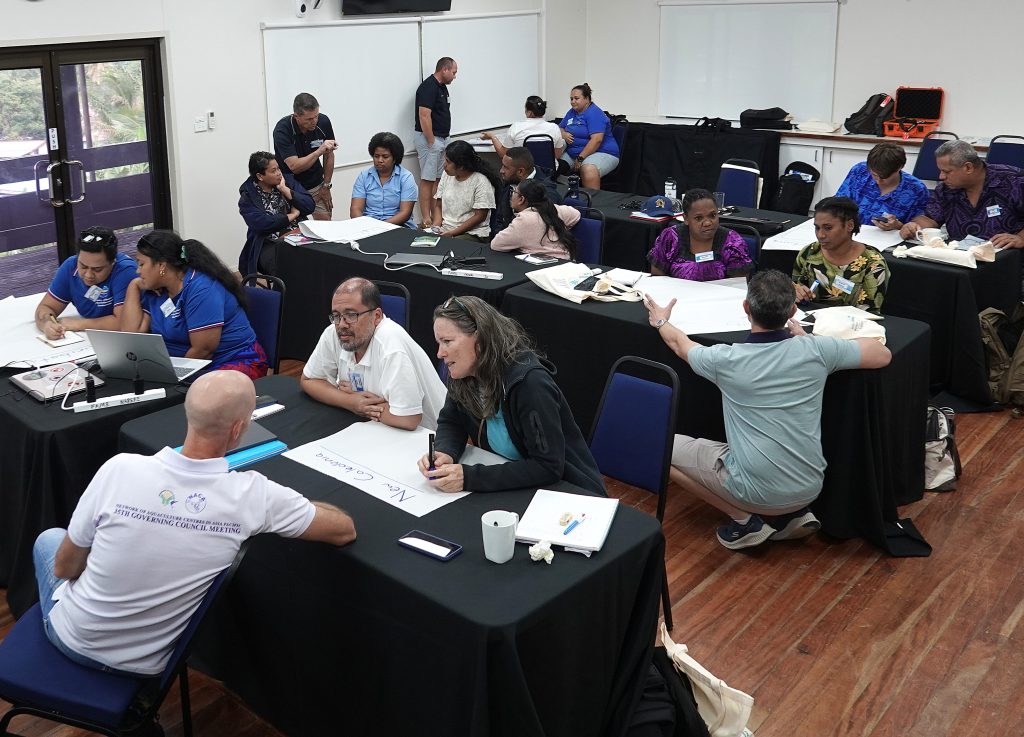
Left: Wayne O’Connor and Anthony A Zammit, introducing oysters and food safety to the students of the Vutia Primary School. Right: Practical exercises in site evaluation for each of the Pacific Island countries (Images: K. Ellard)
“Tropical rock oyster aquaculture offers considerable opportunities to improve food security, support coastal livelihoods and supply growing domestic, tourism and export markets across the Indo-Pacific. However, the absence of established shellfish quality assurance systems remains a significant barrier to industry development in many Pacific Island countries,” said Professor Wayne O’Connor, Senior Principal Research Scientist, NSW DPIRD.
Drawing on Australia’s established Shellfish Quality Assurance Programs, the training provided participants with practical knowledge and skills to assess shellfish food safety risks, evaluate potential harvesting areas and develop management approaches suited to tropical environments.
The course combined technical presentations, interactive workshops and field-based activities. Participants examined key food safety hazards associated with shellfish consumption, including microbial pathogens, marine biotoxins and environmental contaminants, and explored how these risks are influenced by local environmental conditions, coastal land use and harvesting practices.
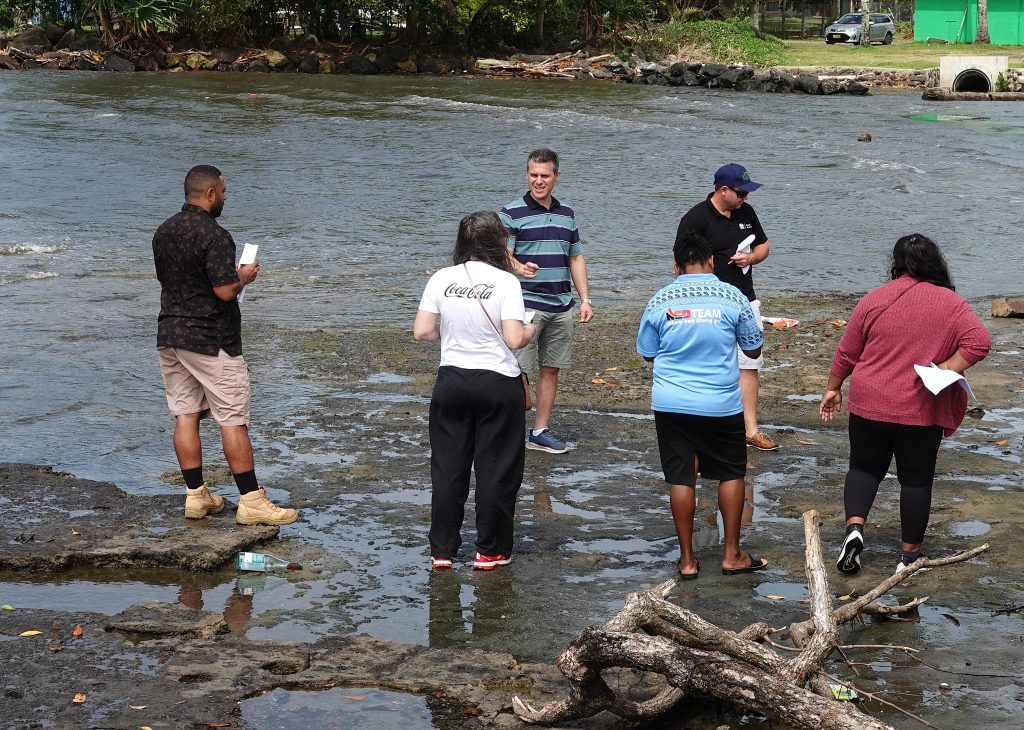
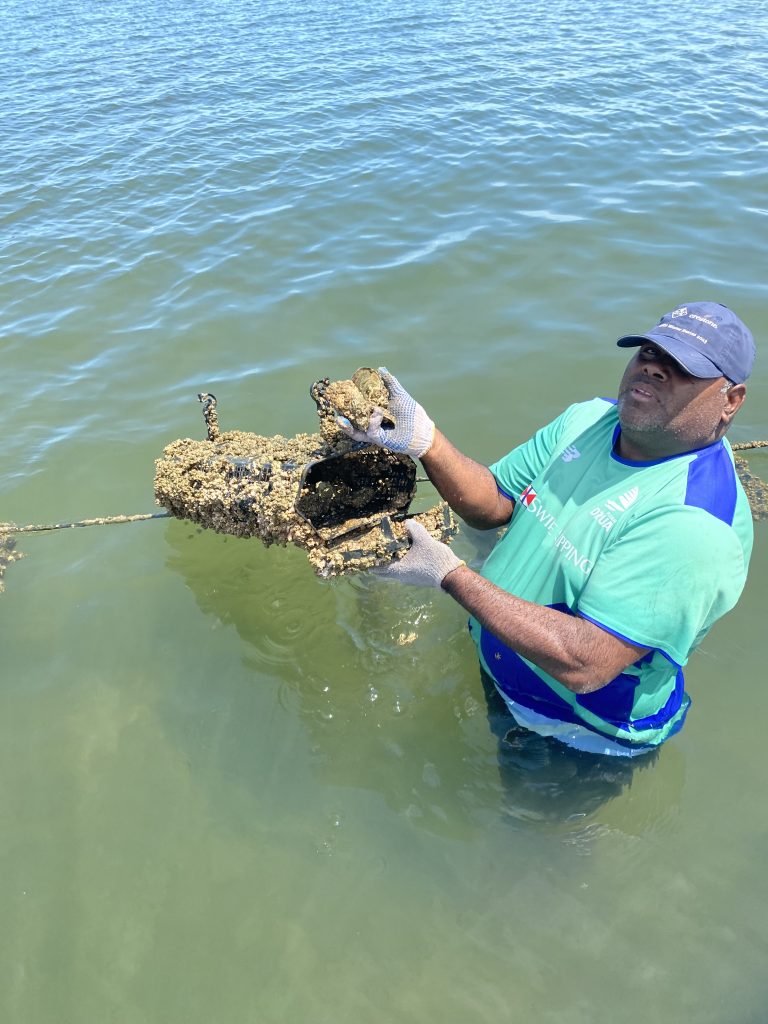
Left: Anthony Zammit, Phil Baker and participants undertaking site surveys in Suva Harbour (Image: K. Ellard). Right: Farmed oysters in Fiji (Image: S. Nowland).
“A major focus was the assessment and classification of shellfish harvesting areas, including shoreline sanitary surveys, identification of contamination sources, water quality monitoring and interpretation of environmental data. Field visits to Suva Harbour and surrounding coastal areas provided hands-on experience in assessing potential oyster harvesting sites, while group exercises allowed participants to apply their knowledge to practical management scenarios,” said Wayne.
Participants also had the opportunity to work directly with trainers on desk-based assessments of sites of particular interest in their home countries. Using Google Earth, they examined local coastal environments, identified potential contamination sources and considered the suitability of individual sites for shellfish harvesting.
“This practical exercise allowed participants to apply the assessment techniques to locations directly relevant to their own work and future industry development,” he said.
“Importantly, the training contributed to preliminary assessments of potential oyster harvesting areas in Fiji and the development of approaches for identifying suitable depuration and relaying sites. These activities provide a foundation for establishing locally appropriate shellfish quality assurance systems and supporting future industry growth,” said Wayne.
“Beyond the technical skills acquired, the course provided an opportunity for participants from six Pacific Island countries to exchange experiences, identify common challenges and strengthen regional collaboration in shellfish food safety and aquaculture development,” he said.
The need for this training was identified through the ACIAR project FIS/2022/147, which aims to support the development of Fiji’s emerging oyster aquaculture industry. Although production remains relatively small, there is considerable interest in expanding supply to higher-value domestic markets, particularly restaurants and resorts that currently rely heavily on imported, often frozen, oysters.
“For NSW DPIRD, international collaborations of this nature provide benefits extending well beyond the immediate project objectives. They expose staff to different production systems, environmental conditions, technologies and industry development challenges, strengthening their capacity to undertake innovative research and respond to emerging issues within NSW aquaculture,” he said.
These collaborations also create opportunities to develop new research partnerships, attract external investment and expand the application of Australian expertise and technologies internationally.
“Importantly, the training addressed challenges shared by aquaculture industries throughout the Indo-Pacific. Strengthening regional capacity to identify, monitor and manage these threats contributes to Australia’s broader interests in biosecurity and the protection of aquatic industries and natural resources,” said Wayne.
“The successful delivery of this training represents an important step towards strengthening food safety capability across the Pacific and establishing the systems needed to support safe, sustainable and commercially viable tropical oyster industries,” he concluded.