

Symposium attendance boosts plant pathology skills
October 23, 2026
Earlier this year, the Crawford Fund for Food Security NT Committee announced the recipients of three scholarships to support researchers in the field of biosecurity to gain professional development and networking opportunities through conference attendance.
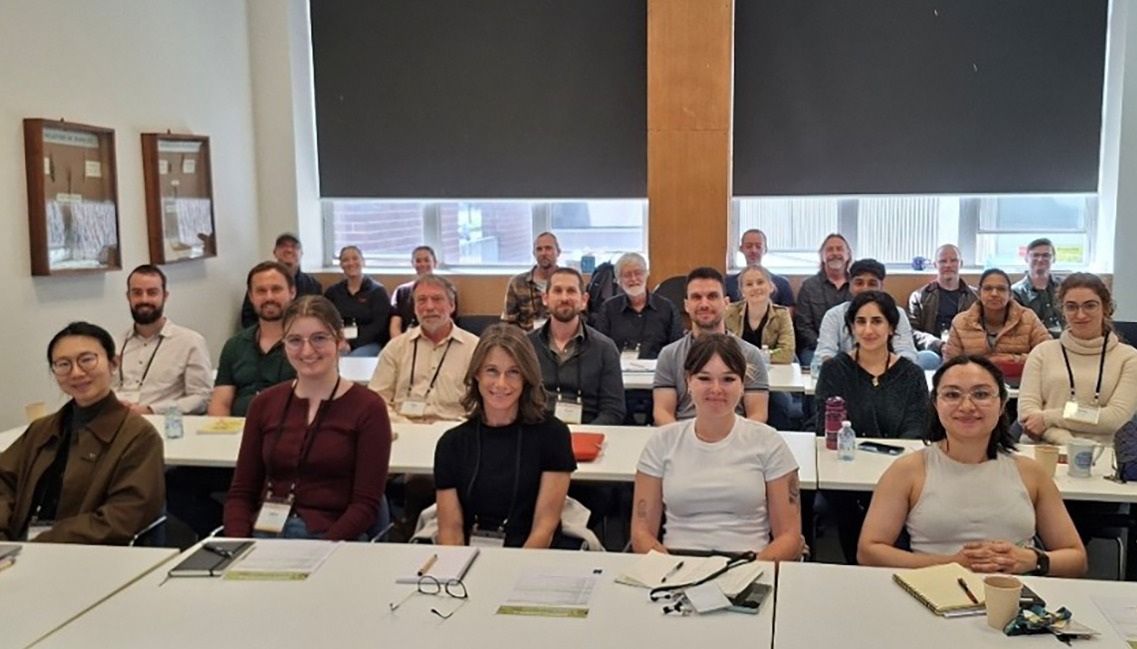
Isla McDonald, a graduate from the NT Government’s Department of Agriculture and Fisheries, was supported to attend the Australasian Soilborne Disease Symposium in Melbourne in September 2026.
Isla shared this reflection on the experience, and it’s relevance to her research.
By Isla McDonald
The Crawford Fund Award enabled me to attend the Australasian Soilborne Disease Symposium in Melbourne that brought together leading disease researchers, students, breeders and industry professionals.
As an early career researcher and aspiring plant pathologist, this opportunity was incredibly valuable and something I can’t access in the Territory. The Crawford scholarship allowed me to travel interstate to upskill, connect and learn from top researchers and pathologists.
Attending the conference directly supported my research investigating resistance to Fusarium oxysporum f. sp. tracheiphilum (FOT), a major disease of snake bean in the Northern Territory. I was able to discuss disease assessment methods, optimised experimental design, molecular BREEDING technologies with other disease researchers.
A key highlight was participating in a specialist nematology workshop, where I learned new approaches to nematode diagnostics, surveillance and sampling. Discussions with nematologists from across Australia gave insights into improving sampling methods, the best crop rotation species to use in various systems and other integrated pest management strategies for root-knot nematodes.
I met other researchers working on Fusarium wilt in various crops, resistance breeding and disease diagnostics. I was able to discuss my research project, receive feedback on experimental design and disease assessment, and learn how similar challenges are being addressed in glasshouse trials.
These learnings will support my work on the Northern Territory component of a national nematode surveillance and management project. The knowledge and networks I’ve gained has advanced my research capability and improved my understanding of emerging diseases, management and surveillance. In turn, this will improve outcomes for Territory growers.
Specifically, some of the things I learned attending the symposium included:
- Different data recording methods for disease trials, understanding the symptoms and how to accurately measure them to determine resistance or susceptibility.
- The critical role a large resistant germplasm plays in screening trials and breeding programs.
- Application of whole-genome sequencing and molecular approaches to understand nematode diversity and populations.
- Using genetic markers in breeding programs to target resistant regions within host genomes to accelerate breeding.
- Glasshouse layouts and mapping experimental design to reduce environmental variation between replicates and improve data quality.
Key learnings from the specialist nematology workshop included:
- Using species accumulation and sampling curve models to estimate nematode biodiversity to determine the number of samples required to predict nematode communities. This model could be a useful resource for surveillance and soil health assessments across the territory.
- Research identifying resistant germplasm for management of root-knot nematode.
- Findings of IPM strategies that outlined resistant crop rotation varieties against RKN.
- Evidence that root-lesion nematodes can occur at depths of up to 1.6m, meaning traditional shallow sampling underestimate populations, produces false-negative results and unexpected infestations following planting. Going forward, sampling protocols for nematodes in the territory will be adjusted to ensure accurate capture of populations.
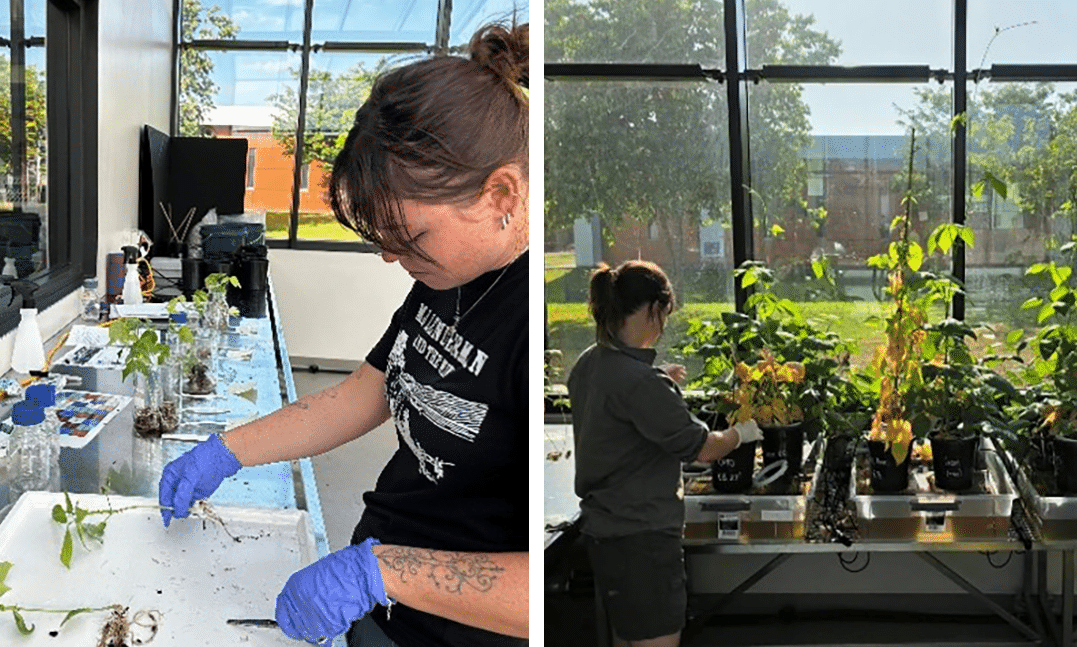
Background
Fusarium wilt, caused by Fusarium oxysporum f. sp. tracheiphilum (FOT), is a major threat to snake bean production in the Northern Territory, with severe outbreaks causing crop losses of up to 90%. Snake bean is an important crop throughout the Northern Territory and is widely grown across Southeast Asia, China and the Caribbean. With little management available and the viability of chlamydospores in the soil for years, resistant cultivars are a critical solution for growers not only in Australia, but globally.
As part of the NT Graduate Program, I am leading disease screening trials to identify sources of resistance to FOT for use in a snake bean breeding program. The project involves screening cowpea germplasm against virulent FOT isolates to identify resistant donor parents. Working alongside the department’s plant breeder, resistant varieties are crossed with the commercial snake bean variety GPK to develop cultivars with resistance and commercially desirable traits.
To date, my glasshouse trials have identified two cowpea varieties as highly resistant to FOT. These varieties have been selected as donor parents for the breeding program. The next phase of the project involves screening F₂ progeny populations against Fusarium isolates to identify resistant genotypes and assess heritability.
I have also been involved in the Northern Territory component of a national nematode surveillance and management project (VG23007) led by Dr Melanie Ford. Through diagnostic testing, surveillance activities and species identification work, the project aims to improve understanding of nematode distribution and support the development of more effective management strategies for NT growers.
As an aspiring plant pathologist and researcher, these projects have taught me a lot about applied research and improved my knowledge on current issues for Territory growers. By upskilling myself in these areas, I also upskill the territories knowledge and resilience to soil-borne diseases.