

VetTrain Bhutan 2026
November 3, 2026
With support from The Crawford Fund for Food Security’s Victoria Committee, Australian charity Vets Beyond Borders (VBB) has delivered a five-day training program at the National Veterinary Hospital in Thimphu, Bhutan. Twenty-four veterinarians and two laboratory technicians from across Bhutan participated.
The activity drew on Australia’s expertise in clinical diagnostics and One Health approaches, alongside VBB’s experience delivering training in settings with limited resources. Volunteer trainers Dr Kathleen Chow, Dr Matthew Retchford and Dr Caitlin Retchford delivered more than 30 hours of lectures, case discussions and practical learning.
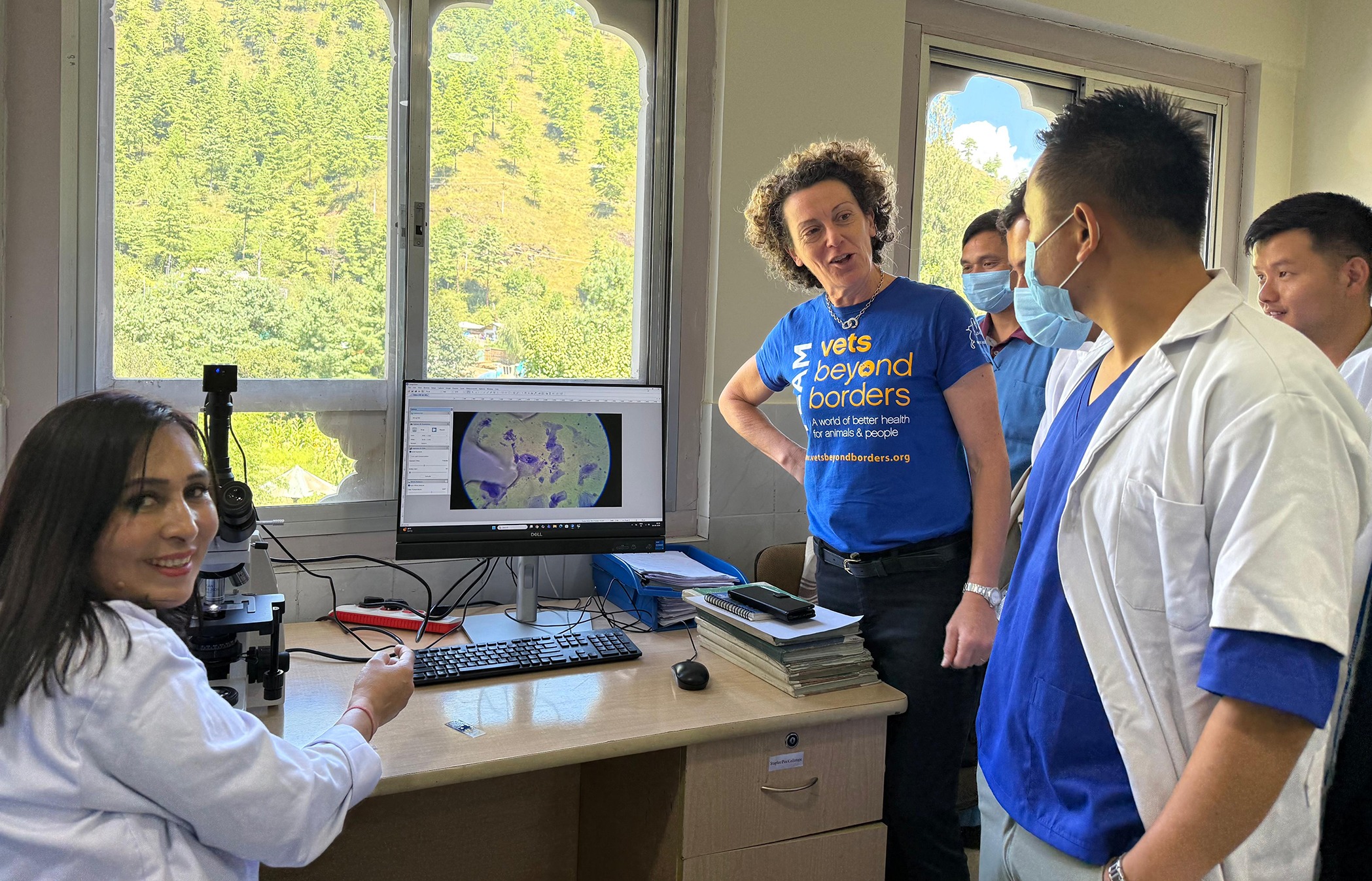
“Strengthening veterinary diagnostic skills can help Bhutan better manage diseases of animal and public health significance, supporting healthier livestock, improved companion animal care and community wellbeing,” said Dr Caitlin Retchford, Director, Vets Beyond Borders.
The training covered ultrasonography, radiographic interpretation, clinical pathology and laboratory techniques. Participants explored how diagnostic findings can inform clinical decisions, supporting more targeted treatment and reducing reliance on empirical approaches.
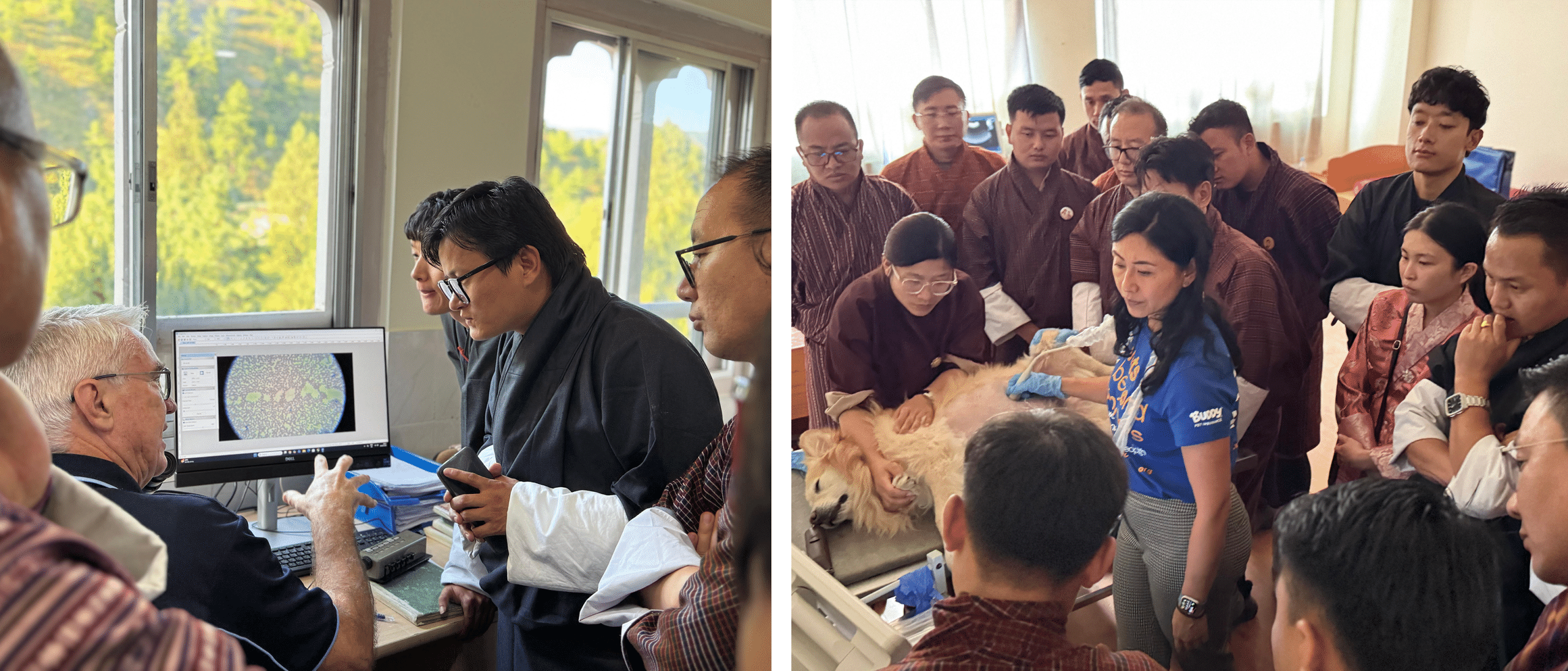
Although imaging practicals focused on dogs, teaching emphasised principles transferable across species. Blood and urine testing, microscopy and an understanding of disease processes are relevant to both companion animals and livestock. Applications discussed included reproductive assessment and investigation of illness in production animals.
“These skills have the potential to support earlier recognition and management of disease, reduce preventable animal losses and protect livestock productivity. For farming communities, healthier animals can help sustain food supplies and household livelihoods,” said Caitlin.
“Stronger diagnostic services also support the investigation of diseases with potential implications for human health, reflecting the One Health connections between animals, people and their environment,” she said.
The trainers adapted content to participants’ identified knowledge gaps and demonstrated accessible techniques, including rapid cytology staining, manual blood testing and refractometer use. This practical approach helped connect Australian expertise with Bhutan’s local clinical needs and available resources.
“Senior ministry and veterinary officials welcomed further collaboration with VBB and The Crawford Fund for Food Security. Continued practice, access to equipment and consumables, and follow-up support will be important to translating the training into lasting benefits for animal health, food security and community health,” Caitlin concluded.
The program was hosted by the National Veterinary Hospital, with local participant travel supported by Bhutan’s Department of Livestock through the EU-PISRAF project.
This training builds on the VetTrain Pacific program delivered in Fiji in 2025, with support from the Crawford Fund. The activity once again contributed to areas relevant to Victoria and Australia, including agricultural capability, food security, One Health and international professional collaboration.