

Dr Tyron Venn
Senior Research Fellow, School of Agriculture and Food Sustainability, University of Queensland
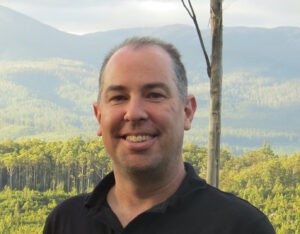 Dr Venn is a natural resource economist with a research focus on the design and evaluation of resource and environmental policy and practice to facilitate global action to conserve biodiversity, mitigate climate risk and address United Nations Sustainable Development Goals. This requires quantification of the complex and sometimes perverse domestic and international carbon, biodiversity and socio-economic trade-offs (including leakages) that can be associated with well-intentioned policy. His research is highly interdisciplinary and collaborative with research institutions, government and industry, including ecologists, agricultural scientists, engineers and social scientists. Methods employed include stratified and replicated field experiments, cost-benefit analysis, lifecycle analysis of carbon, mathematical programming, simulation and applied environmental economics including non-market valuation. Specific research contexts include forest and wood product value chains, Australian Indigenous agribusiness, silvopastoral systems, wildfire risk mitigation and invasive species management.
Session 2 Case Study– Dr Tyron Venn, 2025 Crawford Fund for Food Security Conference