

Mr Acacio Sarmento da Silva
Senior Research Analyst, WorldFish
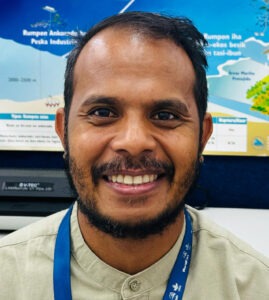 Acacio Sarmento is a health professional, research analyst, nutrition sensitive agricultural trainer, agriculture and nutrition curriculum developer, senior researcher, program manager, advisor at National Alliance for tobacco control, health promotor, agriculture group and community facilitator and DMERL specialist.
Acacio Sarmento is a highly accomplished senior researcher and development practitioner in Timor-Leste, specializing in agriculture, nutrition, and rural economic development. With deep expertise in agriculture-sensitive nutrition and gender-inclusive programming, he brings extensive experience in research design, methodologies, data analysis, project implementation, and MEL (Monitoring, Evaluation, and Learning). Acacio has a strong background in capacity building, serving as an advisor to project teams and junior researchers, and as a trainer and facilitator for government staff. His work is grounded in community-level engagement, with a proven track record of advancing food security and nutrition outcomes through collaborative, evidence-based approaches.
Session 4 Case Study – Mr Acacio Sarmento da Silva, 2025 Crawford Fund for Food Security Conference
Session 4 Q&A, 2025 Crawford Fund for Food Security Conference