

Dr Sonia Akter
Associate Professor, Crawford School of Public Policy Resources, Environment and Development, ANU
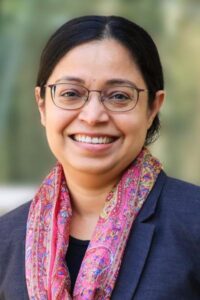 Dr Sonia Akter joined the Crawford School of Public Policy as Senior Lecturer in January 2023. Her research is situated on the nexus of agriculture, environment and development in the Asia-Pacific region. She has worked extensively on agriculture and food policy, natural disasters and women’s empowerment in South and Southeast Asia.
Sonia has published single and co-authored articles in top journals in the field of environment and development studies and is a Senior Editor for the journal Food Security and Associate Editor for the Australian Journal of Agricultural and Resource Economics (AJARE).
Sonia graduated with a PhD in Environmental Management and Development from the Australian National University in 2010 and holds a MS degree in Economics from York University, Toronto, Canada. Prior to joining the Crawford School of Public Policy in 2023, she was Assistant Professor at the Lee Kuan Yew School of Public Policy at the National University of Singapore (2015-2022). She was Scientist at the International Rice Research Institute (IRRI) (2014-2015) and Senior Researcher at Helmholtz Centre for Environmental Research-UFZ, Leipzig, Germany (2011-2013). She has served in numerous advisory roles and expert panels including the Australian Center for International Agricultural Research (ACIAR), the Asian Development Bank, the World Bank and the Ministry of Environment and Water Resources, Singapore where she contributed broad-ranging methodological and strategic insights around valuation of water resource, strengthening women’s participation in agricultural programs and designing instruments for capturing the gender differentiated impact of natural disasters.
Session 4 Case Study – Dr Sonia Akter, 2025 Crawford Fund for Food Security Conference
Session 4 Q&A, 2025 Crawford Fund for Food Security Conference