

Dr Mohammed Mainuddin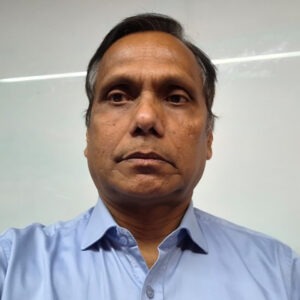
Senior Principal Research Scientist, CSIRO Environment
Dr Mohammed Mainuddin is a Senior Principal Research Scientist and Leader of the Water and Society Team within the Water Security Program at CSIRO Environment, based in Canberra, Australia. Prior to joining CSIRO in 2004, he worked with the International Water Management Institute (IWMI) in Sri Lanka and the Asian Institute of Technology (AIT) in Thailand. Dr Mainuddin is internationally recognised for his multidisciplinary expertise at the nexus of climate, water, agriculture, food security, and livelihoods, with over three decades of experience. He has led extensive work in integrated river basin modelling across Australia, Asia, Africa, and South America.
Most of his research over the last 15 years focused on integrated coastal zone management for cropping intensification and livelihood enhancement in the Ganges delta and on sustainable groundwater management for food security in the Eastern Gangetic Plains (EGP). These endeavours have not only generated invaluable insights but have also played a pivotal role in shaping national policies and guidelines. Mainuddin has had major impacts over three decades recognised by the CSIRO Chairman’s Medal and ‘One CSIRO’ award in 2008, and Agriculture and Food Impact award in 2024.
Dr Mainuddin’s commitment to bridging the gap between research and actionable solutions underscores his profound impact on society. Through his leadership and expertise, he continues to spearhead initiatives that drive sustainable development, resilience, and prosperity in water-dependent communities both locally and globally.
ABSTRACT
From salinity to food security – transforming cropping systems in the Ganges Delta
The salt-affected coastal Ganges Delta of Bangladesh and West Bengal supports over 20 million people and is critical for food security, biodiversity, and livelihoods. Its low-lying polders are highly vulnerable to flooding and sea-level rise. Agriculture in these regions is dominated by low‑yielding local rice varieties grown in the wet season under rainfed condition. In the dry season, most agricultural land remains fallow due salinity in the soil and the lack of fresh water for irrigation. These regions are characterised by high levels of poverty, food insecurity, environmental vulnerability, and limited livelihood options.
Since 2015, CSIRO and partner organizations from Australia, Bangladesh, and India have collaborated on an Australian Centre for International Agricultural Research (ACIAR)-funded research project to sustainably increase cropping intensity and productivity in the Ganges Delta, particularly during the dry season, through integrated soil, water, and crop management. This presentation highlights how transdisciplinary integrated research has transformed agriculture in a region challenged by salinity, natural disasters, and climate change.
The study evaluated agroclimatic potential, modelled salt–water dynamics in polders, and examined soil–crop–water–salinity interactions through field trials and crop modelling. It identified salt-tolerant crops and improved management practices, strengthened community-based water management, assessed profitable cropping patterns, innovated and demonstrated technologies that boost productivity, cropping intensity, and profitability. Farmers are adopting these innovations, gaining tangible economic, food security and livelihood benefits. Central to this success is the transdisciplinary, integrated research and outreach activities. The project contributed significantly to the scientific understanding and modelling of crop systems and hydrological processes in the Asian Mega-Deltas.