

Dr Stefan Schmitz
Executive Director, Crop Trust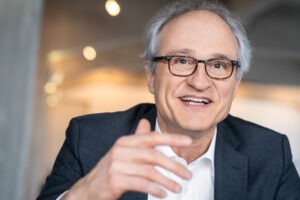
Stefan Schmitz joined the Crop Trust as Executive Director in January 2020.
He previously worked as Deputy Director-General and Commissioner for the “One World – No Hunger” Initiative at the German Federal Ministry for Economic Cooperation and Development (BMZ). He also chaired the Steering Committee of the Global Agriculture and Food Security Program (GAFSP).
For more than 10 years, Stefan was leading the food security, agriculture and rural development work at BMZ. From 2007 until 2009 he worked as senior advisor to the Secretariat of the Organization for Economic Cooperation and Development (OECD) in Paris. Before joining the BMZ in 2001, Stefan held various posts in the German federal administration in the fields of geographical information systems, regional planning and international cooperation on urban issues.
He received scholarships of the McCloy Fellowship of the American Council on Germany and of the German Academic Exchange Service. After studying in Bonn and St. Andrews, he graduated from Bonn University in geography and mathematics and received a doctorate in geosciences from the Free University of Berlin in 2000.
ABSTRACT
Seeds of Opportunity: Regional Cooperation for Food Security in an Uncertain World
The future of food will be shaped by decisions we make today about the crop diversity we conserve and share. From Australia’s leadership in global genebank networks to the unique food crops of the Pacific, crop diversity provides the genetic resources needed to adapt agriculture to climate change, strengthen nutrition and build resilient economies. This discussion highlights how sustainable financing models like the Crop Diversity Endowment Fund can turn one-time investments into permanent support for genebanks – securing crucial crop collections and delivering impact forever. It is an opportunity to explore safeguarding crop diversity as critical regional infrastructure and how stronger collaboration across the Indo-Pacific unlocks opportunities for farmers, researchers and future generations.