


Dr Tony Pattison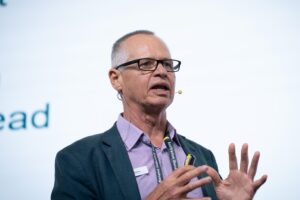
Senior-Principal Researcher with the Queensland Department of Primary Industries
Dr Tony Pattison is a Senior-Principal Researcher with the Queensland Department of Primary Industries, based at the South Johnstone Research Facility in north Queensland. For more than 30 years, Tony has worked with the banana industry on soil health, biosecurity and Panama disease management. His research has helped growers better understand and manage soil-borne constraints, particularly Fusarium wilt Tropical Race 4. Tony has led and contributed to major international research partnerships across Asia and Latin America, translating global experience into practical tools and advice for banana growers. He holds degrees from the University of New England, the University of Sydney and Bonn University. Tony’s contribution has been recognised through the Lao PDR’s Friendship Medal and the 2025 Banana Researcher of the Year Award at the Australian Banana Industry Conference.
ABSTRACT
Beyond Blame: Past, Present and Future of TR4 Management
Australia’s long history with Panama disease shows why regional agricultural research matters. Fusarium wilt was first described near Brisbane in the 1870s, Tropical Race 4 (TR4) devastated the Northern Territory Cavendish industry after 1997, and in 2015, TR4 was confirmed in north Queensland, the centre of Australia’s banana production. As the disease threatens smallholder livelihoods across Southeast Asia and the security of Australia’s banana supply there are important lessons for all banana producers. This requires TR4 to be viewed as a systems problem, not just a pathogen problem. The impacts of TR4 are amplified by simplified banana production systems, soil degradation, monoculture, constrained access to clean planting material and uneven technical support. This results in smallholder growers often being blamed for disease spread, but risks mistaking vulnerability for negligence.
Drawing on 20-years of ACIAR-supported research in Australia, and Southeast Asia, the presentation shows how soil microbial communities help explain why some farming systems are more resilient than others. The development of the Fusarium wilt Integrated Risk Tool as a practical decision framework helps advisers and growers assess farm-level risk, structure conversations and identify realistic management priorities under different disease scenarios.
The presentation highlights two diverse case studies: Arnold Dela Cerna, a smallholder grower in Mindanao who rebuilt production through integrated management, and Frank and Dianne Sciacca, Queensland growers who linked agroecological farming with supply-chain differentiation. Together, these examples show that the future of TR4 management lies in building local capacity, supporting agroecological transition and helping vulnerable growers continue producing bananas.